Most travelers skip Vientiane, but the city hides temples, food, and experiences you won’t find anywhere else. Curious? My blog spills the secrets.
Disclaimer: All views expressed on this blog are my own based on my own experiences and do not represent of any entity with which I have been, are now or will be affiliated.
June 15, 2025
Batangas, Philippines
Date of Trip: May 25-27
Whenever I travel, I always make space — both on my phone and in my mind — for the small things. I jot down half-formed thoughts, to-do lists, brief impressions, or odd little moments that catch my attention. These notes become a kind of breadcrumb trail through each journey, reminders of where I was, what I felt, and what mattered in that fleeting second.
Since 2023, Laos had quietly held a spot on my Southeast Asia itinerary — not with urgency, but with quiet persistence, like a bookmark waiting to be reopened. Other destinations always seemed to push ahead: more familiar, more talked about, easier to plan. But Laos stayed there, in the background, whispering its own kind of promise — unassuming, unhurried.
This year, I finally decided to stop waiting. With nothing more than a backpack, a curious heart, deliberately leaving my schedule blank. I boarded a flight to Vientiane, the capital of Laos. No tour packages, no day-by-day breakdowns — just me, a map I’d barely looked at, and a desire to finally meet this place that had been waiting so patiently.
Touching down in Laos felt like landing in another tempo. The air itself seemed slower, thicker, like time moved differently here. There was no rush, no pressure to “see it all.” I let myself wander — sometimes with a destination, often without.
How to Plan a Trip to Laos?
Visa Requirements
Philippine passport holders could stay up to 30 days “visa free” in Laos. But before traveling to Laos, make sure that your passport is valid for at least 6 months.
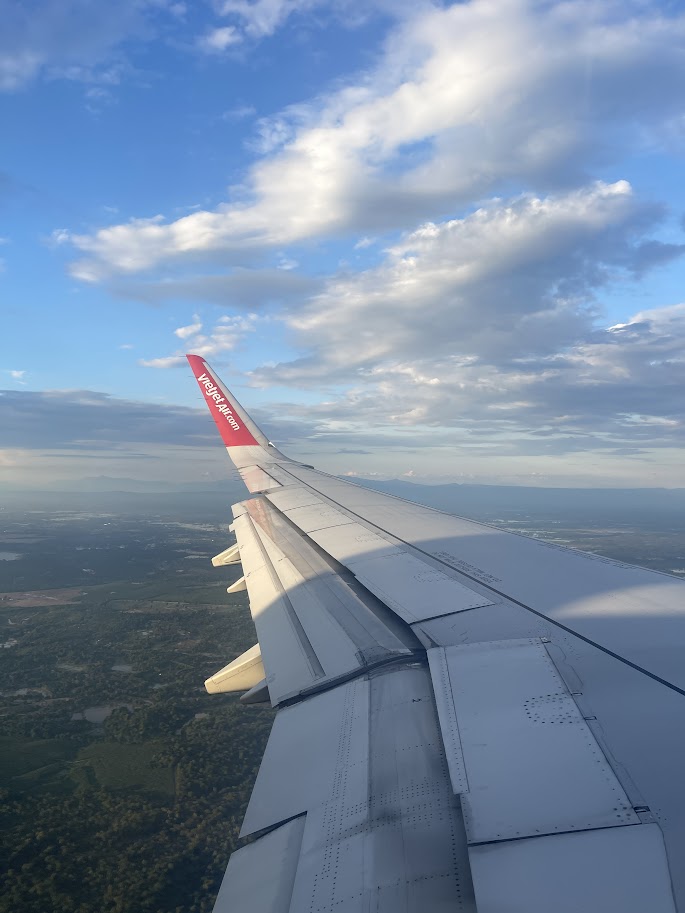
I booked a round-trip flight from Ho Chi Minh City to Vientiane, Laos with VietJet Air for only PHP 6,000. The flight used an aircraft with a 3-3 seat configuration. It was a basic fare — no inflight meal, no checked baggage, and no onboard video entertainment — but it included a 7 kg carry-on allowance, which was enough for my needs. I was coming straight from a private tour in Ho Chi Minh and flew out of Tan Son Nhat International Airport.
Note: There are no direct flights from the Philippines to Laos. This leg of the journey was actually a spontaneous addition to my Singapore trip, where I decided to travel to Ho Chi Minh City and Laos.
Travel Insurance – I already had travel insurance as part of my earlier trip to Singapore — something I never travel without. For longer trips (which mine usually are), I consider it essential. I purchased mine through the GCash app from Standard Insurance Co., Inc. for around PHP 903. It covers things like trip cancellations and delays of over six hours, which brings me peace of mind. If you’re planning a trip, I highly recommend checking it out directly through the app for full policy details.
Wattay International Airport (Vientiane) – Wattay is noticeably quieter and more relaxed compared to Tan Son Nhat Airport. Immigration and airline check-in counters typically open only about 2 hours before your flight, so there’s no need to arrive too early. When planning your airport transfer, keep in mind that the airport is just about 20 minutes from the city center.
The airport itself is compact and spread over two floors, with Immigration located on the second floor. The domestic terminal is right next to the international terminal, making transfers between the two easy if needed. While there are some food options available, they are fairly limited, so you might want to eat beforehand. There’s also a postal service within the airport for any last-minute mailing needs.
Helpful Travel Tips & Reminders
1. Print your boarding pass — even if you’ve checked in online.
I highly recommend getting a physical copy of your boarding pass printed at the airline counter. When I flew back to Singapore from Ho Chi Minh, I presented a digital version on my phone, but the Immigration officer refused to accept it. I had to return to the airline counter, queue again, and get it printed — a hassle that could have been avoided. While I haven’t tried printing it myself on regular paper, I still suggest using the airline’s printing service, especially at Tan Son Nhat Airport, where long lines at Immigration and check-in counters are common. A small oversight like this can easily turn into a frustrating delay.
2. Watch for gate changes.
Flight gates can change due to delays or other operational reasons, so always keep an eye on the flight information screens throughout the terminal.
3. Mind your liquids when flying carry-on only.
If you’re not checking baggage, make sure your toiletries are all under 100ml. I sometimes forget to switch out my full-sized bottles when traveling light, and this nearly caused issues when I flew from Singapore to Ho Chi Minh.
4. Bring a pen.
Upon arrival at Wattay International Airport, you’ll need to fill out an arrival form, and again, a departure card when leaving Laos. Sometimes, there are no pens provided at Immigration, so it’s handy to bring your own.of Wattay Airport.
Currency – Lao Kip is the currency used in Laos but you can also pay in USD but Kip is widely used. The current exchange rate is 1PHP = 380Kip.
Accessing Cash Abroad – When I travel internationally, I always use my GCash Debit Card to withdraw money from local ATMs. It’s a convenient and reliable option. Just keep in mind that withdrawal fees depend on the bank you’re using. For example, at Bcell ATM in Vietiane, the fee is around 30,000Kip (about 79 PHP) per withdrawal. The good thing is that GCash itself doesn’t add any extra charges — you’ll only pay the ATM fee charged by the international bank, not by GCash or your home bank.
ATMs – ATMs are widely available throughout Vientiane, so accessing cash is generally not a problem. However, I did come across a few instances — particularly near Pha That Luang — where some ATMs had run out of cash. Aside from that, I didn’t encounter any major issues withdrawing money in other areas of the city.
Safety – Vientiane feels generally safe. I often walked around the city at night and never experienced any rude or unpleasant behavior. That said, it’s always wise to stay alert and exercise caution, just as you would in any unfamiliar place.
Time zone – +7GMT
Internet Connection – I bought a physical SIM card just outside Wattay International Airport for 75,000 LAK (around PHP 197). It came with 10GB of data valid for 3 days. At the time, I couldn’t find any eSIM options that worked reliably in Vientiane. I also recommend getting a SIM card with a local phone number, as it’s necessary for using some of the transportation apps available in Laos.
Power Socket – uses Type A sockets, which have two flat parallel pins. Many outlets are universal, meaning they can accommodate a variety of plug types — including Type A, B, C, and G — making it convenient for most travelers to charge their devices without an adapter.
Weather – tropical and has two distinct seasons: dry season usually last from March to August, while wet season lasts from September to February.
Transportation – I downloaded LocaApp, which works similarly to Uber or Grab in Vientiane. It allows you to pay in cash or add a debit card as your payment method. One important thing to note: you’ll need to register with a local Laos phone number. I initially tried using my Philippine number, but I wasn’t able to receive the OTP required to complete the registration process.
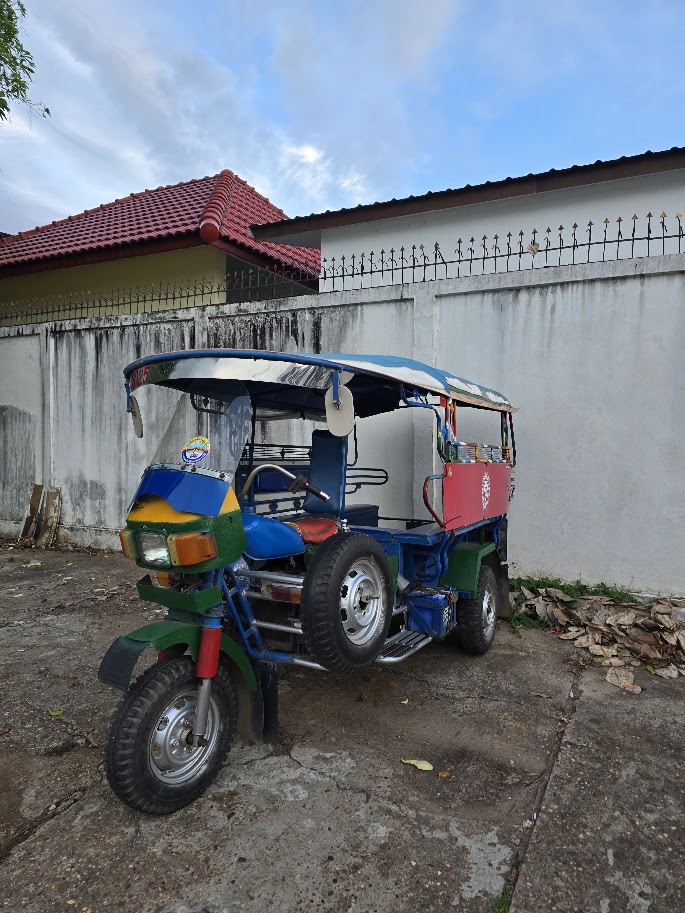
LocaApp is reliable and convenient, offering a range of vehicle options — from cars to motorbikes — depending on your preference and budget. The prices are surprisingly affordable compared to what I’m used to back home. My car ride cost only around PHP 150, while motorbike rides were as low as PHP 20 to PHP 50. I didn’t get the chance to try the tuktuks, which are similar to the ones in the Philippines and Thailand.
For traveling beyond the city, Laos also offers a high-speed train, which I plan to try on my next visit. There are also van and bus services available for inter-province travel, though I haven’t had the chance to use them yet. During this trip, I mainly relied on LocaApp for getting around, but next time, I’d love to explore more of the local transportation options.
Things to Note: Cars in Laos are left-hand drive, meaning the steering wheel is on the left side, and vehicles drive on the right side of the road.
Cashless Payment – Cashless payment is widely accepted in Vientiane, even at night markets, which was a pleasant surprise. However, temples still require cash for payments, so it’s best to carry some cash with you at all times. I wasn’t familiar with the local cashless payment apps, so I relied mostly on cash throughout my trip. Next time, I plan to explore and try out their digital payment systems for added convenience.
Accommodation – For most of my travels around Asia, I’ve booked accommodations through Agoda, Airbnb, Trip.com, or Booking.com. The platform I use usually depends on where I’m going and the kind of experience I’m looking for.
For this particular trip, I chose Agoda. The process was quick and easy — just enter your destination (in this case, Vientiane) and browse through a variety of available stays.
A tip I always follow is to carefully check the location of the accommodation. Choosing a place that’s within walking distance of cafés, restaurants, and tourist spots makes exploring much more convenient. I also make it a point to read guest reviews before confirming any booking. While reviews can sometimes be mixed, I try to approach each stay with an open mind — not everything goes perfectly, and when it doesn’t, I just consider it part of the travel experience.
For my Vientiane trip, I stayed at Syri Guesthouse Vientiane Hostel & Cafe and paid only USD 10.80 (around PHP 607.50) for 3 days and 2 nights in an 8-bed mixed dormitory. It’s one of the most affordable and enjoyable hostels I’ve stayed at while backpacking. Please note that if you haven’t already paid for your accommodation through the app using a card, the only accepted method of payment on-site is cash.
The dorm rooms were spotless and well-kept, featuring comfortable beds and pillows. Each bed was equipped with a privacy curtain, providing a sense of personal space, along with charging ports and a reading light. Lockers were also available in the room for secure storage of personal belongings.
The toilets and shower areas were separate and located on the ground floor. Showers came with hot water and complete toiletries, which was a pleasant surprise. Although there’s no elevator, I stayed on the second floor and didn’t find it to be a problem.
The common area was cozy and inviting, with billiards, tables, and chairs where you can relax or socialize with fellow travelers. The staff were friendly and helpful, and there was free Wi-Fi throughout the property.
At the reception, they also sell drinks like bottled water and soda, which is super convenient if you don’t feel like stepping out.
Another highlight is the location — it’s within easy walking distance of the night market, cafés, and restaurants in Vientiane. The hostel also allows you to store your luggage if you arrive early or need to leave your things after checking out.
I enjoyed my stay here and can’t recommend this hostel enough. It offers great value, a comfortable stay, and a welcoming environment perfect for budget travelers.
Convenience Stores – Mini Big C is one of the main convenience store chains found throughout Vientiane. They offer a wide range of products, including souvenir items, and are open 24 hours, making them a convenient stop for travelers at any time.
Day 1
May 25, 2025 (Sunday)
I left Saigon in the afternoon after an incredibly educational motorbike tour around the city — more on that in an upcoming blog post.
After clearing Immigration, I had a meal at Saigon Café, where I ordered broken rice with grilled pork for about PHP 600. As expected, airport food was overpriced and underwhelming. Just a heads-up: Saigon Airport accepts both Vietnamese Dong and USD, and prices are typically listed in USD.
My departure from Ho Chi Minh City went smoothly and arrived safely in Vientiane.
When I arrived at Wattay International Airport in Laos, I felt genuinely excited — it was my first time in the country, and I was thrilled to explore a new destination. I had originally planned to visit the world’s highest treehouse in southern Laos or what they call The Gibbon Experience, something that has long been on my bucket list. However, since I had just come from a demanding adventure in the Himalayas, I decided to save that experience for another time.
Most of my travels are usually focused on off-the-beaten-path destinations and outdoor experiences, and in the process, I often miss the beauty and character of capital cities. This time, I made a conscious decision to do things differently.
This trip, I wanted to slow down, rest, and enjoy the quiet charm of city life. No hiking, no outdoor challenges — just good sleep, peaceful surroundings, and time to appreciate a new culture. That’s what led me to Vientiane, the capital of Laos.
After arriving at Wattay Airport, I took a LocaCar to my hostel. Once I settled in, I rested for a while before heading out on foot to my first destination — the night food market in Vientiane.
Itinerary:
Vientiane Night Food Market
The Vientiane Night Food Market is open daily from 5:00 PM to 10:00 PM (Laos time). I had a great time exploring the variety of food stalls and enjoying a refreshing fresh avocado shake. Prices were quite affordable, typically ranging from PHP 50 to PHP 200.
I got to try some local favorites, including coconut pies, Lao grilled pork, and sweet potato balls. One thing that caught my attention was seeing massive eggplants and mushrooms being grilled — a first for me!
There are seating areas available, but keep in mind that you’ll need to order directly from the stall that owns the table if you want to sit there. I initially took food from an outside stall and tried to sit down, but was politely told that seating is reserved for customers of the specific vendor.
Feeling completely full, I decided to head back to my hostel to unwind and get a good night’s rest for the next day.
Day 2
May 26, 2025 (Monday)
Itinerary Food:
1. Le Trio Coffee
2. Texas Chicken
3. Ma Maison Restaurant
4. Starbucks
Itinerary Places:
1. Presidential Palace
2. Wat Ho Phrakeo Museum
3. Wat Sisaket
4. Patuxay Victory Monument
5. Pha That Luang
6. Lao National Culture Hall
7. Nam Phou Park
8. Vietiane Night Market
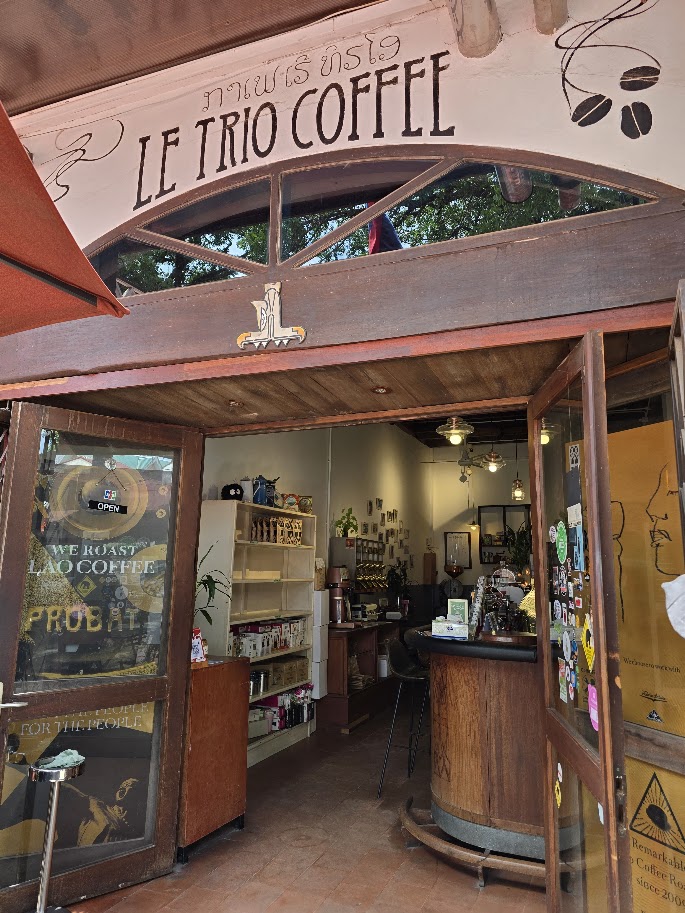
Le Trio Coffee
PHP200-500
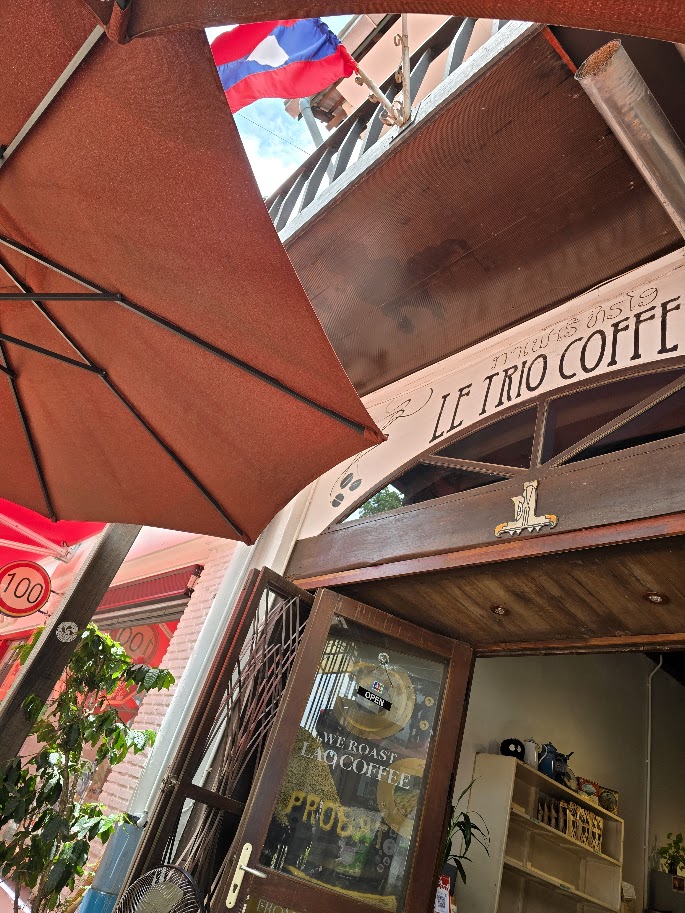
Just a short walk from my hostel, I discovered this charming coffee shop thanks to Google Maps and its great reviews. I decided to give it a try — and I’m glad I did! They accept card payments, which is always a plus.
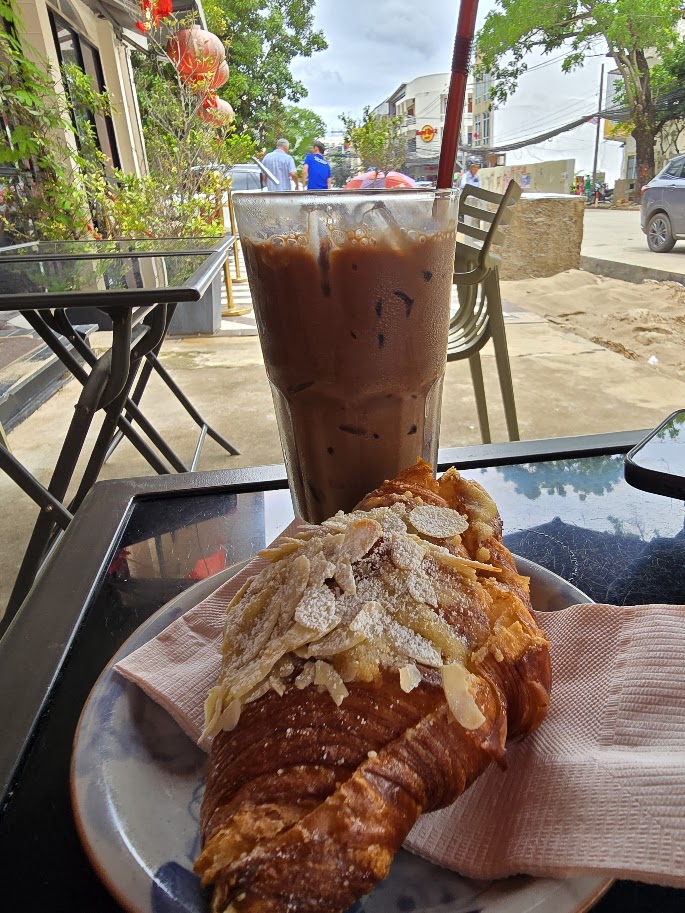
To start my day, I ordered an almond croissant and an iced mocha — both were absolutely delicious. The café had a cozy atmosphere, making it the perfect spot for a slow morning and a great way to kick off the day.
After having breakfast, I booked motorbike to set me off to my first destination Ho Phrakeo Museum
Presidential Palace – The Presidential Palace on Lane Xang Street and just walking distance from Phrakeo Museum, It was originally commissioned in 1973 by the Royal Lao government on the site of the former royal residence. Designed by local architect, the construction was delayed due to the 1975 political shift when the Pathet Lao took power.
It was finally completed in 1986 and is now used exclusively for government functions and ceremonies. The palace is not open to the public. The Presidential Palace should not be mistaken for the official residence of the Lao president, which is actually located in the Ban Phonthan suburb of Vientiane.
Wat Ho Phrakeo Museum
Entrance Fee:
– 30,000 Kip (~PHP 79) for foreigners
– 10,000 Kip (~PHP 26) for locals
open from 08:00 to 12:00 and 13:00 to 16:00 every day
In Laos (and also in Thailand and Cambodia), the word “wat” means “temple” or “monastery.” It refers to a Buddhist place of worship, often consisting of several buildings such as prayer halls, stupas, and monks’ living quarters.
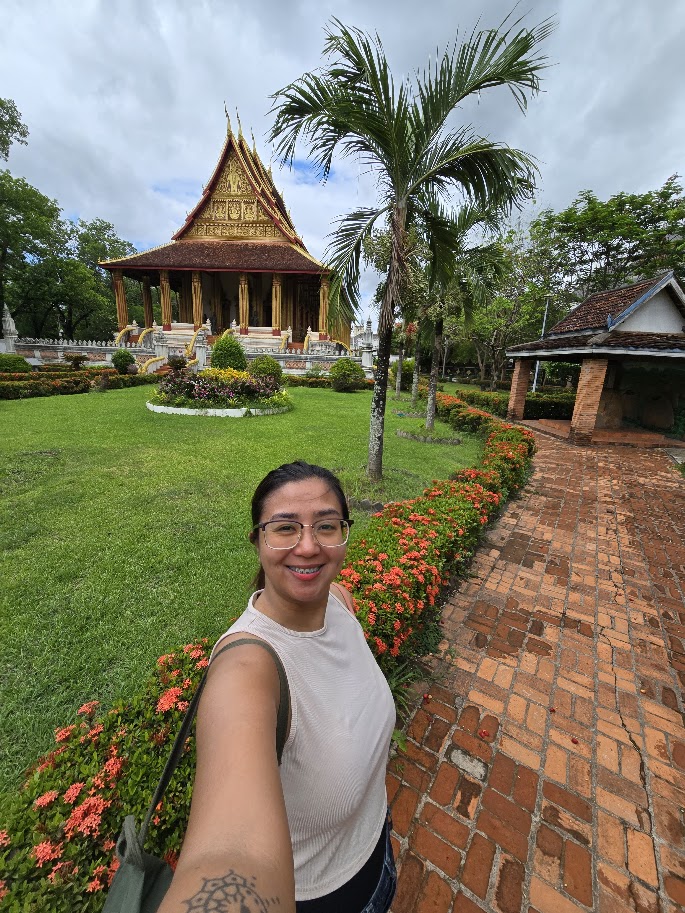
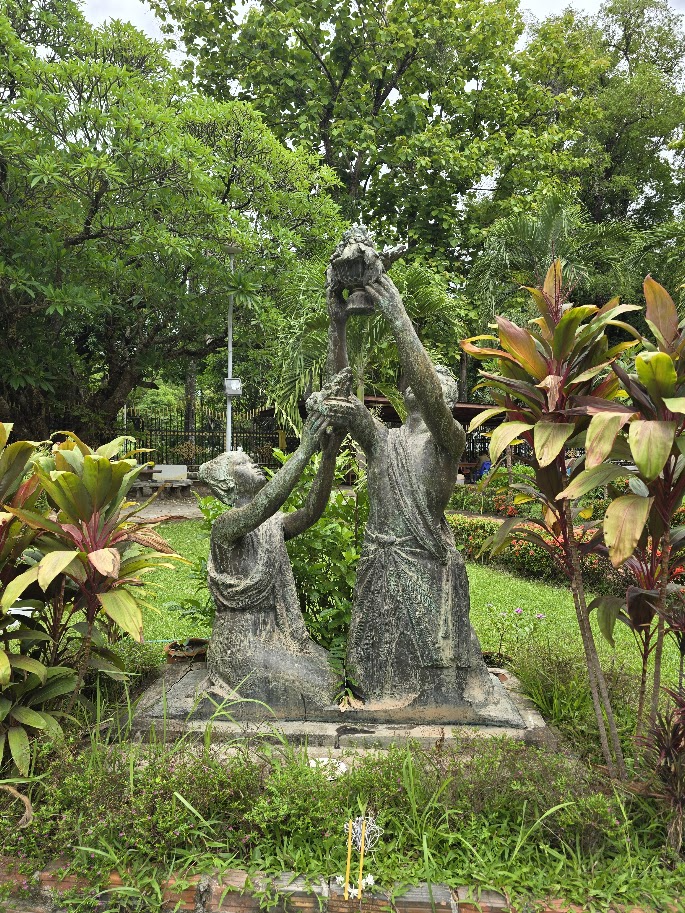
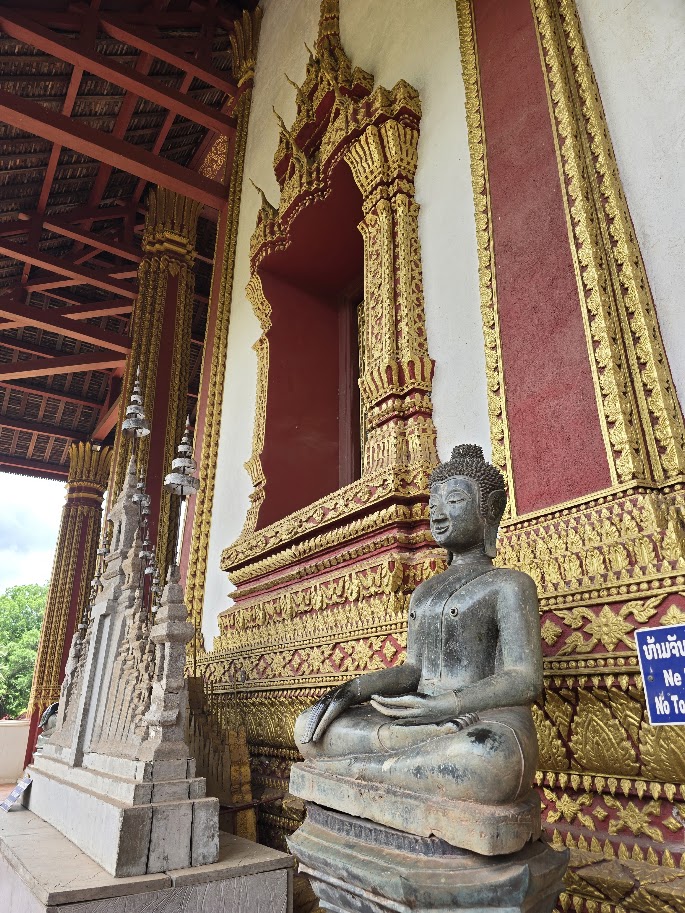
Wat Ho Phrakeo Museum was Originally built in 1565, it served as the personal chapel of the Lao royal family and was constructed to house the Emerald Buddha, which had been taken from northern Siam (present-day Thailand). However, in 1778, the Siamese reclaimed the sacred jade statue, and it is now enshrined at Wat Phra Kaew in Bangkok.
To Note: Photography or videography is not permitted inside the temple
Wat Sisaket
Entrance Fee:
– 30,000 Kip (~PHP 79) for foreigners
– 10,000 Kip (~PHP 26) for locals
open from 08:00 to 12:00 and 13:00 to 16:00 every day
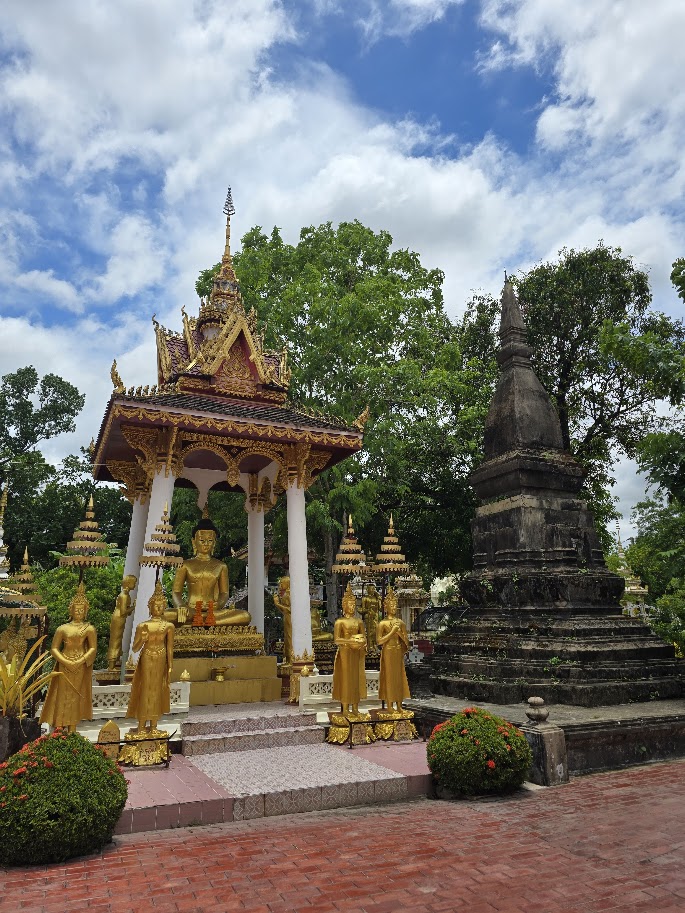
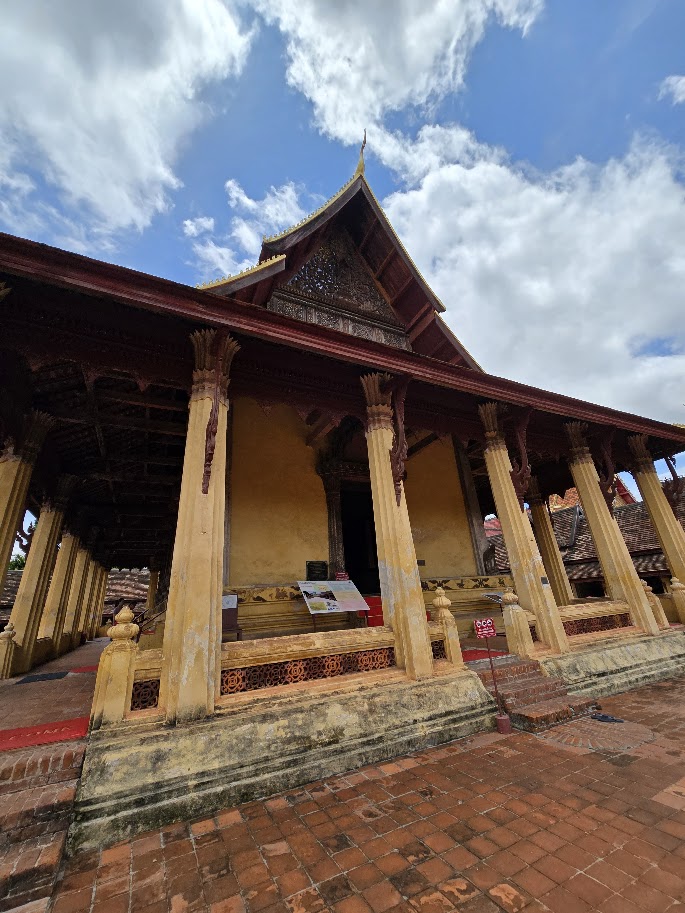
Wat Si Saket is just walking distance from the is the Wat Ho Phrakeo Museum and the only temple in Laos to survive the Siamese invasion of 1828, which devastated much of the capital. Built in 1818, it houses over 10,000 Buddha statues in a variety of sizes and styles. The temple is also renowned for its beautiful architecture and thoughtful layout.
Patuxay Victory Monument
From 08:00 to 16:30 on Mondays to Fridays, and 08:00 to 17:00 on Saturdays and Sundays.
Entrance Fee:
– 30,000 Kip (~PHP 79) for foreigners
– 10,000 Kip (~PHP 26) for locals
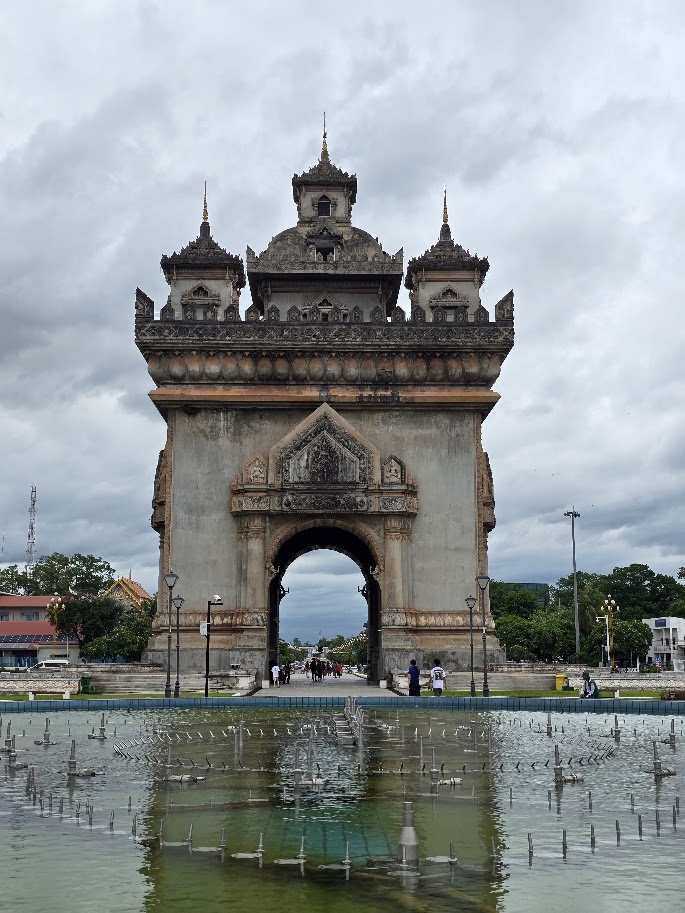
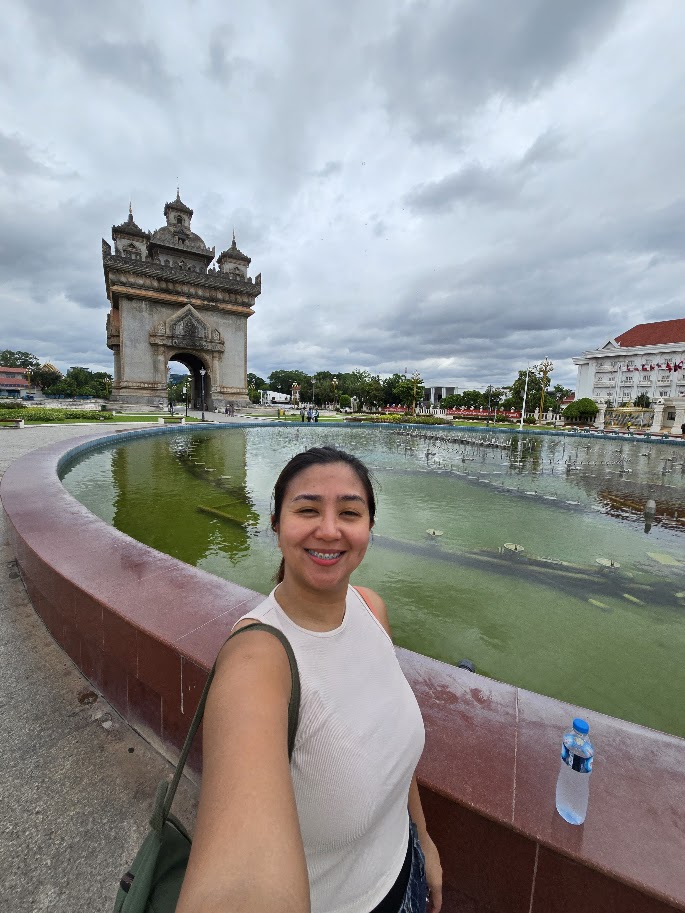
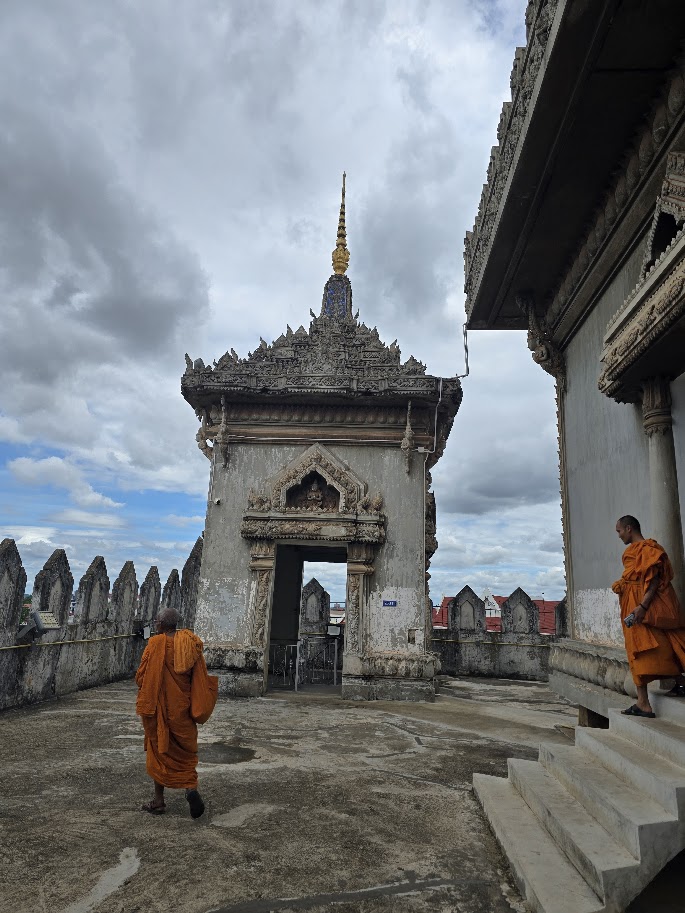
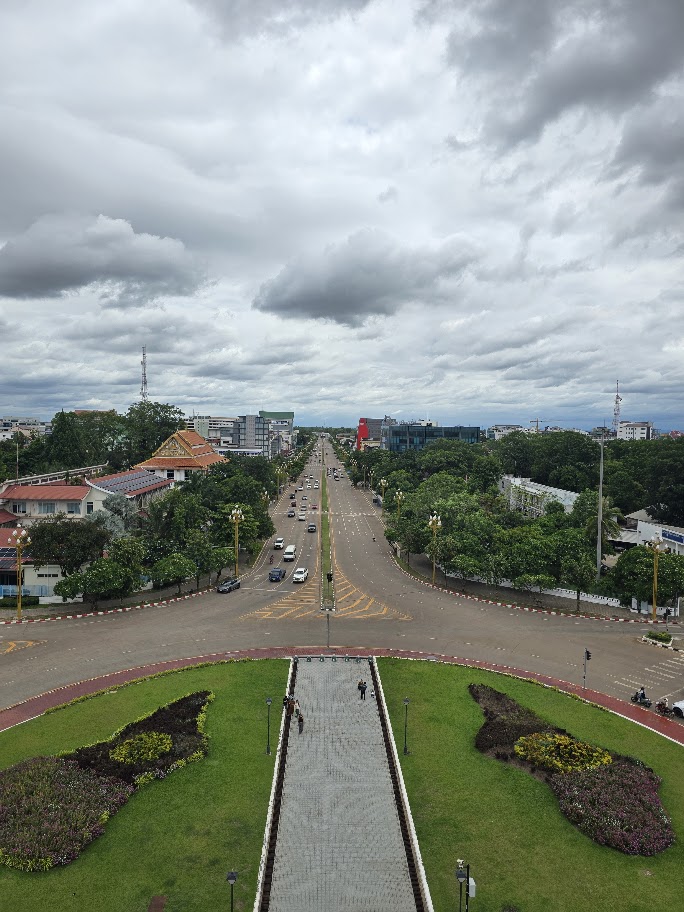
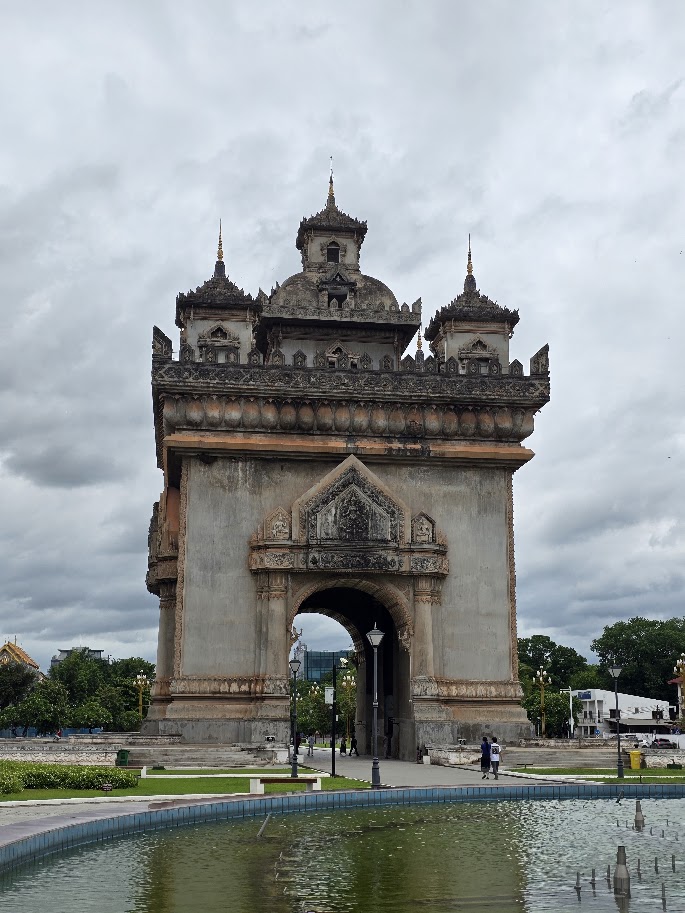
After, I booked a motorbike to go to Vientiane’s version of the Arc de Triomphe stands out somewhat oddly in the bustling commercial area around Rue Lan Xang. Known officially as the Victory Gate, it honors the Lao who lost their lives in prerevolutionary conflicts. Its exterior decorations combine Buddhist symbols—like lotus leaves and stupa-shaped towers—with statues of animist figures such as kinnari (half-woman, half-bird creatures) and nagas (serpent-like dragons). For a small fee, you can climb to the top and take in panoramic views of Vientiane’s charming, old-fashioned cityscape, filled with trees, low-rise buildings, and temples.Just a heads-up: the viewpoint is on the 6th floor if you want to reach the top — which I did, haha!
Pha That Luang
Entrance Fee:
– 30,000 Kip (~PHP 79) for foreigners
– 10,000 Kip (~PHP 26) for locals
open from 08:00 to 12:00 and 13:00 to 16:00 every day
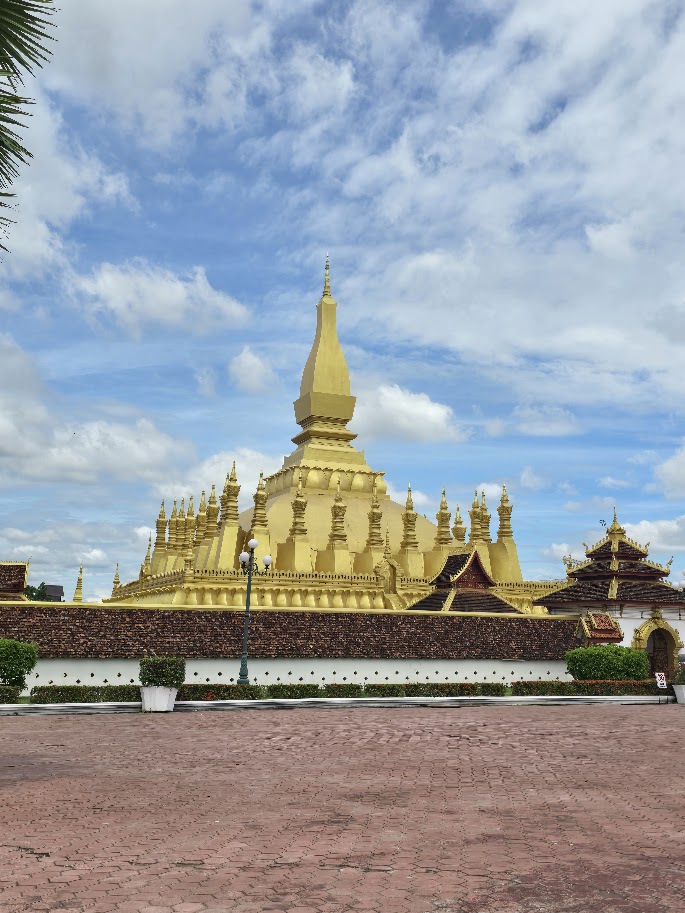
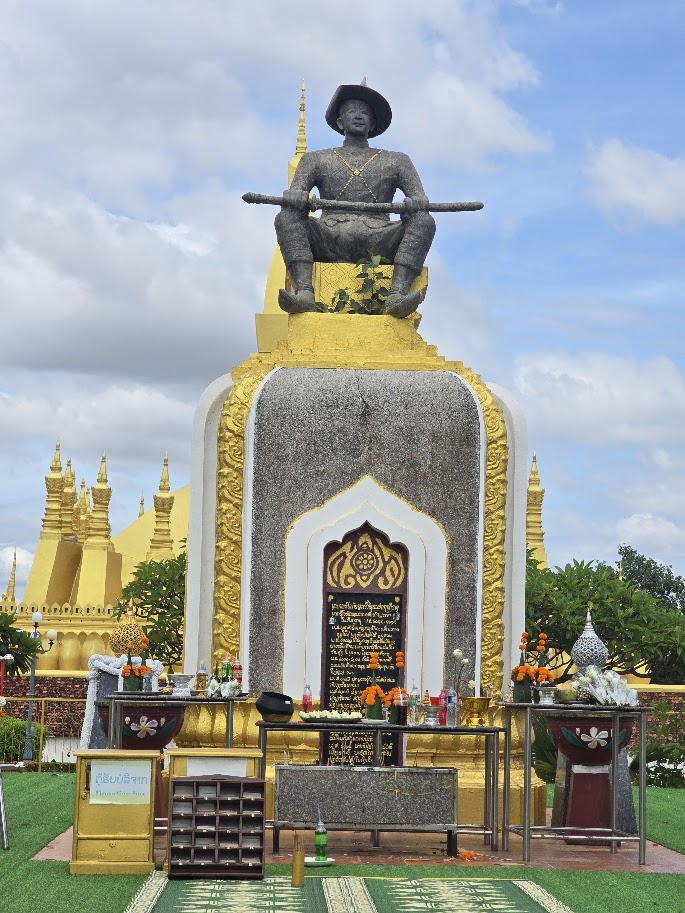
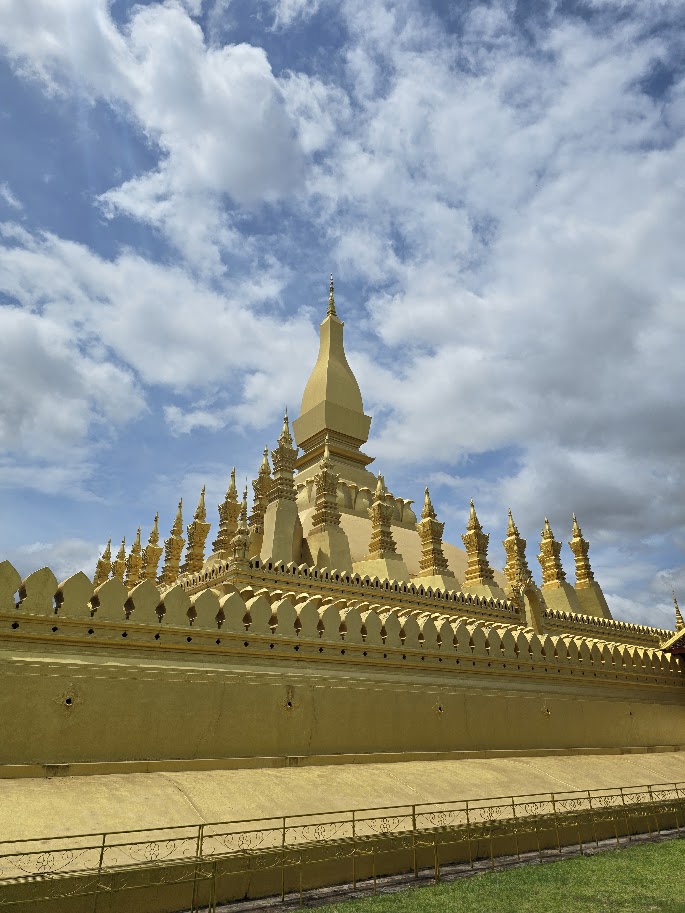
I rented a motorbike again to visit Pha That Luang, which quickly became one of my favorite temples. Please remember to wear appropriate clothing when visiting—the temple provides leg covers if needed, as I was wearing shorts during my trip.
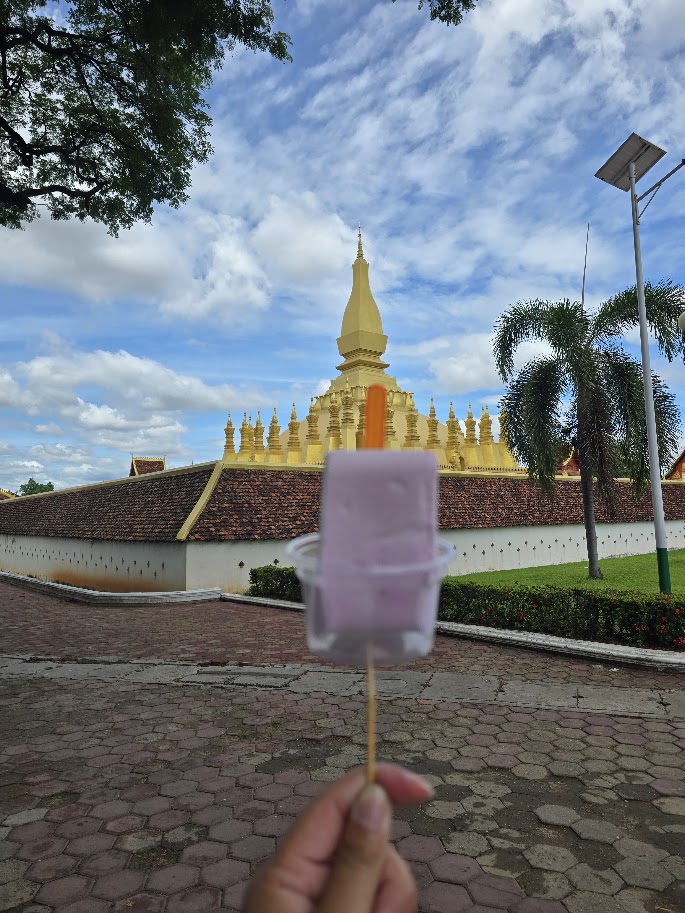
Pha That Luang, meaning the Great Sacred Stupa, is a powerful symbol of national pride and holds deep cultural and religious significance. The stunning golden stupa is the centerpiece of the site. As you explore the complex, you’ll find several temples and prayer halls, each showcasing distinct architectural styles and intricate details.
After exploring the temple, I tried a taro ice cream sold on the street. I loved that it came with a plastic cover underneath, which protected my fingers from getting sticky as it melted—saving me the hassle of wiping or washing them. It only cost 5,000 kip, about 13 PHP.
Lao National Culture Hall
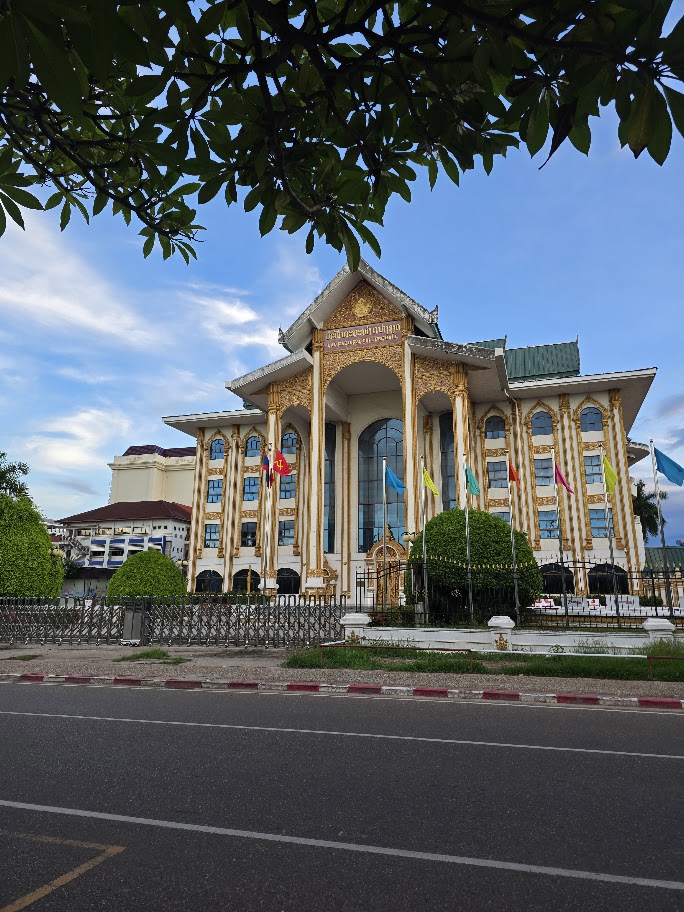
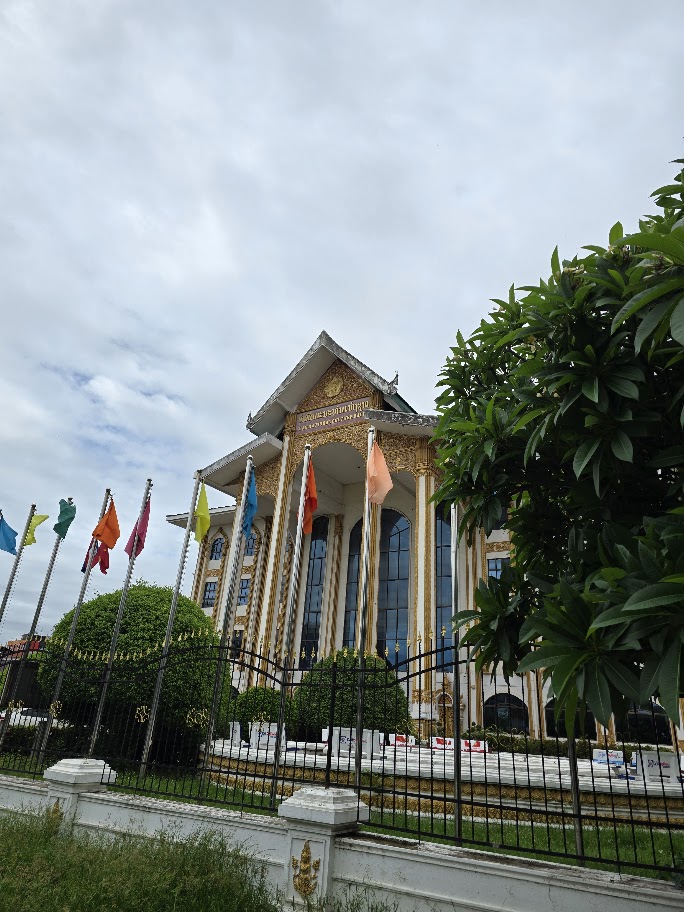
I often saw this building while walking to nearby cafés, restaurants, and around my hostel, but I never actually visited it. It’s a large government venue that occasionally hosts official dance and musical performances.
Texas Chicken
PHP200-500
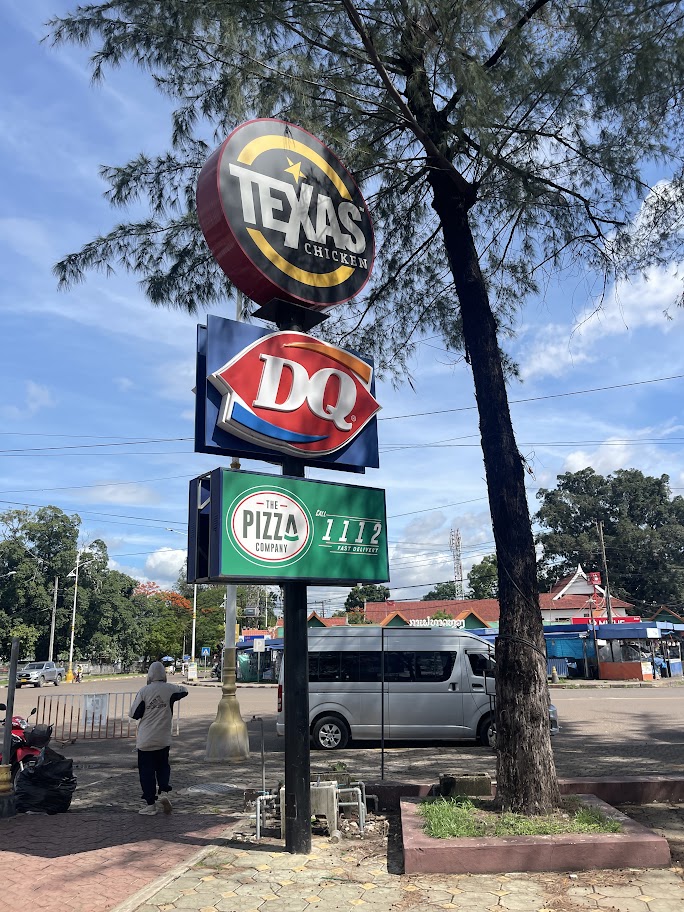
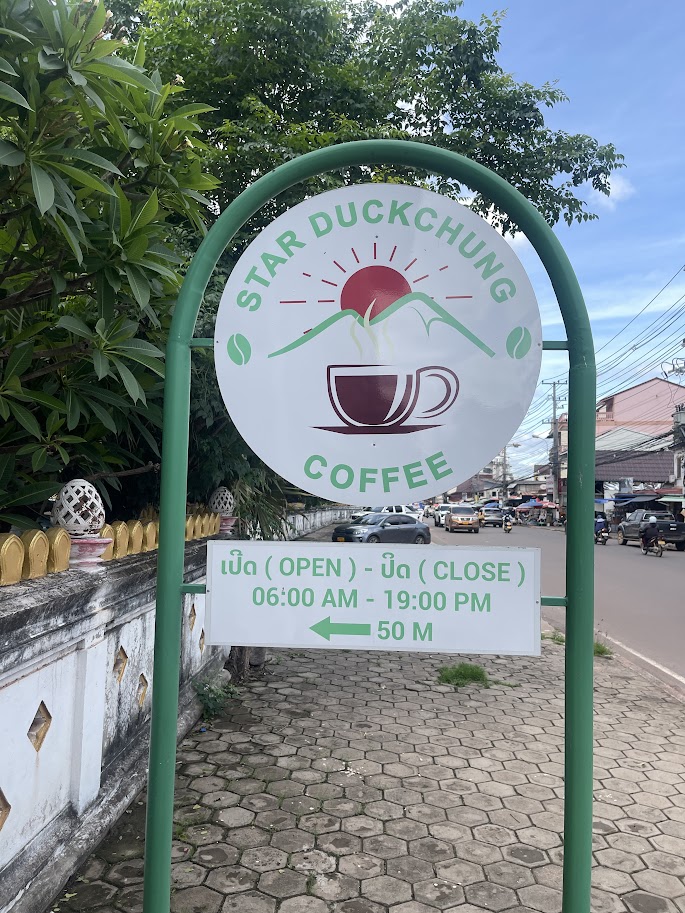
I needed to withdraw cash but couldn’t find an ATM with available funds, and since I was already hungry, I stopped at Texas Chicken to eat. Fortunately, they accepted card payments, so I ordered a meal of chicken, rice, and soda for 400 PHP. It was pretty decent—similar to the fast food I’ve had in other countries and back home in the Philippines. On the way, I also spotted some cafés with a “Starduck” sign, which made me laugh because the name sounds a lot like Starbucks.
I grabbed a motorbike taxi and headed back to my hostel to rest. Later, I decided to take a walk and see what other places I could explore nearby. I had planned to visit Buddha Park, but since it’s about 30–45 minutes outside the city and it was already late, plus I was tired from visiting museums, I decided to skip it for the day. Hiring a car there costs around 1,500 PHP one way, so a round trip would be about 3,000 PHP. However, there is a bus (#14) that goes to Buddha Park, which I plan to take next time to save money instead of paying for a private ride.
Nam Phou Park
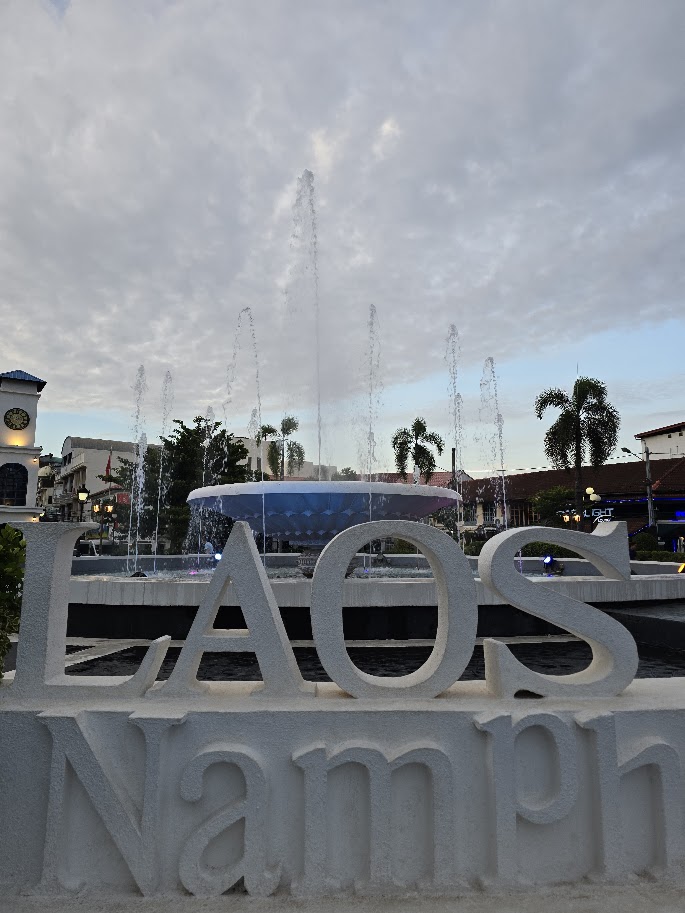
While walking around town, I stumbled upon this park. It was nice enough to look at, with a fountain and some lights that come on at night, but there wasn’t much else to do there.
Ma Maison Restaurant
PHP500-1500
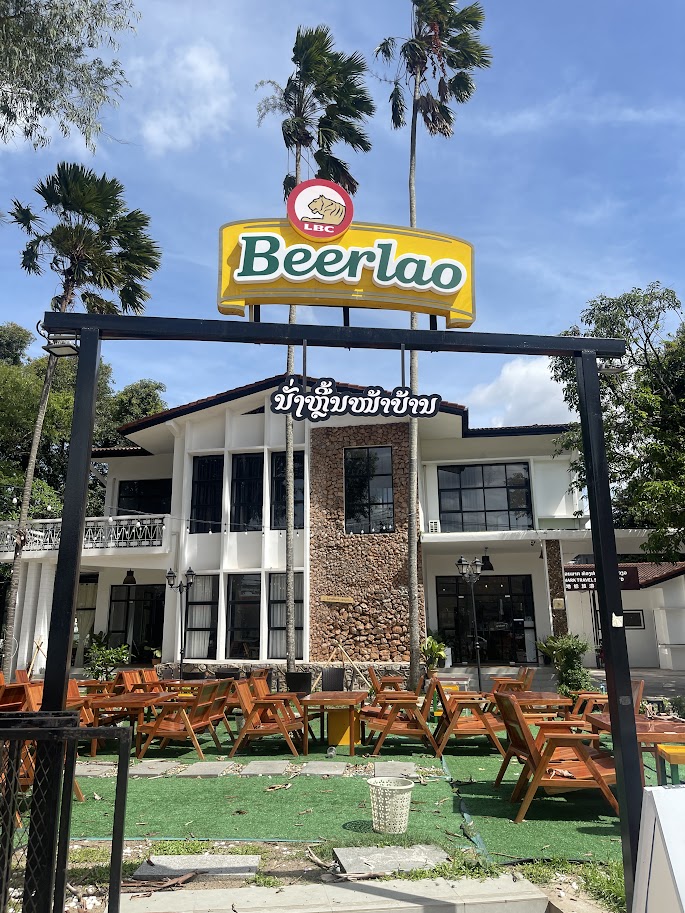
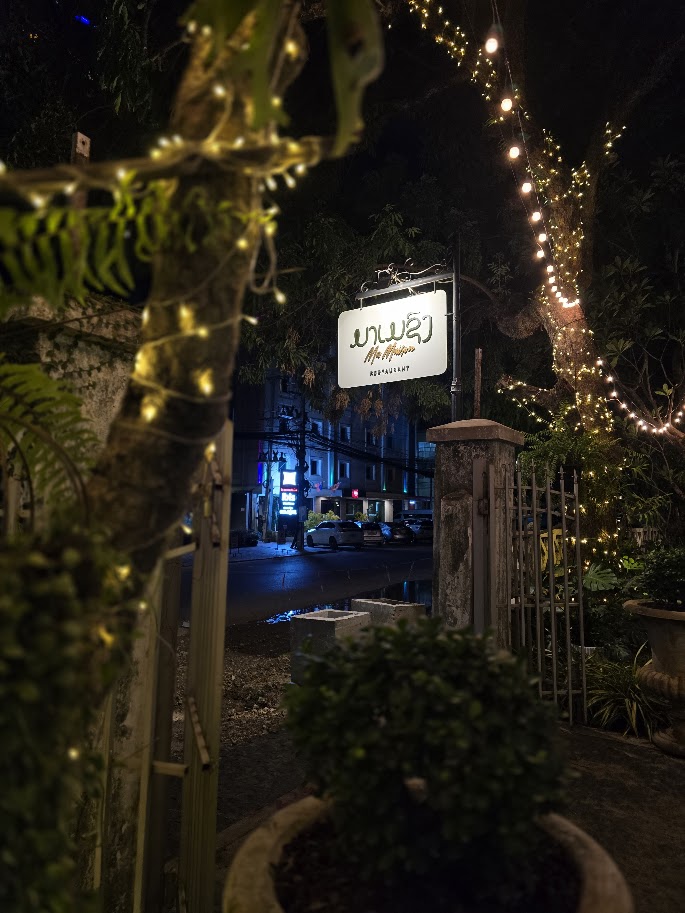
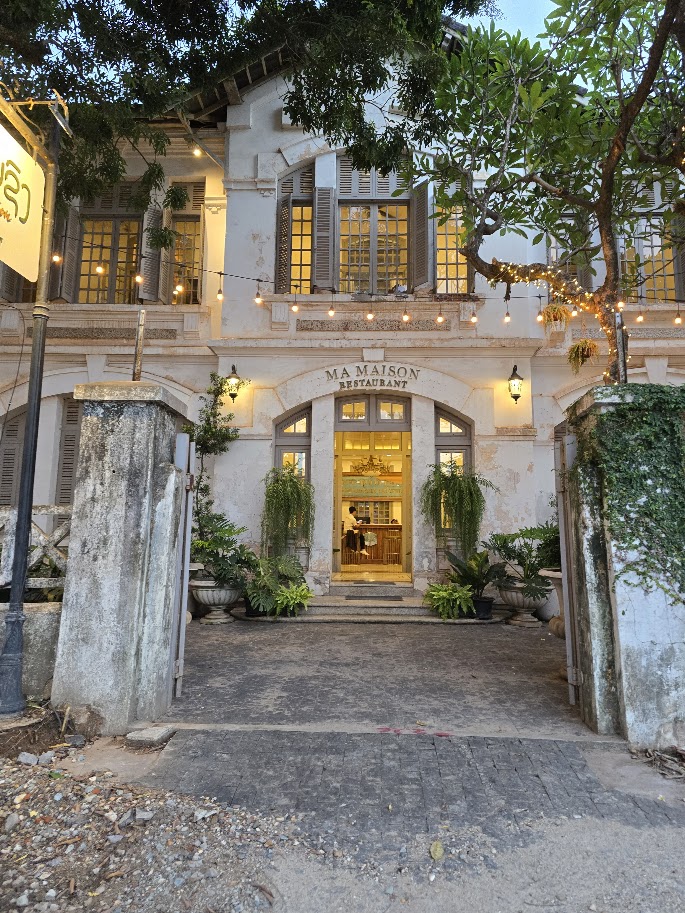
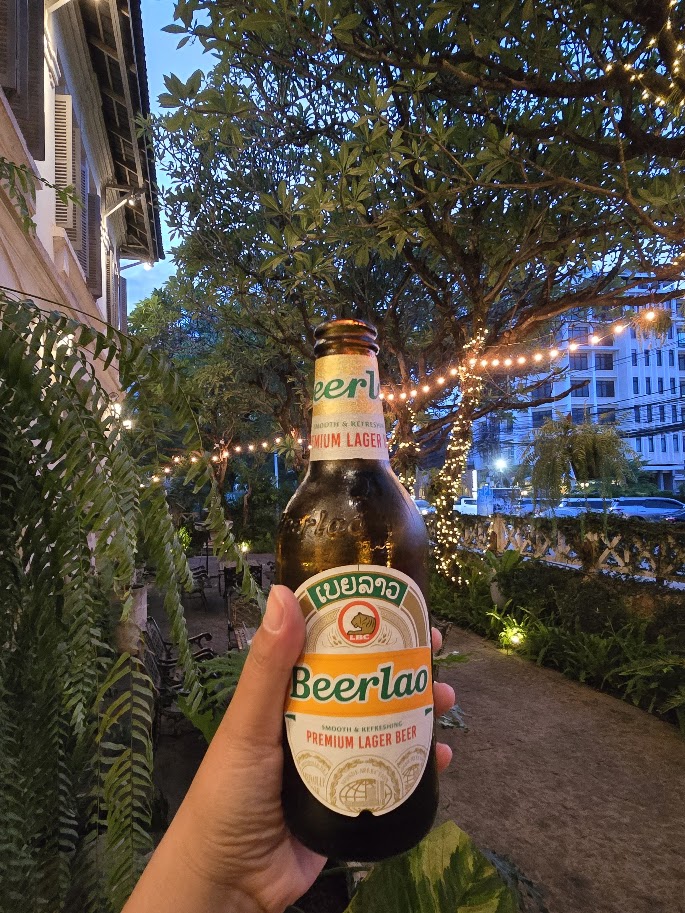
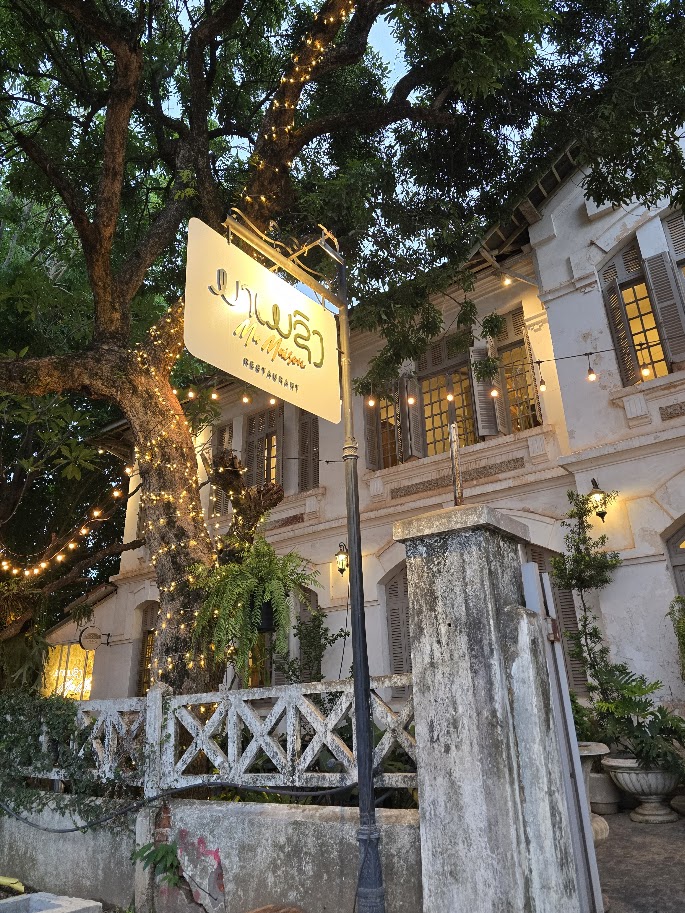
While exploring the town, I stumbled upon a beautifully restored restaurant that was once a library — now transformed into a warm, elegant dining space with a rustic charm I absolutely love. I’m always drawn to places with character, and this one instantly caught my eye. More than that, I was excited to finally try some traditional Lao dishes and, of course, a bottle of Beer Lao, which they served here.
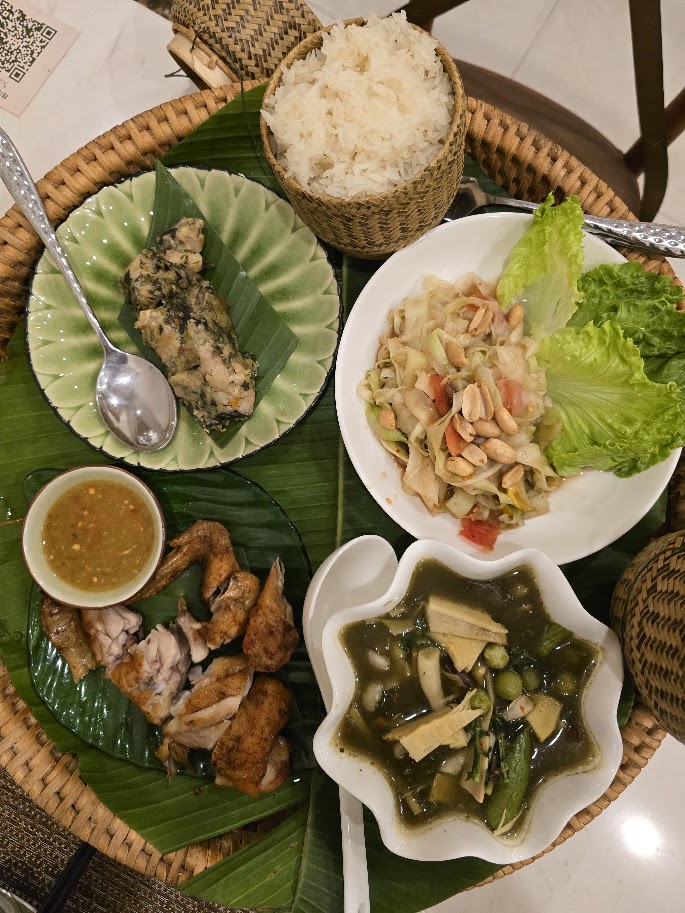
I ordered the Central Lao Platter, a dish meant for two, priced at 330,000 kip (around PHP 869). It came with a variety of local specialties:
- Grilled local chicken (ping gai lard)
- Papaya salad (tum mak hoong)
- Steamed Mekong fish (mok paa) wrapped in banana leaves
- Bamboo shoot soup (kaeng nor mai) with mushrooms and greens
- And a generous serving of sticky rice (khao niew)
To be honest, some of the flavors took a bit of getting used to. The papaya salad had a bold, sour punch and reminded me of kimchi—but instead of cabbage, it used green papaya, and the heavy fish sauce wasn’t quite to my taste. The bamboo shoot soup was also intense—salty with complex flavors I couldn’t quite place.
That said, the grilled chicken and steamed Mekong fish were absolutely delicious—tender, flavorful, and well-seasoned. What surprised me most was the sticky rice. In the Philippines and Thailand, sticky rice is usually served as a sweet dessert, but here in Laos, it’s the main starch—unsweetened and chewy. At first, I found it a bit hard to swallow when paired with dry dishes, but it grew on me. It’s unique, and I loved experiencing it the way locals do. The Beer Lao was really smooth and I always love local beer!
Trying local food always surprises me—it pushes my palate and gives me a deeper appreciation for the culture. Laos definitely delivered on that front.
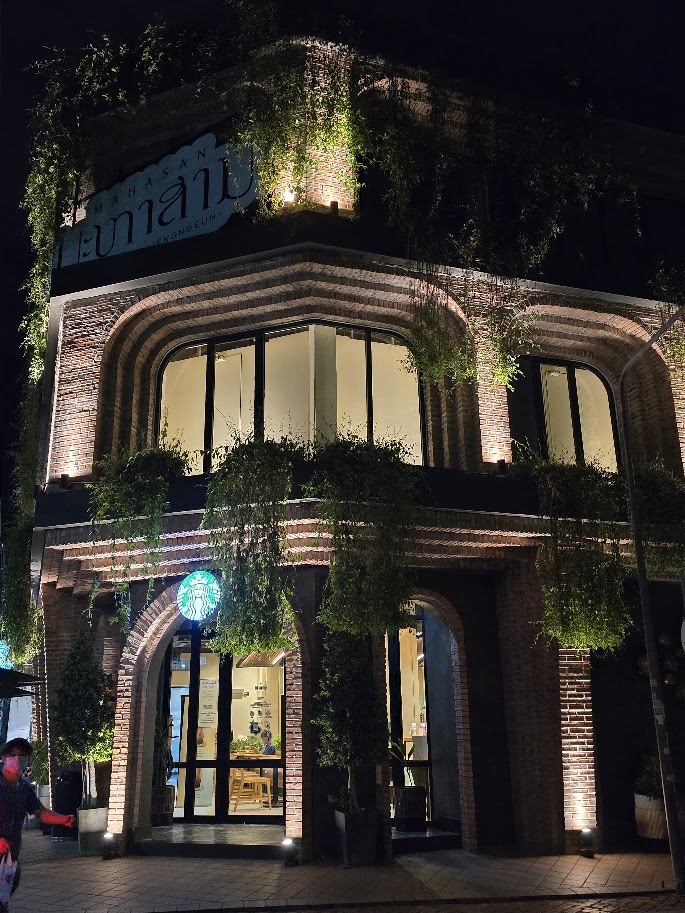
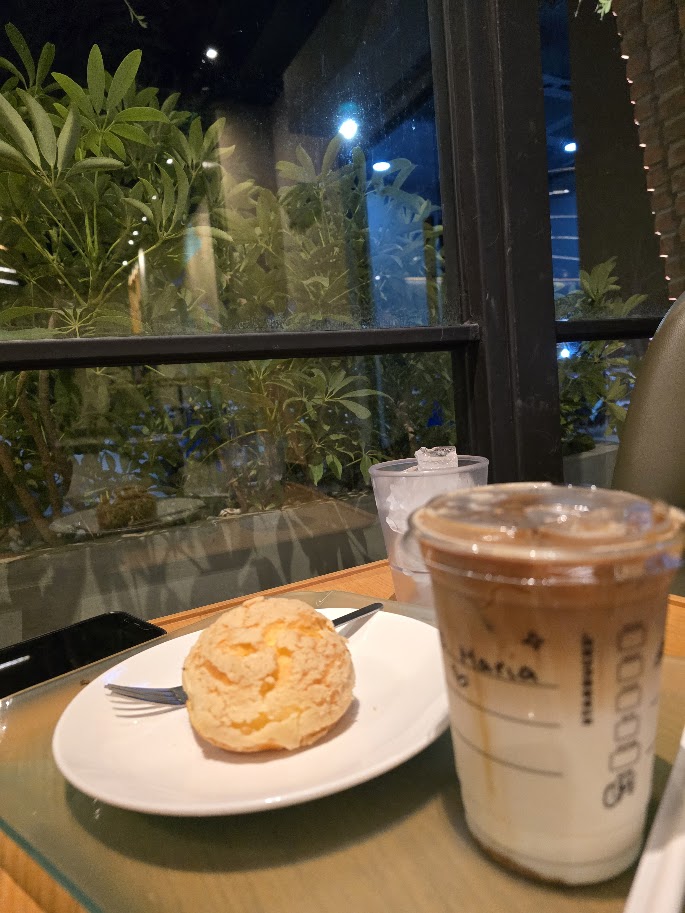
Starbucks Vientiane – I made a quick stop here for dessert and coffee, as it’s conveniently located near the Vientiane Night Market. As expected, the drinks and food tasted just like any other Starbucks around the world—reliable, but nothing particularly unique. They did have location-themed drinkware available, which was a nice touch. What stood out most to me was the architecture, which had a pleasant, nature-inspired vibe that gave the place a warm and relaxing atmosphere.
Vietiane Night Market
Opens Daily 6:00pm-10:00pm
I headed over to the Vientiane Night Market, but personally, I preferred the food market experience more. The night market offers a long stretch of stalls selling various clothing items and a few food options. It reminded me a lot of the night markets back in the Philippines, but what stood out here was how organized and clean everything was.
I went back home after exploring town to rest.
Day 3
May 27, 2025 (Tuesday)
Itinerary:
1. That Dam (Black Stupa)
1. Kualao Restaurant
2. La Terrasse Cafe and Bakery
I decided to take it easy today and dedicate the day to relaxing, trying more Lao dishes, and visiting a café—which turned out to be a great choice. After checking out of my hostel, I left my bag at the reception and set off on foot to explore another nearby restaurant.
That Dam (Black Stupa)
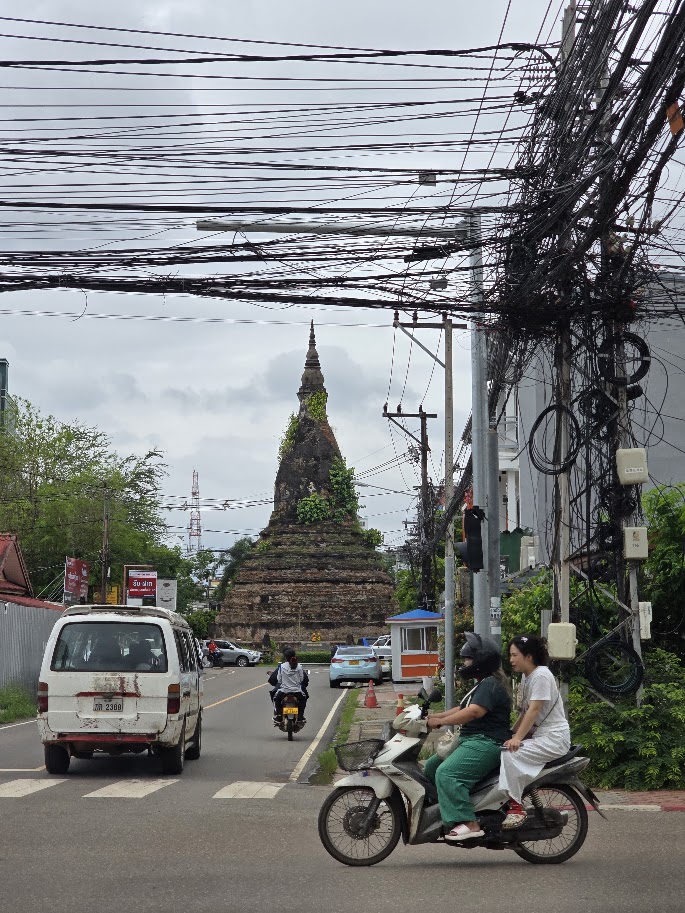
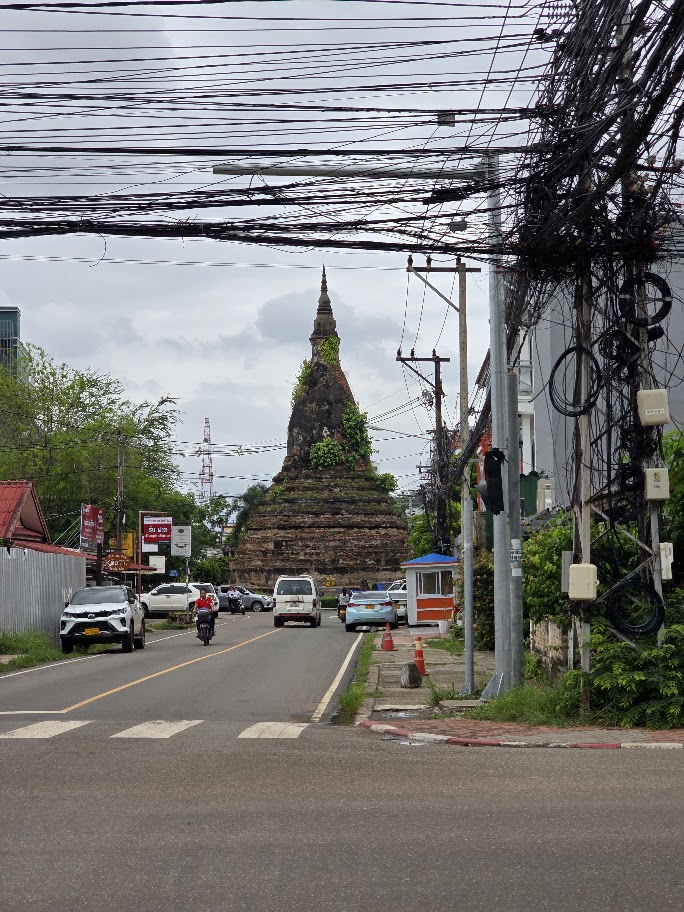
I hadn’t planned to visit this spot, but I came across it on my way to Kualao—and it was such a pleasant surprise to find it right in the middle of town.
That Dam, also known as the Black Stupa, is a 16th-century Buddhist monument located in the heart of Vientiane. Tucked away on a quiet roundabout near Talat Sao (the morning market) and the U.S. Embassy, it stands as one of the city’s more mysterious landmarks.
According to local legend, the stupa was once protected by a seven-headed Naga, a mythical water serpent. It was originally covered in gold, but during the Siamese-Laotian War in the late 1820s, the gold was looted and taken to Siam (present-day Thailand). What remains today is the weathered, darkened structure locals now call the Black Stupa—a haunting yet symbolic piece of Lao history.
Kualao Restaurant
Opens daily 11:00am-2pm & 6-10pm
190,000kip to 300,000kip per order (500PHP to 790PHP)
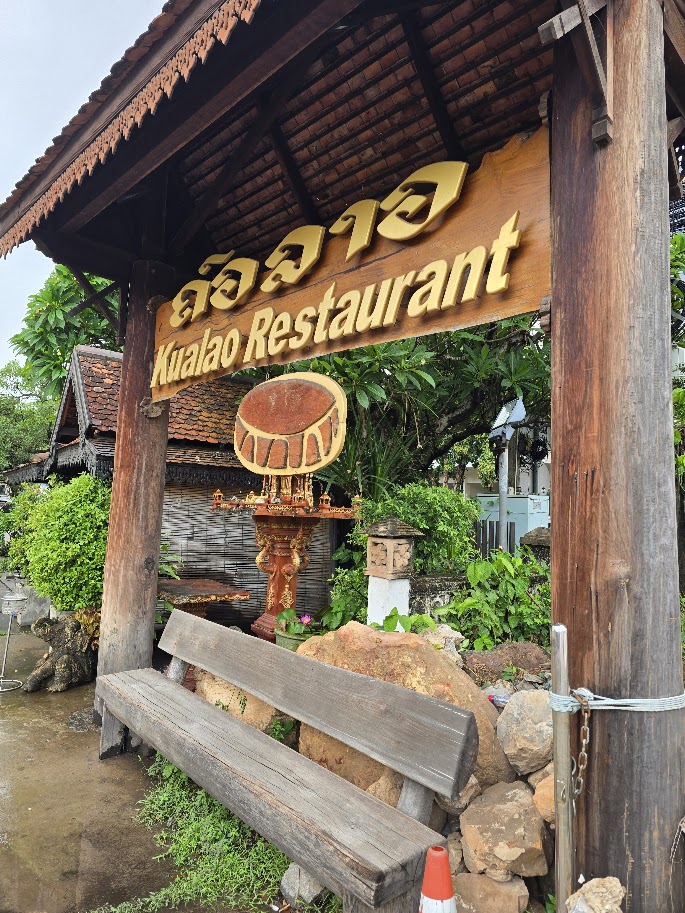
Kualao Restaurant is often hailed as Vientiane’s most iconic destination for upscale, authentic Lao cuisine—and after dining here, I can see why. Nestled discreetly at the corner of That Dam Intersection, near the famous Black Stupa (That Dam), Kualao blends colonial elegance with deep-rooted Lao tradition. From the moment I walked in, I was greeted by warm, welcoming staff dressed in traditional Lao attire, which immediately set the tone for a culturally rich dining experience.
The restaurant’s interior has a rustic, old-world charm that made me feel like I had stepped back into the era of French Indochina. It’s refined yet cozy—perfect for a relaxed but meaningful meal.
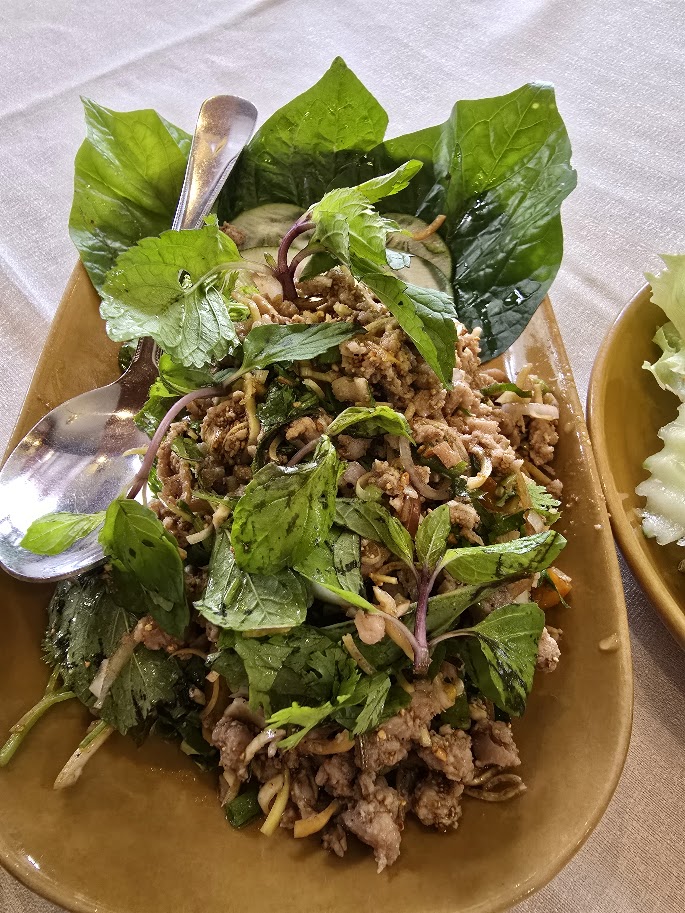
I couldn’t leave without trying larb, the national dish of Laos, and I opted for the duck version. This flavorful dish is made with minced duck meat, lime juice, fermented fish sauce, ground roasted sticky rice, and an abundance of fresh herbs. One thing I’ve come to notice about Lao cuisine is its generous use of herbs, mint, and bold flavors that lean toward sour, salty, and spicy. Compared to Filipino-style minced meat dishes, this larb packed a lot more freshness and zest, thanks to all the herbs—which, I’ll admit, aren’t as common in Filipino cooking. But I really enjoyed it!
Of course, I had to order brown sticky rice again—now that I know how to eat it properly! I found myself eating the viand first, then using the sticky rice almost like a follow-up bite, or as we say in the Philippines, panulak—which worked surprisingly well, haha!
Dining at Kualao was such a memorable experience. I’d definitely go back, especially in the evening when they host traditional Lao music and cultural performances. It’s more than just a meal—it’s a celebration of Lao heritage.
La Terrasse Cafe and Bakery
50,000kip to 150,000 (131PHP to 400PHP)
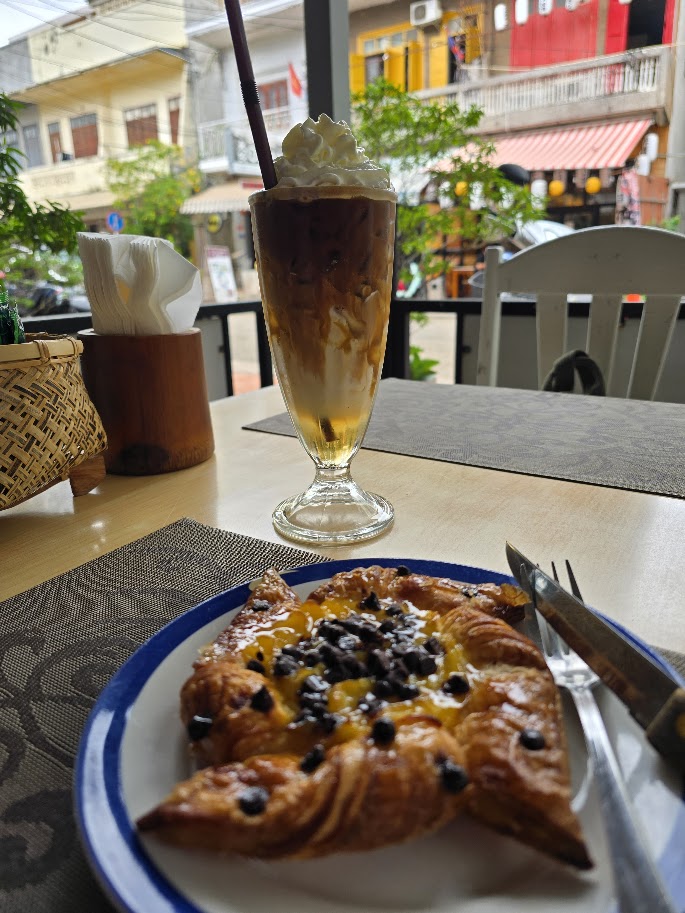
While exploring the area near my hostel, I came across a charming French bakery with a cozy al fresco setup. The place had glowing reviews on Google Maps, so I decided to stop by and try their moulin custard cream bread along with an iced macchiato. The bread was beautifully flaky and packed with flavor, and the coffee was just the right balance of strong and smooth.
It was such a lovely spot to relax in, and quickly became an instant favorite of mine in Vientiane. I’d definitely love to come back and try more of their baked goods on my next visit. A real gem in the heart of the city!
I booked a cab to Wattay Airport using LocaApp for my 6:45 PM flight. I arrived early, around 3:30 PM, and waited until the immigration and airline counters opened at 4:30 PM. Thankfully, there were no delays—I landed back at Tan Son Nhat International Airport on time.
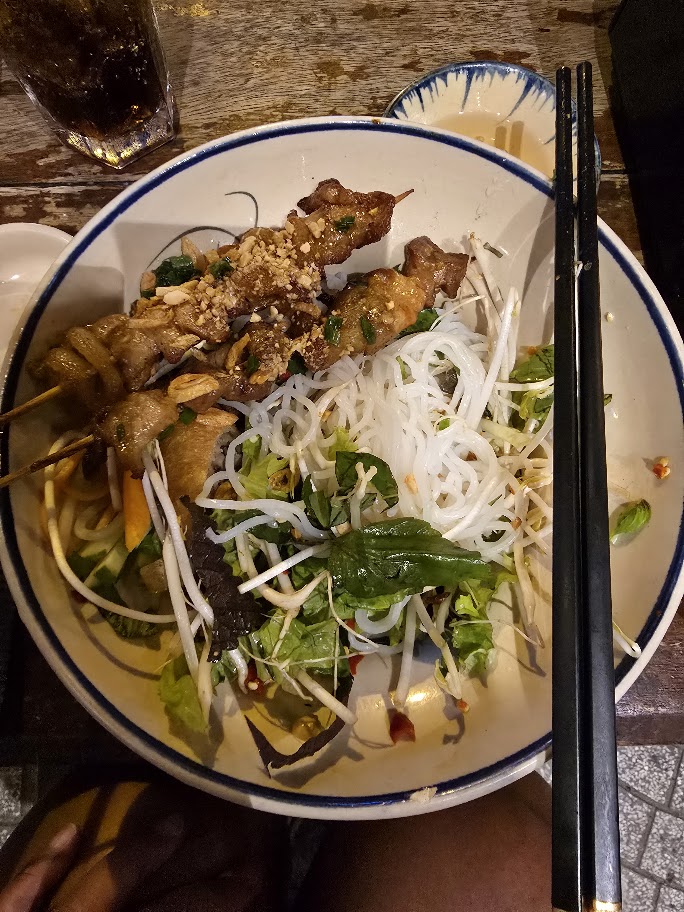
Getting a Grab in Ho Chi Minh was quick and easy, so I made it to my accommodation without any hassle. I checked in at 9 Hostel and Bar, and for dinner, I ordered Bún thịt nướng and nem nướng (grilled pork with vermicelli) for 79,000 VND (around PHP 170). The dish was packed with flavor—Vietnamese food in Saigon truly never disappoints!
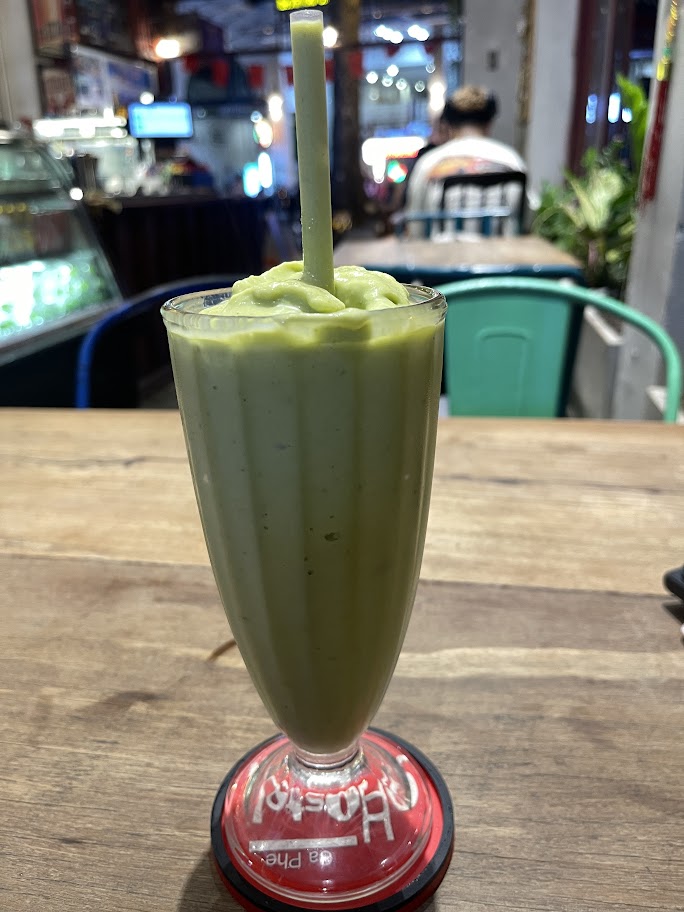
To end the day on a refreshing note, I grabbed an avocado shake before calling it a night. More about my Saigon food adventures in my next blog!
Vientiane, once a French trading post, is undeniably laid-back. As the capital and largest city of the Lao People’s Democratic Republic, it doesn’t overwhelm you with a long list of attractions or fast-paced activities—and that’s exactly what gives it its charm. I genuinely enjoyed my time here. While temple-hopping isn’t usually my favorite thing, it was still a nice experience to see them up close. What I loved most was the slow, peaceful vibe of the city. I’m already looking forward to returning and exploring more of Laos—especially the provinces—next time via their high-speed trains.
Love,
Maria,sometimes,Niskie
 Finding Maria
Leave a comment