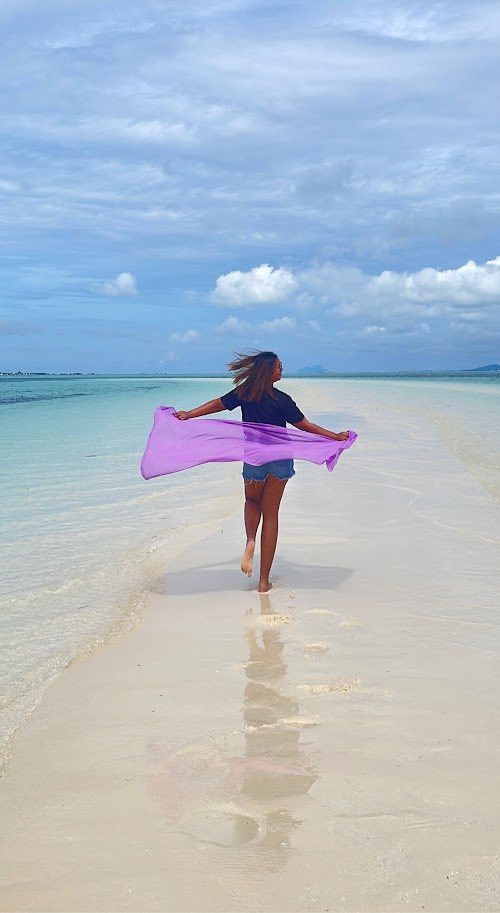
Zambasulta is unforgettable—hard to reach, breathtaking views, and one of my best adventures in the Philippines. Oh, and yes… I survived a RORO ride! Read my blog!
Disclaimer: All views expressed on this blog are my own based on my own experiences and do not represent of any entity with which I have been, are now or will be affiliated
September 12, 2024
Batangas, Philippines
Date of Trip – August 21-27
This backpacking trip includes the following provinces- Zamboanga City, Basilan, Sulu and Tawi-Tawi.
I love exploring the Philippines, not just because it’s my home, but also because Filipinos are the warmest people I’ve ever met. Filipinos have an extraordinary ability to smile even in the face of adversity, and this cheerful resilience is a core part of who we are. Perhaps part of the reason for our constant smiles is our proximity to beautiful beaches. With so many provinces lined with stunning shores, it’s hard not to smile when you’re surrounded by the beauty of the water.
I was excited to be part of this Mindanao backpacking trip because getting to these provinces is quite challenging due to their remote locations and historical events. I had always wanted to visit them, anticipating it would be the adventure of a lifetime, and it certainly was.
I’ll be sharing the itinerary and expenses for each province I visited.
Where is Mindanao, and what makes it significant?
Mindanao, the second-largest island in the Philippines after Luzon, is located in the southern part of the archipelago. It is bordered by the Celebes, and Sulu Seas.
Mindanao stands as a significant Muslim region within the predominantly Roman Catholic Philippines. Although Muslims are no longer the majority, Islamic culture remains prominent, with numerous mosques. Mindanao is home to the largest concentration of ethnic minorities in the Philippines, including Muslim groups like the Magindanao, Maranao, Ilanun, and Sangil, often collectively known as the Moro.
Due to its vast undeveloped fertile land, Mindanao has been regarded as the country’s “pioneer frontier,” with significant population growth occurring mainly after migration efforts were promoted in the mid-20th century.
Things to Bring/Note:
1. For this backpacking trip, comfortable shoes is essential since you’ll be doing a lot of walking and adventuring.
2. Cash, since these are remote provinces, getting cash through ATM may be difficult
3. Umbrella and portable fan—given the unpredictable weather (it might rain or get very hot), having both of these is essential.
4. Swimwear in these predominantly Muslim provinces should be modest, so it’s best to choose swimwear that covers the shoulders and extends below the knees. I did see one person in a bikini, but I wouldn’t recommend drawing attention by wearing such attire.
5. Detergent bar or powder—since this is a backpacking trip, finding a laundromat can be challenging, so you’ll need to do your laundry at your accommodations.
6. Extra shirts
7. Toiletries, mosquito repellent, alcohol, tissues, and wet wipes—it’s best to be prepared in case you don’t have access to a shower.
8. Blanket, towel
9. Exercise patience, as most provinces have unreliable or intermittent internet connections. Even if accommodations offer piso WiFi, getting a stable connection can be challenging.
10. As a tourist, it’s important to respect the local rules and regulations.
11. As this is a backpacking trip, you should expect to stay in places without the full range of hotel amenities and transportation. If you’re looking for 5-star accommodations, private transportation, this trip may not suit your preferences.
12. Please don’t expect Michelin-starred restaurants, as these are rare in remote islands or provinces. Instead, savor the local cuisine prepared by residents and experience the culture through street food.
13.If you’re backpacking, be prepared to encounter a diverse group of people with varying tastes, share facilities like toilets, and sometimes deal with hostels lacking running water. Embrace the experience with an open mind and a relaxed attitude.
Budget – PHP13,500 for the 7 day backpacking trip excluding flights, food and pasalubong
Day1 August 21 (Wednesday)
NAIA Terminal 3
I stayed overnight at the office to catch an early flight today. Despite arriving two hours early, there was a long check-in line. I hadn’t checked in online, thinking you only get the boarding pass at the counter if you need to check bags. I found out you can get a boarding pass online even if you need to check in bags. I need to confirm if this differs for international flights, as it seems you only get the boarding pass after checking in bags at the counter for international travel, even if you checked in online. *I flew with Cebu Pacific
After checking in my bags, I enjoyed coffee and breakfast. When I tried to use the ATM, it was out of service, so I decided to wait and withdraw cash when I arrived in Zamboanga City. I then met up with my Adpengtures friends—some of whom were familiar faces (three of them I had met on previous trips with this group) and others who were new to me.
The airport bus arrived on time to take us to our plane. The trip was smooth, with no delays or issues, and we landed in Zamboanga City as scheduled. I’m excited to start exploring this new place.
Zamboanga International Airport
The airport was small, but it was adequate for domestic flights and had a conveyor belt and CR. After retrieving my bag, our van service picked us up for our first tour.
Zamboanga City
Zamboanga City in the Philippines is believed to have derived its name from the Malay word “Jambangan,” which translates to “flower garden.” It is also known as “Asia’s Latin City” because of its Hispanic influences, reflected in the Spanish-colonial architecture that remains visible today.
Zamboanga City is geographically located within the province of Zamboanga del Sur but operates independently as a Chartered City.
One of the city’s defining symbols is the Vinta. These boats are more than traditional sailboats; they represent a vital part of Zamboanga City’s cultural identity. They stand as a living testament to the city’s rich sailing heritage and embody the resilience, creativity, and pride of its diverse community.


Here is My travel Itinerary for Day1

- Stopped for breakfast to try Satti, a popular dish in Zamboanga that comes from the Tausug community, known for their tradition of grilling meat on skewers. This dish features a piquant sticky soup with rice cooked in a coconut leaf, served with grilled beef or chicken skewers. While it’s an interesting taste and enjoyable to try occasionally while traveling, it’s not something I’d choose regularly.
Cost – PHP185-250 combo meal (1 barbecue chicken, 3pcs satay and 3 beef sticks)

2. Merloquet Falls – We traveled two hours from the city proper to reach this waterfall. From the drop-off point, we had to descend over 300 steps to get to the falls. Although the water was quite muddy due to recent rain, the two-tiered falls were still beautiful. After a few minutes of admiring the waterfalls, we began our ascent. The intermittent rain made the stairs very slippery, and the intense heat with no breeze forced us to take frequent breaks.

3. We visited the Sadik Grand Mosque, which is still under construction. It’s going to be the largest mosque in the Philippines once it’s completed. I’ve always admired mosque architecture, especially after my visit to Brunei where I saw some truly stunning mosques that felt like they were straight out of an Aladdin story! I’m excited to see how this one turns out in the Philippines.

4. We then arrived to see Rainbow Mosque. The mosque features a vibrant exterior with bright colors that symbolize peace. The seven hues of the dome represent the diverse cultures, religions, traditions, and beliefs of Zamboanga City’s residents, who live harmoniously together. These colors also reflect Zamboanga’s identity as a colorful, multicultural destination.

5. We arrived at our final destination in Yakan Village, where I purchased a blanket for 600 PHP in preparation for sleeping on a boat (roro). The Yakan Weaving Village is an important heritage site known for its handwoven textiles, which feature vibrant colors and geometric patterns. The tribe’s weaving, crafted from pineapple and abaca fibers, reflects their resilience and pride after moving from Basilan. While traditional dyes are still used, they are now complemented by chemical dyes to improve the quality of the textiles.
Here we are, heading to Sulu via roro. It’s not my first roro ride, but it is my first time sleeping on one, so I was curious about the experience. After buying our tickets, we boarded the Aleson boat and I carried my luggage up to our room without hiring a porter, despite the affordable cost. When I saw the room, I was shocked—it was crowded and felt like an evacuation scene from a war. It was also very hot, and I wasn’t sure I’d be able to bathe, but fortunately, there was a toilet onboard. I met a friendly 70+ traveler who shared her stories, which made me feel less alone. With my alcohol (isopropyl not beer) and portable fan, I managed to sleep comfortably after a shower. However, I was woken in the middle of the night for a ticket check, which I wish had been done earlier.


It was an eye-opener to realize that people endure this every time they return home, especially given that this is the most affordable option. I wondered how they manage to sleep in such conditions without air conditioning. It must be incredibly challenging to face this regularly, with few alternatives but to ride the roro. If I were alone on this journey, I might have been tempted to cry and head back to Batangas. It was a really wild adventure. I once thought sleeping in a tent during typhoon in the middle of the forest was the craziest experience, but this one rivaled it.
You can watch the video of the experience here.
Day2 August 22(Thursday)
Sulu
We’ve finally arrived in Sulu! I never imagined I’d actually land here and breathe the air of Sulu. It feels surreal, having only studied about it in my elementary Sibika at Kultura class. But here I am! I was initially hesitant to visit due to the historical issues surrounding Sulu, but exploring this aspect of their history was actually an integral part of the adventure—an exploration of their dramatic and complex past.
Here is My travel Itinerary for Day2

Sulu is a province in the Philippines located in the Bangsamoro Autonomous Region in Muslim Mindanao (BARMM), and it encompasses the Sulu Archipelago.
The name Sulu was previously written as Suluk or Soolook. The Malays (Malaysians) have historically used the term “Orang Suluk” to refer to the people of the region, which corresponds to the modern term Tausug.
Transportation in Sulu
I didn’t have the chance to explore their other transportation options, but I was fascinated by the unique pedicabs in Sulu. Known locally as “Sikad-Sikad,” these charming rides offer a distinctive glimpse into Sulu’s local transport culture. It was truly awesome to see such a different take on pedicab transportation! You can find the video here
Capital of Sulu – Jolo
Itinerary
1. Breakfast at Shara’s
After a 7 hour roro ride, we arrived in Sulu and we were greeted by our tour guide to have breakfast at Shara’s. We tried Bang Bang Sug and Sulu Coffee or Kahawa Sug.
Tausugs like to start with something sweet before enjoying their main savory dishes. While Filipino merienda in Luzon often features skewered sweet banana cue and “kakanin” (glutinous rice cakes), southern Mindanao offers unique glutinous rice cakes and deep-fried treats perfect for afternoon snacks.
The Tausugs call these “Bang Bang”—crackers and cakes that are usually baked or deep-fried. They are known for their all-day celebrations and make sure guests have plenty of bite-sized, mostly sweet treats.
The Tausug people also enjoy their distinctive Kahawa Sug coffee, a single-origin varietal from the Sulu Archipelago. Traditionally, they pair it with “bangbang” (snacks) or “latal” (a platter of native dishes). Hot coffee is served with an extra empty cup for pouring back and forth, which cools the coffee and enhances its flavor.
The sweet cakes here taste similar to the kakanins found in Luzon, though most include sweet shredded coconut. I enjoyed many of them, and the coffee was excellent as well.
You can find the video here.
2. Stopped by the Jolo Town Hall to check in our belongings and take photos.
3. Mang Sali Beach Resort
Mang Sali Beach Resort in Parang, Philippines, is nestled in the charming town of Parang. The beach in Sulu was so enchanting that it felt like discovering a hidden paradise. I couldn’t believe I was finally standing on the shores of the Sulu Sea—what a dream come true! Although we only had a brief stop to explore the area, I was thrilled and even treated myself to a refreshing coconut juice for just PHP 50!
You can find the video here


4. Parang Beach Resort
After a brief drive, we arrived at Parang Beach Resort. Despite the rain, I couldn’t resist taking a swim in the Sulu Sea! The beaches here were spectacular, and the seawater was noticeably saltier than in other parts of Luzon or Southeast Asia. This higher salinity is likely due to variations in ocean currents, reduced freshwater input, increased evaporation, local geography, and human activities. I was also surprised to see goats roaming around instead of the usual dogs found on other beaches in Luzon.


6. Alano’s Grill – We had lunch here and were surprised to find dishes similar to those in Indonesian and Malaysian cuisine. While it’s worth trying, the seafood we sampled was not fresh and didn’t taste good. I wouldn’t recommend their seafood dishes. Keep in mind that cafeteria options in Sulu are limited, so it’s better to choose other menu items besides seafood.
7. Sulu Provincial Capitol – Located in the heart of Jolo, the capital of the province, the Sulu Provincial Capitol is renowned for its Moorish-inspired architecture and golden domes, making it one of the most stunning capitol buildings in the country.

We made a quick stop to take a photo with the “I Love Sulu” sign. Although I’m not usually a fan of “I Love” photo ops, finding them somewhat cliché, I was surprised to see how many people enjoyed snapping pictures with these signs. I took a photo here just because everyone else was doing it. Haha!

8. Sulu National Museum
A short walk from the capitol leads to the Sulu National Museum. This two-story building, formerly the Provincial Museum and Library of Sulu, offers a fascinating glimpse into the culture and heritage of Sulu and its cultural significance in Mindanao. I enjoyed learning more about the region’s rich history and traditions.


9. We stopped by the Cathedral of Our Lady of Mount Carmel, commonly known as Jolo Cathedral, a Roman Catholic church in Jolo with a rich history. Unfortunately, we couldn’t enter the church due to a tragic bombing incident five years ago that resulted in several deaths. The church stands amidst a backdrop of violence, as Sulu is a predominantly Muslim province, yet it remains a significant symbol. I hope these kind of violence ends so that Sulu, a beautiful town, can truly thrive. You can see INQ news here and BBC new here

10. It was time for dinner, and although I can’t recall the name of the place, I enjoyed my mango shake and meal. Afterward, we headed back to the roro to return to Zamboanga. The roro fee was included in our tour package, but unfortunately, the Montenegro Shipping Line experience was far less comfortable than Aleson Shipping Lines. We were packed closely together while sleeping, and I was relieved to be sharing a bunk with someone I knew, though I couldn’t imagine how awkward it would have been with a stranger. The restroom had no shower and was almost always occupied, and the bunk beds lacked safety covers, making them risky. Overall, I didn’t like this shipping line, but we had no other options.
Fortunately, after an 8-hour roro ride, we arrived in Zamboanga City just in time to witness a beautiful sunrise.
Day 3 August 23 (Friday)
Malacañang moved Ninoy Aquino Day from Wednesday to Friday, August 23 News here
Zambaonga City and Tawi-Tawi
Without having had a chance to shower, we first visited Fort Pilar before heading to Sta. Cruz Island in Zamboanga City, and then on to Tawi-Tawi for our flight.


Paseo Del Mar/Fort Pilar – Fort Pilar, De Vera’s masterpiece, was abandoned in 1663 and later rebuilt in 1718. For centuries, it defended against attacks from Moros, Dutch, Portuguese, and British forces. After falling into disrepair post-World War II, the National Museum of the Philippines restored it to its former glory.
What I really enjoyed about this place was the pigeon feeding. It was amazing to see pigeons flying overhead. I paid PHP 10 for their food, which allowed me to feed them and capture some great photos while they soared around me.
Sta. Cruz Island – Sta. Cruz, an island off the coast of Zamboanga City, is renowned for its stunning blue waters and a beach with delicate, pink-tinted sand. While I couldn’t verify the pink hue myself, I was truly enchanted by the beach’s beauty. Even though I didn’t swim, visiting was a delightful experience. The highlight was exploring the mangroves, which turned out to be the most educational tour I’ve ever had, thanks to an informative guide and enthusiastic student volunteers. I also had a tranquil moment holding stingless jellyfish, which was both serene and memorable. Taking photos in a vinta during our final stop in the mangroves was a great touch. I look forward to riding a vinta during their regatta festival on my next trip.,
Knickerbocker – The knickerbocker offers a local variation of the classic Filipino dessert halo-halo, with chunks of fresh fruit as the main ingredient. While it’s enjoyable, I would have preferred more crushed ice, similar to halo-halo. I also love sampling regional delicacies when I travel, as they offer a unique twist compared to what we have in Luzon.
More in this video


We caught our flight to Tawi-Tawi, which took 55 minutes. To reach Tawi-Tawi, you first need to fly from Zamboanga City.
Tawi-Tawi
Finally we arrived in Sanga-Sanga Airport in Tawi-Tawi with no delays. I found it very interesting that there was no conveyor belt in the airport, it’s probably because of the size. So we waited outside so it will be transported to us via other means like mini-truck with all our luggages.
I was amazed to find myself in Tawi-Tawi, located at the southernmost tip of the Philippines, ready to dive into the Celebes Sea! What had once been a topic of study is now a thrilling reality. It’s astonishing how experiencing a place in person can make the concepts and images from my imagination come to life in such a vivid and tangible way.
Tawi-Tawi, an island in the southwestern Sulu Archipelago of the Philippines, lies between the Celebes Sea and the Sulu Sea. Once part of Sulu, it became a separate province on September 11, 1973, with Bongao as its capital. Tawi-Tawi is noted as an early center of Islam in the Philippines.
The Sama Badjaus, known as the “Sea Gypsies” of the Sulu and Celebes Seas, live along Tawi-Tawi’s coasts and on houseboats. They are expert fishermen, divers, and navigators, trading their catches for farmed produce and making repairs to their boats. Their unique cultural practices include ritualistic sea immersion of newborns and arranged marriages overseen by a chosen leader.
Due to regional conflicts, many Sama Badjaus have migrated to Sabah, Malaysia, and Sulawesi and Kalimantan in Indonesia, where they now form the second-largest ethnic group in Sabah, despite being largely undocumented immigrants.
Capital – Bongao
Dinner at Kah Tim’s
After settling into our accommodation, we headed out for dinner at Kah Tim’s. I was impressed by the restaurant’s view of the stunning karst formations and its paid Wi-Fi. Although the restroom was quite basic, with just a wooden platform and a hole for urination, I appreciated the restaurant’s dedication to showcasing Tawi-Tawi’s traditional dishes, fresh seafood, and culinary culture. This place is definitely a must-visit when in Tawi-Tawi.
We ordered freshly caught tuna, which they cooked and grilled for us. We also tried their traditional dish, tiyula itum. This Filipino beef soup is made with beef or goat, cooked with lemongrass, ginger, turmeric, and charred coconut meat. Although it looks black like dinuguan, it contains no blood; the color comes from the burnt coconut meat. It might seem unusual or intimidating, but the burnt coconut adds a rich depth of flavor. The dish was incredibly tender and flavorful—I could eat it every day! To top off the meal, I couldn’t resist trying their refreshing mango shake. I absolutely loved this place!
After our meal, we visited a few local grocery stores with very affordable prices. I also appreciated that Tawi-Tawi has a vibrant nightlife compared to other provinces we’ve been to.


Day 4 August 24 (Saturday)
Tawi-Tawi

Barter – The Municipality of Panglima Sugala, often referred to as Tawi-Tawi’s “food basket,” is the largest supplier of agricultural products in the province. Locally known as Adlaw Pagtabuh-tabuh or Market Day, Badjao communities from various Tawi-Tawi islands gather at Panglima Sugala Market every Saturday to trade marine products. They exchange seafood, shellfish, and seaweeds for vegetables and other agricultural goods. Visiting this local market gave us a rare glimpse into a barter system that has persisted despite the rise of paper money. The market was bustling, with products spread on the concrete floor and no tables, chairs, or price tags in sight. While modern marketplaces rely on price tags and scales, in this charming town, trust is the true measure. Witnessing the peaceful exchange of goods felt like stepping back to a simpler, bygone era.
Initially, I was disheartened by the large crowd who have kids with them and the muddy conditions, but despite the rain, it was uplifting to see the barter system thrive and preserve cultural traditions. Afterward, we headed to a local cafeteria. Although I was surprised by the dining venue, it was a good experience since it was part of the package. The food was similar to the traditional offerings we had encountered before.
More vide here.
Panampangan Island
Panampangan Island, located in the captivating Tawi-Tawi, is a hidden gem celebrated for its pristine beauty and untouched natural wonders. As the longest sandbar in the Philippines, it boasts a stunning expanse of fine white sandy beach within the Sulu Archipelago.
The island was absolutely breathtaking, and I was thrilled to see stilt houses where the Badjao live. It was a remarkable sight, though it required a two-hour boat ride from the barter market. Standing on the Philippines’ longest sandbar and being able to step foot in Celebes Seas was a dream come true!
We explored the island and enjoyed the freshest seafood, expertly prepared by Layag Tawi-Tawi Tour Services. It was my first time trying sea mantis, and I absolutely loved it!


Simunul
Just 45 minutes from Panampangan Island lies Simunul, renowned for hosting the oldest mosque in the Philippines. Established during pre-colonial times, this historic mosque is a significant cultural and religious landmark, offering a glimpse into the region’s rich heritage long before colonial influences arrived.
Upon arriving at the mosque, we found it crowded with visitors, so we initially headed to the Simunul Municipal Hall. There, we learned about a crocodile captured from Indonesia. I took the opportunity to use the restroom before returning to the mosque.
Masjid Shiekh Karimul Makhdum
Upon arrival, we had to wear appropriate clothing to enter the mosque, which can be rented for free near the entrance. I love trying on traditional attire when visiting different regions in the Philippines or across Asia, so this was a wonderful experience that allowed me to immerse myself in the local customs and learn more about their practices.


Sangay Siapuh– We made a brief 30-minute stop to swim, but the water was quite dirty, likely due to its proximity to the stilt houses. This prompted me to cut my swim short. Although it was disappointing, it was a necessary pause in our journey.
We came back to town proper, take a bath and ate for dinner this time we tried fresh catch fish.
Day5 August 26 (Sunday)
Tawi-Tawi
On our final day in Tawi-Tawi, I knew I couldn’t leave without hiking to its highest peak. After waking up, we set out for Bud Bongao.
Bud Bongao, the highest peak in Tawi-Tawi at about 340 meters above sea level, is revered as a sacred mountain. It’s a popular destination for both Muslims and Christians from across the province, who climb it to seek favors, spiritual healing, or safety.
Before starting our hike, we received colorful knots to tie on a wooden gate near the mountain’s peak, each representing a different wish. We also encountered several long-tailed macaques, which locals regard as the mountain’s guardians. During our ascent, we saw a group carrying a sick person on a stretcher, highlighting the mountain’s role in spiritual and physical healing. Near the peak, we found Tampats, or shrines used for prayer, and noticed impressive molave trees adding to the mountain’s mystique.

After our hike, we returned to our accommodation to collect our belongings and have breakfast, which consisted of corned beef and eggs—simple but satisfying. Once we had packed up, we set off for the Balobok Rock Shelter.
The Balobok Rockshelter was discovered by accident in 1963 when Mr. Assiong Bangali took refuge from a sudden rainstorm while fishing near the shore. The Balobok Cave, also known as the Balobok Rock Shelter, is an archaeological site in Lakit-Lakit, Bongao, Tawi-Tawi. It is one of the oldest human settlement sites in Southeast Asia, dating back 8,000 to 5,000 years. In the 1970s, it was used as a shelter by the Moro National Liberation Front (MNLF).

Tawi-Tawi Capitol, Masjid Raayat Mosque, Nurul Iman Islamic Center (Pink mosque inside the Mindanao University) and Pasalubong Center
We stopped at various mosques to take photos and visit the Pasalubong Center, where I bought a Tawi-Tawi refrigerator magnet and used the restroom. I’m not usually fond of taking photos at travel sites, as it doesn’t really resonate with me. If it were up to me, I’d often skip taking pictures because I find it uninteresting. However, since I was part of a group, I had to go along with it.


It’s time for our flight back to Tawi-Tawi. It’s hard to believe that our trip is already coming to an end. Despite the bittersweet feeling of leaving, I had an incredible experience in Tawi-Tawi and truly enjoyed my time there. I have a strong feeling that I’ll be back to explore more of this amazing place in the future.
More video of Tawi-Tawi trip here
We arrived on time at Zamboanga Airport, took a PHP250 taxi to our accommodation, and checked into Winzelle Suites in Zamboanga City.
After checking into the hostel, I noticed a strong, hospital-like smell, similar to Zonrox. Despite this, the affordability and the need for a place to sleep made it acceptable. We then went to dinner at Alavar. My new travel buddies and I ended up at a different Alavar restaurant near the coastline, when we should have gone to the main location, but it was still fine since we just have to hail another tricycle ride to the place. The tricycle ride for our group of four cost PHP125.
Alavar Seafood Restaurant Zamboanga City
Cost 1500-2000
Finally, I was able to eat curacha. Curacha is a celebrated dish in Mindanao, particularly renowned in Zamboanga. This spanner crab, also known as the red frog crab, is native to the waters of Zamboanga and Sulu. The restaurant’s signature dish features the key ingredient: Alavar sauce—a secret blend of coconut milk, crab roe paste (taba ng talangka), and a mix of spices. This unique sauce is a regional specialty that highlights the flavors of Zamboanga City.
The dish was incredibly flavorful; I could eat it every day. I’m sure my parents would have loved it too, especially my dad, who is a big fan of crabs.


After the delicious dinner, it was time for a much-needed bath and some rest before heading to our final destination, Basilan.
Day6 August 27 (Monday)
*official holiday in the Philippines commemorating the National Heroes Day
Basilan
We headed to Zamboanga Port via Aleson Shipping Lines around 5:30 in the morning. After being picked up by bus, we boarded the ship, which was not air-conditioned and cost PHP120. The seating was unassigned, making it quite cramped, with people pushing to find a seat. I struggled to find a comfortable spot, having to move three times before I finally found a cushioned seat where I could breathe more easily amidst the crowd.
The journey from Zamboanga to Basilan takes about 1.5 hours, and we arrived around 9:00 a.m. This timing is due to the scheduled departure, with the ship leaving Zamboanga Port at around 7:30 a.m.


Basilan
Basilan, an island province in Mindanao, lies just south of the Zamboanga Peninsula. It is the largest and northernmost island in the Sulu Archipelago. The people of Basilan are called Yakans. The Yakans, concentrated in Tipo-tipo, Lamitan, Sumisip, and Tuburan on Basilan Island, are also found on Sakol, Malanipa, and Tumalutad. The term “Yakan” means “Dayak Origin,” reflecting their descent from the Orang Dyaks of eastern Indonesia. They speak a Sama dialect and are culturally influenced by the Tausug.
Capital – The Philippine Statistics Authority classifies Isabela as statistically independent from Basilan, which led the provincial government to relocate the capital to Lamitan.
Isabela, Basilan
Isabela, officially the City of Isabela, is a 4th class component city and the de facto capital of Basilan, Philippines. Known colloquially as Isabela de Basilan to distinguish it from the province of Isabela in Luzon, the city is part of the Zamboanga Peninsula region rather than the Bangsamoro Autonomous Region in Muslim Mindanao (BARMM).
I was amazed to finally reach Basilan. Despite its political challenges, I was impressed by its progressiveness compared to Sulu. I was also pleased to find a Jollibee here—a rare sight, where we enjoyed a Coke float (a mix of Coke and sundae).
After having breakfast at Font and leaving our belongings there, we visited the provincial capitol and Sta. Isabel Cathedral, which were conveniently within walking distance from each other.


We boarded a boat for a short 15-20 minute ride to Malamawi Island, just off Isabela Port. As soon as we arrived, I was struck by the island’s stunning beauty—pure white sand and crystal-clear waters that brought Boracay to mind, though with a shorter coastline. I absolutely loved this place and hope it continues to develop so that more people can safely enjoy the charm of Basilan.
After swimming and soaking in the island’s beauty, we had lunch here. The only downside was the open shower area in the toilet, but given that this is all part of the adventure and backpacking experience, I managed just fine without it since I was still in my clothes while showering.


Lamitan, Basilan
After basking in the sun and swimming at the scenic Malamawi Beach, we proceeded to our next stop in Lamitan.
Lamitan, officially the City of Lamitan, is a 6th class component city and the official capital of Basilan, Philippines. Lamitan is derived from “Lami-Lamihan,” which means a blend of merrymaking and conference.
Sitti Auna
Situated 30 minutes by van from Malamawi, we’re spending the night at Sitti Auna Riverland Resort. The resort offers a swimming pool and cozy bunk bed accommodations. I’m delighted with the good running water and excellent coffee here—it’s just what I was hoping for. Although the Wi-Fi is only strong outside the rooms, it’s a minor issue in an otherwise perfect stay.
After settling in, we enjoyed a delightful dinner and some lively karaoke. It was the perfect way to end a long day. The meal was sumptuous, featuring a local delicacy called snail gata, or sibilan—snails cooked in rich coconut milk. It was incredibly satisfying, and I absolutely loved this unique local dish!
Day7 August 28 (Tuesday)
Basilan
On our final day in Basilan, we enjoyed some coffee, gathered our belongings, and then made our way to our last destination on the island.
Angat Buhay Weaving Center
Former Vice President Leni Robredo inaugurated the Angat Buhay Weaving Center in Lamitan City, Basilan, supporting Yakan weavers. The term “tennun,” meaning “woven cloth” in Yakan, refers to their traditional weaving, often mistaken for embroidery by those unfamiliar with the process. I was impressed by this initiative to preserve Yakan culture and tradition. By visiting and purchasing their products, we supported the local community. For orders, you can contact Ezra here.
Tulip Garden – The artificial tulip garden is quite charming and perfect for photos. The flowers are crafted from discarded plastic bottles, giving them the nickname “forever tulips” due to their non-biodegradable nature. I also appreciated the inclusion of miracle fruit, or calabash fruit, in the garden. Known in the Southern Philippines for its impressive benefits, calabash fruit juice is celebrated for its potential to combat stroke, diabetes, and cancer.
A short walk from the garden leads to a rambutan-picking area where you can select and pick your own fruit to take home. I was impressed by the freshness, affordability, and delicious taste of the fruits in Basilan.


Bulingan Falls
Bulingan Falls, standing 21 feet tall and 40 meters wide, offers a distinct beauty unlike any other waterfall in the Philippines. Its unique charm lies in its unusual rock formation, where blocks of rock jut out from the falls, giving it a one-of-a-kind appearance that sets it apart from the many waterfalls across the country.
Seeing these falls was truly satisfying. Although I didn’t take a dip since we were heading home, I absolutely loved this cascade of waterfalls. It’s definitely a must-see in Basilan.

Public Market
We set out for our final stop to sample Yakan delicacies and observe their preparation. In Lamitan City, Yakan delicacies include Ja (lokot-lokot) and Panyam (or Panyalam). Traditionally served only on special occasions like weddings and Ramadan, these treats are now available daily at the public market. Panyam is a rice cake shaped like a full or crescent moon, while lokot-lokot is another rice cake, resembling a thread in triangular or conical shapes.
We also picked up fruits for pasalubong, including lanzones, mangosteen, and rambutan, which cost between PHP 50-200 per kilo.
Basilan video trip here
We headed back to Zamboanga for our flight back to Manila. But before that we headed over to Zamboanga City’s largest souvenir spot, the Canelar Barter Trade Center, lets you buy souvenirs for up to 20 people for just PHP 1,000.
More video of Zamboanga trip here
I’m deeply thankful that this trip came together, as I doubt I could have arranged it on my own. It’s been an amazing adventure, far beyond what I ever imagined for a true backpacking experience. This journey would never have come to life without the amazing support of my DIY friends from Adpengtures. Thanks to this trip, I had the chance to meet 12 incredible people who, together, set out to unveil the hidden gems of Perlas ng Silangan, our beloved Philippines. The experiences we shared will remain with me for a lifetime.


Love,
Maria,sometimes,Niskie
Leave a Reply