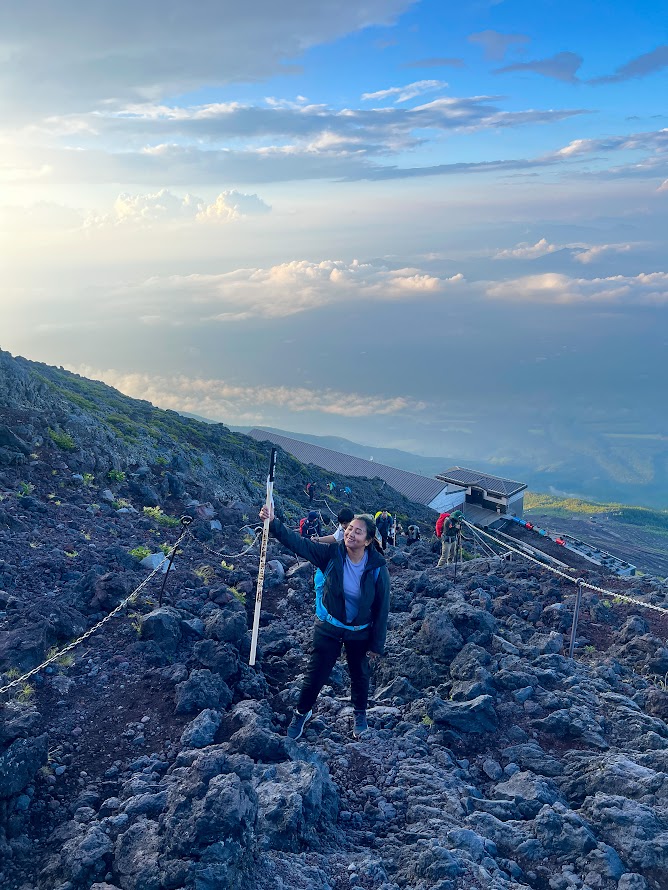
Climbing Mt. Fuji was breathtaking, challenging, and unforgettable—from sunrise views to every step along the trail. Curious what it’s really like at Japan’s highest peak? Read my blog!
Disclaimer: All views expressed on this blog are my own based on my own experiences and do not represent of any entity with which I have been, are now or will be affiliated
Sept 02, 2024
Batangas, Philippines
Date of Hike – August 08-09
At 3,776 meters, Mt. Fuji is Japan’s tallest peak, formed by volcanic activity that began around 100,000 years ago. Mt. Fuji has held spiritual significance for centuries and continues to be a profound source of artistic inspiration.
I have long wanted to complete the Asian Trilogy (Mt. Kinabalu, Yushan and Fuji) and this year I decided to hike the highest peak in Japan. My time in Japan was fantastic—it’s my favorite country, and I had an incredible experience hiking. It also happened to be during Mountain Day week (officially on Sunday, August 11, but celebrated on Monday, August 12), making the experience even more special.
When Is the Best Time to Hike Mt. Fuji?
Mt. Fuji is accessible to hikers from early July to early September, with peak season running from late July to late August. The trails are especially crowded during the Obon holidays in mid-August and may be closed due to rain or wind, so it’s important to plan your ascent carefully.
Many hikers choose a two-day trek, staying overnight at a hut halfway up the mountain and setting out for the summit early the next morning. This approach allows them to reach the top in time to witness the stunning sunrise.
Things to Bring –
Cash – There is no ATM in the 5th station, please bring cash as no one accepts credit card payments only select stores in 5th station
Water – Please note that there is no running water in Mt. Fuji and the restrooms are not connected to plumbing.
Hiking Shoes/Sandals – Please be aware that the descent can be slippery with loose rocks. If you have tight shoes, it’s advisable to wear sandals instead, but make sure to use socks with them. I followed this approach during my hike down Mt. Fuji.
Hat – I carried an umbrella during the hike, but it was not allowed because it could potentially injure other hikers if it were to accidentally poke them.
Sunblock for skin protection
Hiking Stick – You can purchase a hiking stick at the stores located at the 5th station. I suggest buying a shorter stick to avoid additional carrying costs in your luggage. I initially bought a longer stick, believing the store would cut it for me, but I later found out that this service is not available there. Hence, I added 1 more additional luggage for just a hiking stick.
Raincoat and jacket – The weather along the trail can vary significantly, with thunderstorms frequently occurring in the mid-afternoon.
headlamp, bonnet, headbuff or facemask
fleece jacket/down jacket, windbreaker/heattech– Layers and warm clothing are essential. Even in summer, temperatures at the summit of Mt. Fuji range from 2 to 5 degrees Celsius, so it can be quite chilly up there.
trash bag
Internet Connection
I was so impressed that all through out the hike, there was an internet connection!
Mt. Fuji Trails
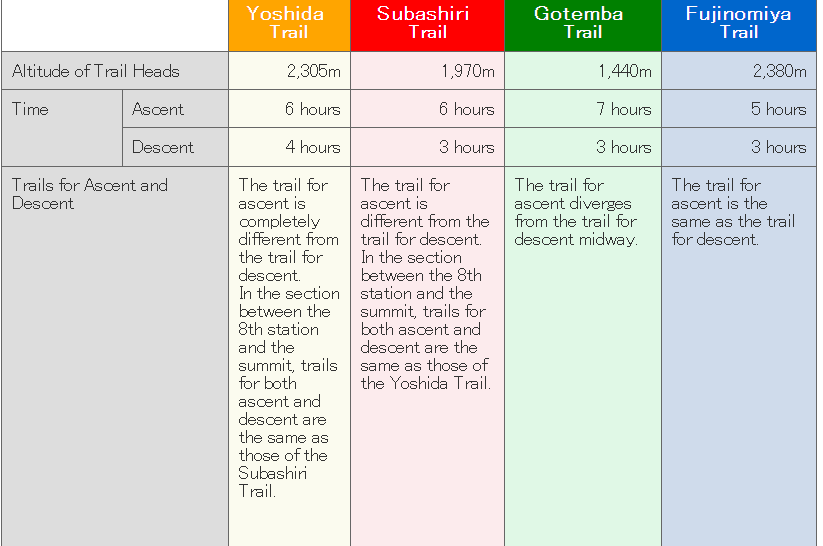
Mt. Fuji features four trails, and I hiked the Yoshida-Subashiri Trail. I can confidently say that the Subashiri section was a significant challenge for me. After a year away from climbing, the relentless ascent of Subashiri was particularly tough. You can find more details here.
Climbing Fee – I booked my climbing fee through an organizer named Ace Dapat, whom I would not recommend. I paid PHP19,000 for this hike knowing he only booked it via Klook. There were numerous red flags prior to the climb, such as his failure to recognize that guests had already paid in full and asking me for additional payment. Additionally, he requested that I receive something from his relative in Japan, despite our lack of prior acquaintance. During the climb, there were significant issues, including one of our team members getting lost on the trail. Despite being a small group of only four, he did not assist in locating her. His lack of leadership and teamwork was evident. The entire experience, from managing the hostels to missing the bus, was a disaster. It is incomprehensible how such an organizer operates. I will not work with him again due to his irresponsibility and recklessness.
With this experience in mind, I will be hiking Mt. Fuji again with friends whom I trust and who ensure that no one is left behind.
Please note climbing fee in Mt. Fuji now is 2,000 Yen or PHP769. Please note that you need to book mountain hut in advance. I’m not sure how much it will cost for a DIY just yet, but I’ll provide an update after my hike next year.
Accommodation before the hike
The organizer, Ace Dapat, booked a night at The Global Hotel Tokyo in Shinjuku for PHP1,372 per night in a female dorm room. While it was decent, it wasn’t my top choice due to its distance from major attractions in Shinjuku. The hotel is actually located near Korean markets.
Accommodation in Mt. Fuji
We stayed at the 8th station hut, which is the closest to the summit.
Things to Note
- It’s advisable to book accommodation near the 5th station if you’re taking the Yoshida trail route.
- Please note that restrooms are available at each station (5th to 10th) and cost between 100 and 300 yen. Carry cash, preferably coins, as you’ll need to drop them in a collection box. Paper money won’t be changed.
- The mountain hut at the 8th station is closer to the summit, so booking here is preferable. However, be aware that you cannot leave your belongings during the ascent.
- When you see the sunrise on the summit deck, keep in mind that it’s not the final summit. You’ll need to walk around the crater to reach the highest post office in Japan.
- It’s best to book bus in advance going back to Tokyo, but you can wait to book your return bus after the hike. Buses operate from 9 AM to 6 PM Japan time, so make sure to reach the 5th station before 6 PM.
- Bring wet wipes to freshen up, as there is no running water on Mt. Fuji—only recycled water is available.
- You can store your belongings at the 5th station reception in the tourism area, where you can also purchase hiking sticks and have a light meal. Please bring cash, as the café does not accept credit cards.
- There are no ATMs in the area, so make sure to withdraw cash while you are still in the city.
- Additionally, you will receive a registration tag that you need to keep until the end of your hike. It will be checked by personnel at the entrance gate before and after your hike to confirm your registration.
- You can ride a horse from 5th to 6th station for a cost of 40k yen or 15k pesos
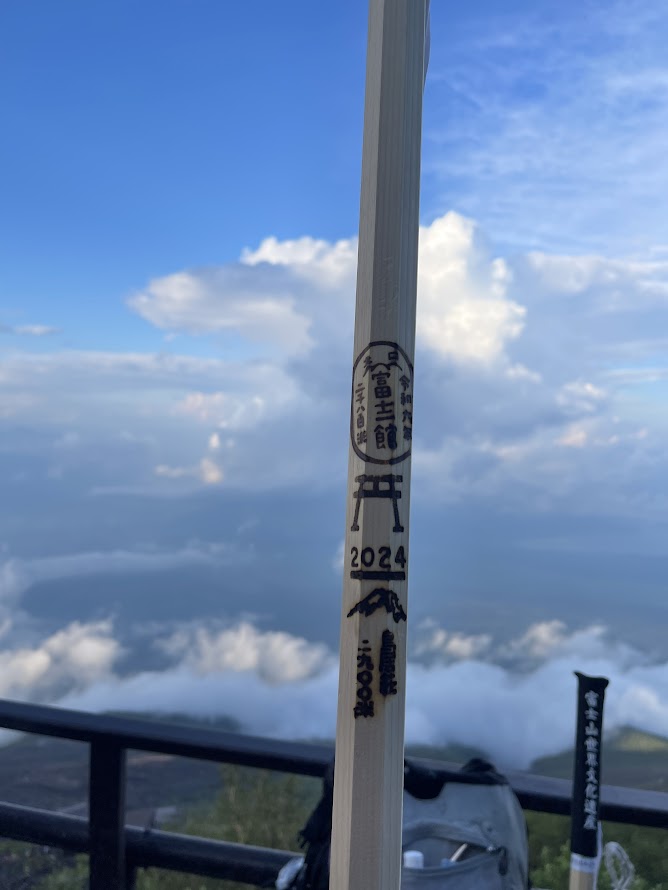
- Stamps for your hiking stick cost 300-500yen each or 100-200pesos
- There is rental gear available at the 5th station, so you can rent hiking clothes and shoes there for an additional cost if needed. I did not rent any, so I’m unsure of the exact prices.
- Luggage storage at the 5th Station costs ¥1,000 (approximately PHP 394). It’s generally more convenient to leave your luggage at your hotel—some offer this service for free or for an additional fee, depending on their policy. However, for this trip, I chose to carry all my belongings with me
- Please be aware that during hiking season, Mount Fuji can get extremely crowded, particularly at the 5th Station and along the trail from the 8th Station to the summit. Compared to other mountains I’ve hiked in Asia, Mount Fuji sees a significantly higher number of climbers attempting to reach the top
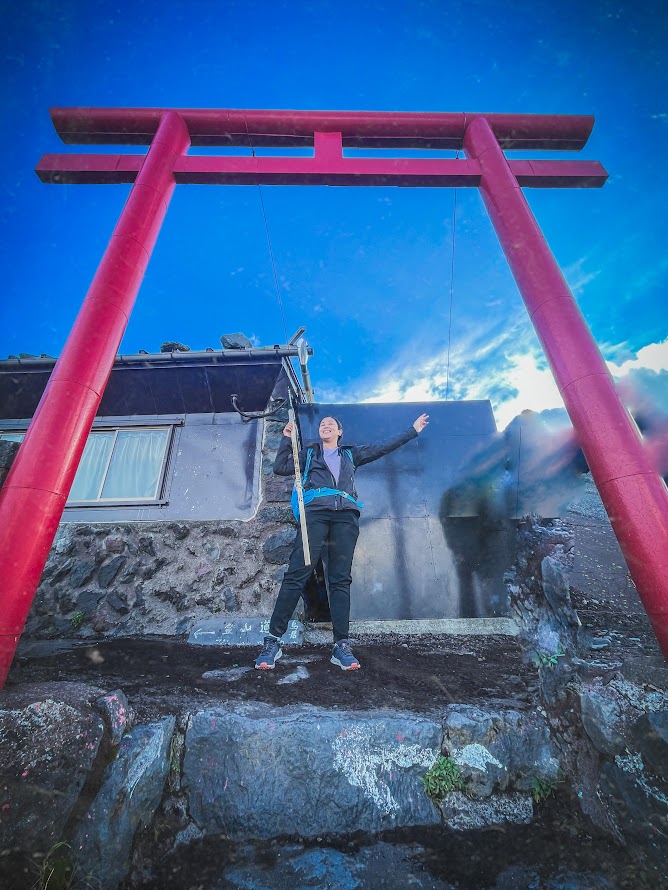
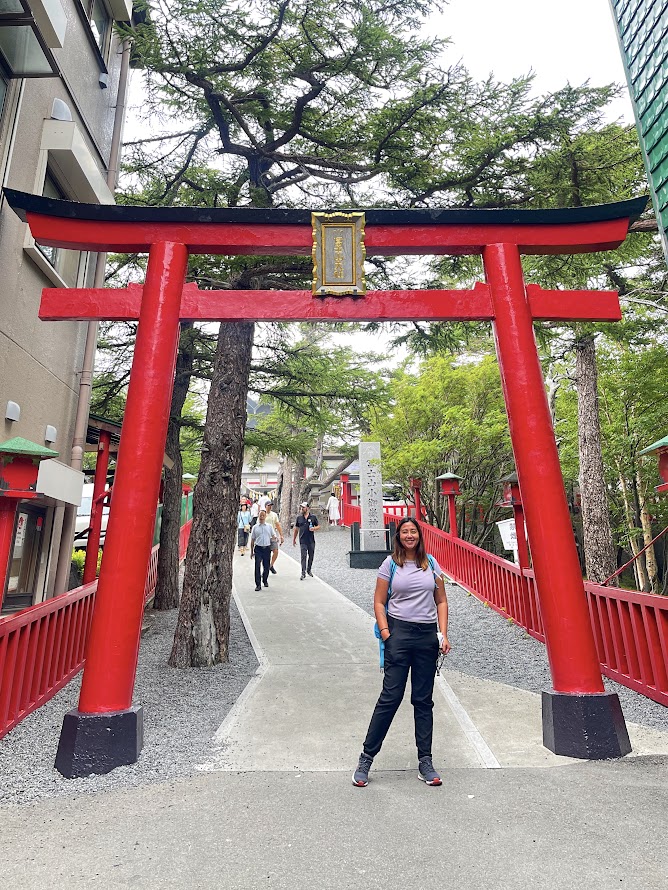
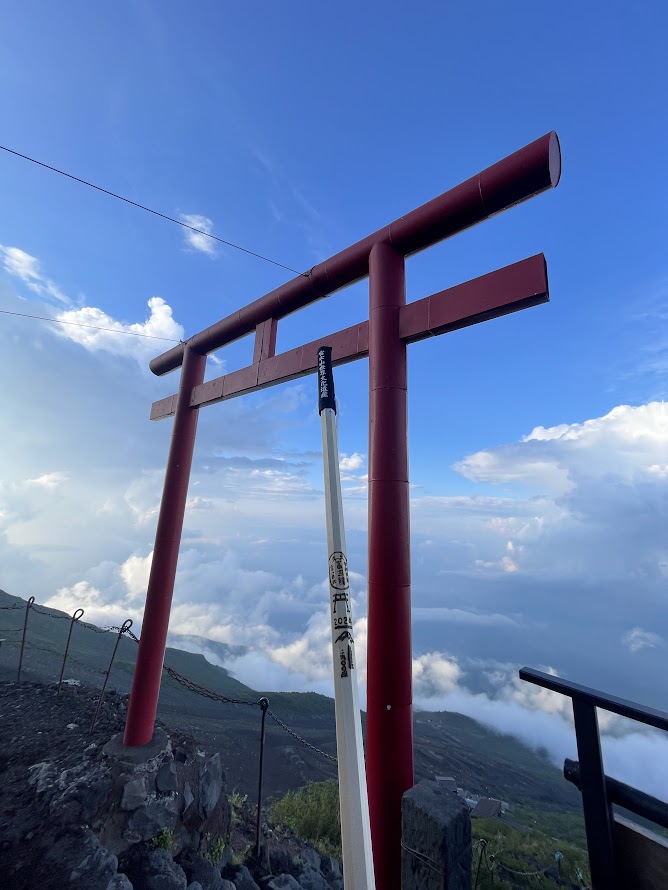
- Since Mount Fuji is a volcano, there’s very little shade along the trail—trees are scarce as you ascend. But what makes hiking here truly special are the unique experiences along the way: taking breaks to get your hiking stick stamped as a keepsake and passing through the iconic torii gates at each station add a cultural charm to the journey
Itinerary
Day1 August 8 (Thursday)
6:00am-8:00am We made a trip from the hotel to 5th station via bus. We waited for almost an hour before the bus arrives in Lawson Shinjuku near Shinjuku station
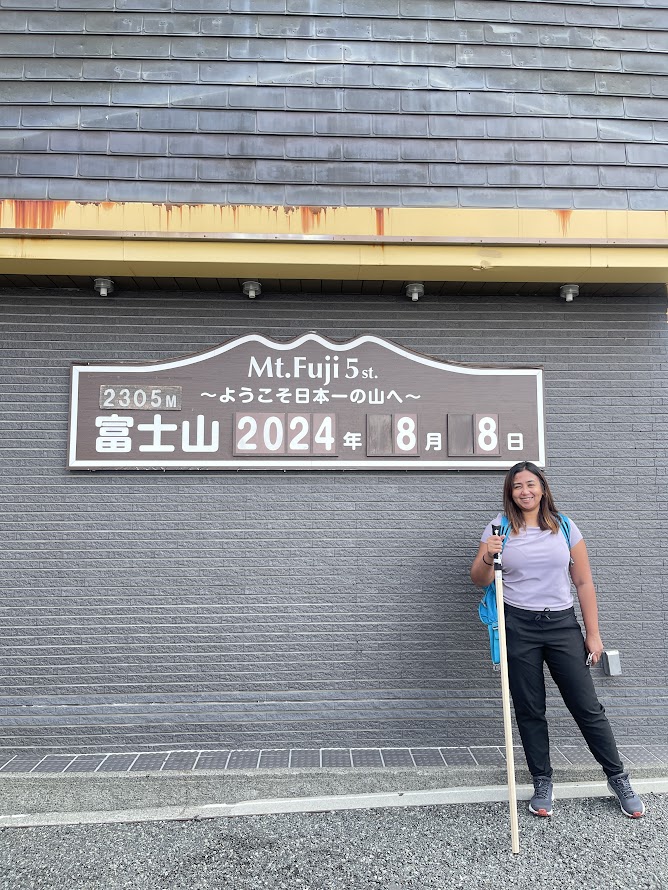
10:00am – Arrived at 5th station, left our luggage and ate at the restaurant
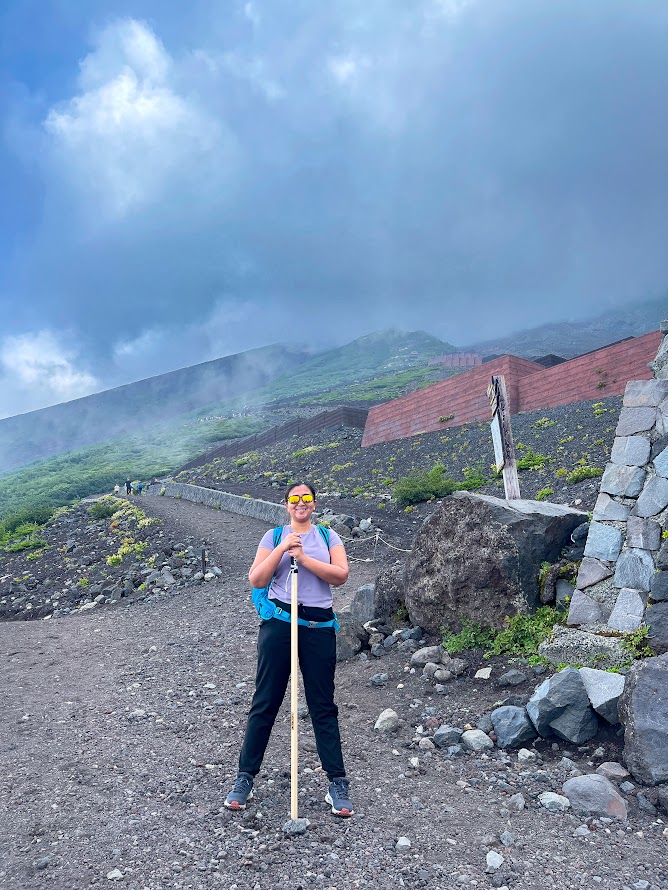
12:00nn – started our ascent
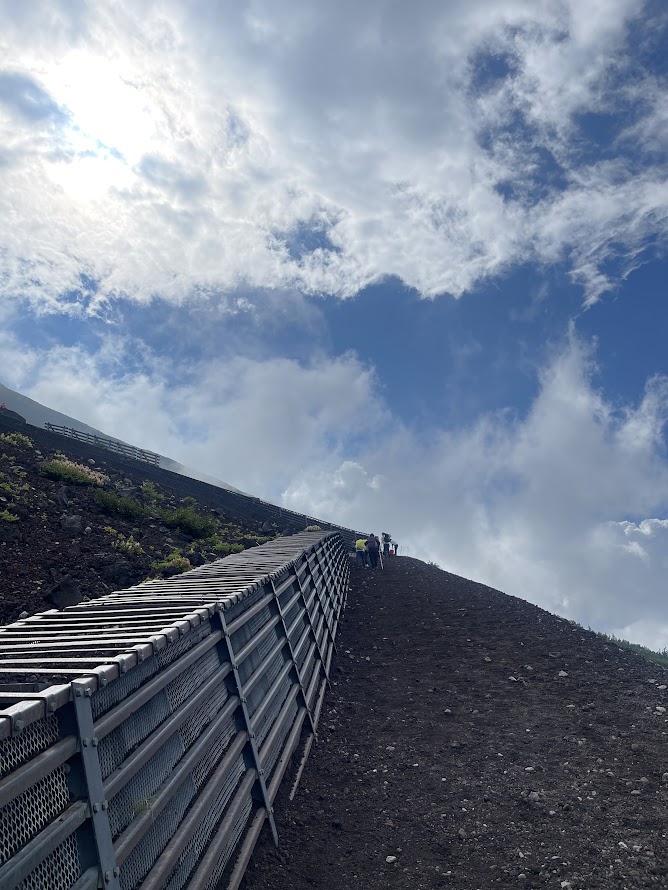
The trek was quite challenging; we took the Yoshida-Subashiri trail and finished around 10:00 PM. It was extremely tough, especially since I hadn’t trained beforehand, which slowed my pace considerably. I realized I need to lose weight to improve my performance and pace for future hikes. I initially thought Mt. Fuji would be a relatively easy trail, but I was mistaken. The experience was much more demanding than I anticipated from the videos I had seen.
I struggled to sleep and had to wake up around 1:00 AM to prepare for the summit. I wasn’t sure if I actually slept or just closed my eyes due to exhaustion from the earlier part of the hike. I only managed to get to bed by 11:30 PM, leaving me just an hour of rest, which made it quite difficult.
Day 2 August 9 (Friday)
1:00am As I prepared for the summit, I brushed my teeth outside the hut and got ready for the climb. It was quite cold at that time (5 degree Celsius), so be sure to have the proper equipment. The trek to the summit will take around 3-4 hours due to heavy foot traffic. Although this allows for some rest, the ascent remains consistently steep. It’s important to acclimate properly, as the climb becomes more difficult with thinning air as you near the top.
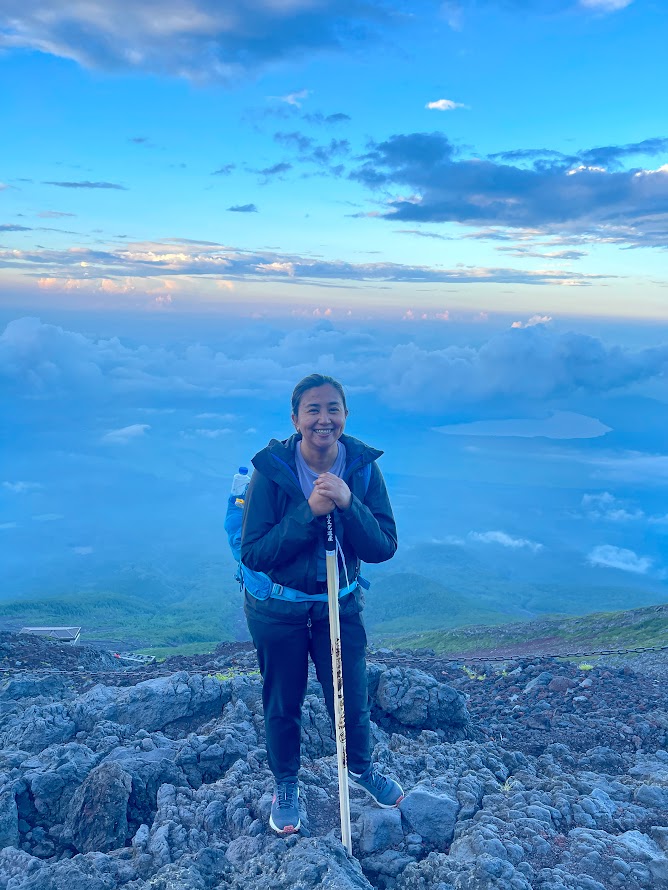
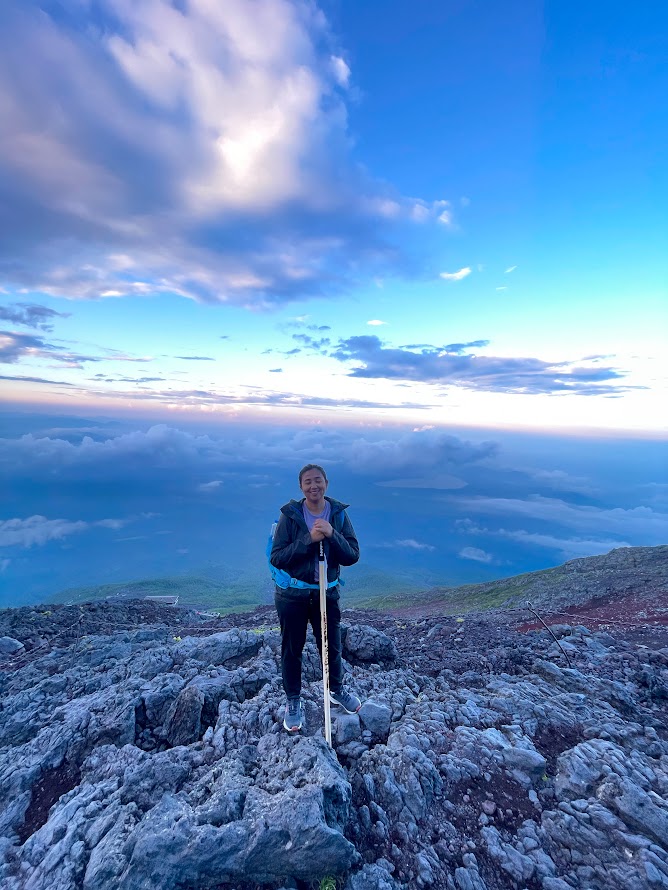
4:30am -At last, we reached the summit. I always get excited when I see torii gates, thinking it’s the final stretch, but there was more to climb. I was thrilled to finally reach the top of Mt. Fuji.
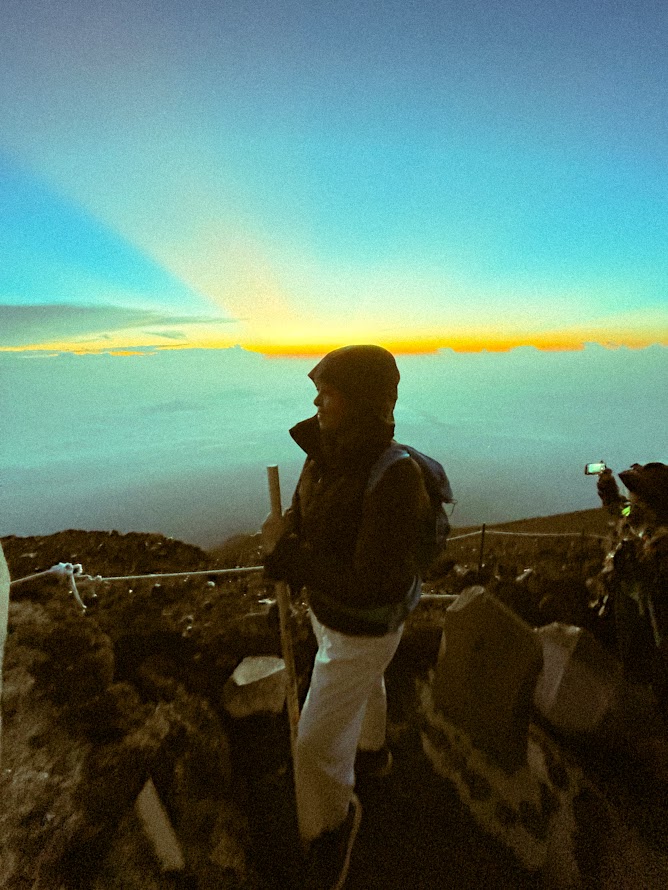
5:00am – Watching the sunrise from the highest peak in Japan was an incredibly beautiful experience, especially in the “Land of the Rising Sun.” I was unaware that there was still an additional hour of hiking required for the final leg of the hike (Kengamine Peak) so I chose to forego it and simply savor the moment. I was delighted to see the vending machine at Japan’s highest peak and have my hiking stick stamped there. Although I would have loved to visit the highest post office in Japan, I plan to return to experience it again.
Before beginning our descent, we had a meal. The descent proved to be quite challenging; I slipped a few times and had to switch from hiking shoes to sandals due to discomfort from my nails pressing against the tips of my shoes. The trail down Mt. Fuji consists of loose rocks and sand, making it easy to fall if you’re not cautious.
12:00nn – We made it to the 5th station, I was very tired, we missed our bus, the call time was supposed to be 10:00am and we had to cover the expense of the organizer who should have known about this. It’s so disorganized that we had to pay 3k yen or 1,154PHP/each going back to Shinjuku.
3:00pm – We reached Shinjuku station and decided to leave and went to Asakusa station where I will be departing for my trip to Nikko.
Accommodation in Asakusa
August 09-10 Hotel Plus Hostel TOKYO ASAKUSA 2 I stayed in a female dormitory room with a single bed, costing JPY 5,549.01 or PHP 2,134. I appreciated that the hostel had laundry facilities. The cost for laundry is 100 yen (approximately PHP 38) per 30 minutes. Most hostels, including the one in Asakusa, provide laundry soap in the washers, so you don’t need to purchase it separately.
The hostel was clean, conveniently located near Asakusa Tobu Station (where I’ll be departing for my next trip), and close to Sensoji Temple. Although it was very hot in Tokyo and I only ventured out at night, I thoroughly enjoyed my stay. I also liked that the hostel had an onsen bath, which was open for use. However, given the summer heat in Japan, particularly in Tokyo, I decided to skip this experience.
7:00pm – Upon checking in, I had dinner at Sansada Tempura, where I enjoyed a delicious special tendon (1k yen or 384php) that was incredibly flavorful. I also received an earthquake alert on my phone, which startled me with its loud notification. I was unsure how to react if there were a strong earthquake while I was outside. Despite this, I thoroughly enjoyed the tempura and had a wonderful time eating in Japan, where every meal has been an amazing experience.
9:00pm – I had a satisfying massage at Erawan Thai Traditional Massage in Asakusa. I enjoyed it so much that I slept exceptionally well afterward. The body massage, which included a foot massage, cost 7,000 yen (approximately 2,682 PHP) for 1.5 hours. I also gave a tip of 1,000 yen (about 384 PHP).
10:00pm – After retrieving my laundry, I took a rest to prepare for my next trip to Nikko.
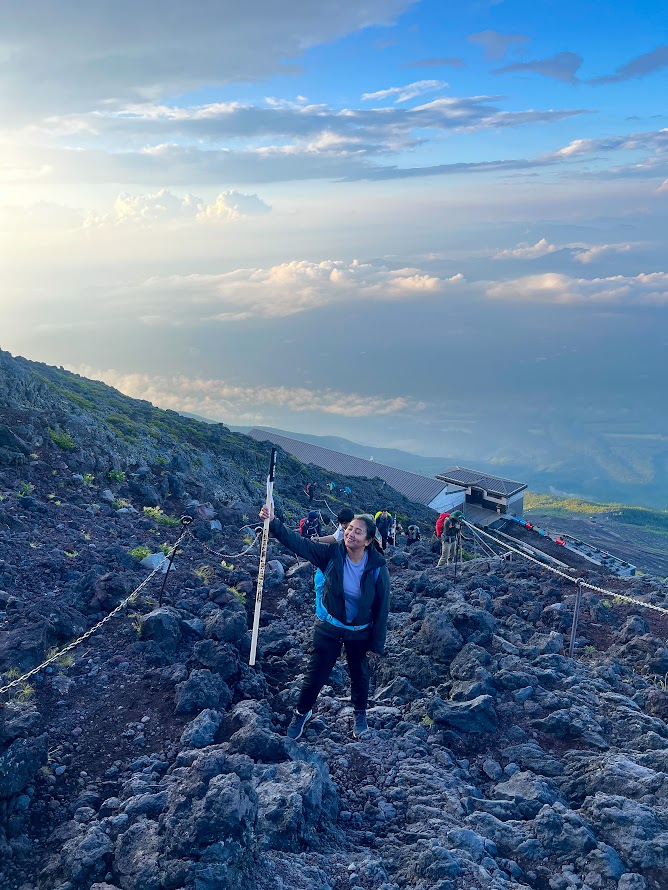
At 3,776 meters, Mt. Fuji stands tall, and conquering it via the Yoshida-Subashiri trail was an experience I’ll never forget! This marks the end of my Asian trilogy after four years, culminating with the highest peak in my favorite country—Japan. I began this journey with fellow adventurers who share my passion for mountains and exploration. Words can’t capture how elated I am and how incredible this mountain truly is.
You can see my Tiktok video here
Love,
Maria, sometimes, Niskie
 Finding Maria
Leave a comment