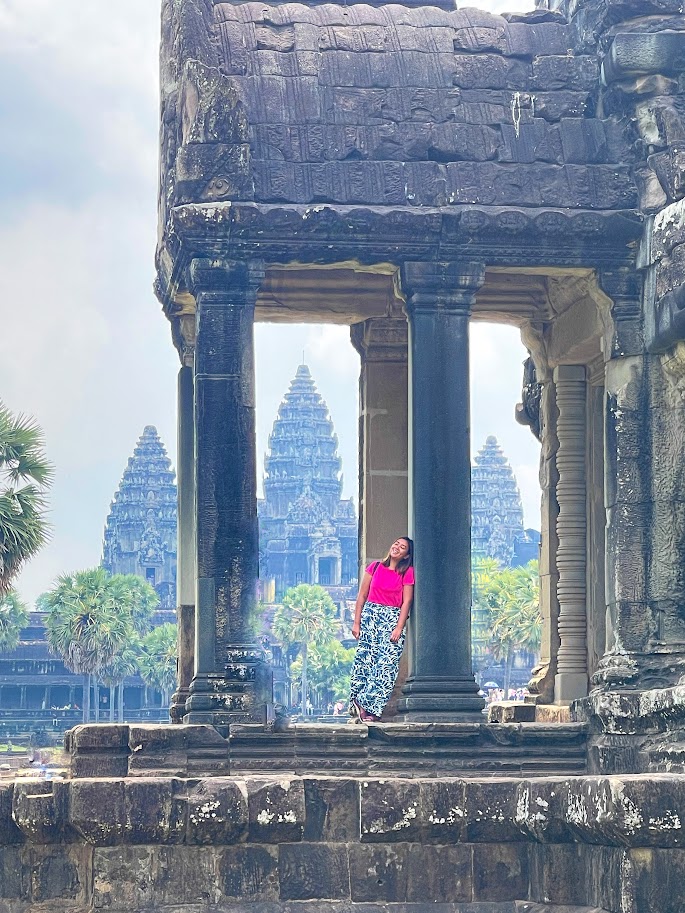
Siem Reap isn’t just Angkor Wat—hidden temples, bustling markets, and unforgettable local experiences await. Curious how to explore this Cambodian gem? Read my guide!
May 5, 2024
Batangas, Philippines
Date of Trip April 14-17
Siem Reap, a city in northwestern Cambodia, has a rich and diverse history dating back thousands of years. The name “Siem Reap” translates to “Defeat of Siam,” referring to a historical conflict between the Khmer Empire and the neighboring Siamese kingdom. It’s a popular destination for travelers seeking to explore the magnificent Angkor Wat complex, a UNESCO World Heritage Site and one of the most iconic archaeological sites in the world. Aside from Angkor Wat, Siem Reap offers a myriad of attractions including other ancient temples, bustling markets, delicious cuisine, and opportunities for cultural immersion.
I’ve been eagerly anticipating a visit to Angkor Wat, the breathtaking 12th-century temple renowned as one of the world’s wonders. Despite any obstacles, I was determined to make this trip happen. While all my journeys have their share of challenges, they always end up being among the most memorable experiences. My visit coincided with Khmer New Year, or Choul Chnam Thmey, a significant traditional holiday in Cambodia celebrated in April, following the harvest season. I only discovered that I was traveling on this holiday two days before my flight. This three-day festival is filled with ceremonies, rituals, and festivities. A highlight of the celebration is the symbolic act of pouring scented water, signifying the cleansing of past misfortunes and welcoming blessings for the new year. Despite getting soaked upon arrival, it was an unforgettable and enriching experience.
Visa Requirements
Philippine passport holders could stay up to 30 days “visa free” in Cambodia. But before traveling to Cambodia, make sure that your passport is valid for at least 6 months.
Flight Amount: There is no direct flight from Philippines to Siem Reap, so I flew first to Hanoi then headed over to Siem Reap
Hanoi to Siem Reap = 117.68SGD or 4,981PHP with 20kg carry-on
From Siem Reap, I flew to Da Nang for my Central Vietnam trip with my bff
Siem Reap to Danang = HKD1733 or PHP12,675 with 20kg carry-on
Things to Note:
1. All visitors entering or leaving the Philippines must register at the eTravel website at least 72 hours before the departure time. When it’s done, guests will get a QR code that they need to either scan or take a picture of and show when you leave the country.
2. At Hanoi’s Noi Bai International Airport, there are two security checkpoints: one before reaching Immigration and another after clearing Immigration.
3. Please ensure you arrive at least three hours before your flight as there may be long queues for both check-in and Immigration.
4. All travelers must submit the Cambodia e-Arrival Card no later than 7 days prior to their arrival. See link. Upon reaching Siem Reap International Airport, ensure that you have completed the Etravel Declaration form beforehand (I was unaware of this requirement and had to manually fill out a yellow form) before proceeding to clear Immigration.
5. Upon arrival at Siem Reap International Airport, there is an airport bus available for $8 USD or 220 VND (accepting both currencies), which will transport you to the town. It’s important to note that the airport is quite a distance from the city, as it took us one hour just to reach the city center.
Currency – The riel or USD are both accepted in Cambodia. I used both.
ATM and Exchange Rates – I prefer using the Gcash Card ATM over my local bank ATM (BPI) in the Philippines for withdrawing money because it provides exchange rates that closely align with those I find online. However, each withdrawal carries a $5 transaction fee. When I arrived, the exchange rate was 1 USD = 57 PHP. Fortunately, there are ATMs scattered across Siem Reap, so withdrawing money should not be an issue.
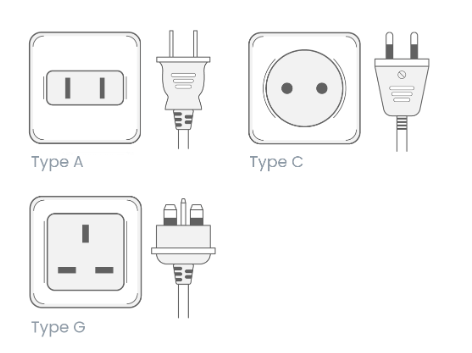
Power Socket – Type A, G and C 220V. It’s essential to carry a travel adapter with you wherever you go, as it can prove to be highly convenient.
Language – English and Khmer, not everyone can speak in English so better to use Google Translate
Religion – Majority of Cambodians are Buddhist
Weather – tropical and has two distinct seasons: the dry season, which runs from April to October and the wet season, which runs from November to March. When I arrived, it was way too hot with average temperature of 38-43 degree Celsius.
Time Zone – +7 GMT
Internet Connectivity – PHP 675.8. I’ve utilized an E-SIM, whenever I travel, and it consistently provides me with excellent connectivity regardless of my destination. I acquired a Southeast Asian E-SIM from Klook, intended for an 8-day duration. In hindsight, I realize I should have opted for the 12-day validity, as my travels within Southeast Asia exceeded the initial 8-day timeframe.
Transportation – In Siem Reap, transportation options like Grab, tuktuks, and private cars are readily available, making getting around hassle-free. I had no trouble booking Grab rides during my stay, and I found the Grab tuktuks particularly delightful! The standard rate for a ride usually starts at a minimum of $5.
Tour Organizer – I coordinated my Siem Reap temple tour with Seyha Chhim (I was a member of Cambodia travel group on Facebook and he happens to be one of the tour organizer members there), reserving a tour guide and tuktuk for a two-day period at a rate of $120 or PHP 6,857. It’s important to note that the Angkor Wat passes are not included in this package and must be purchased separately.I thoroughly enjoyed the experience and would probably recommend them to others. You can reach out to them on their Facebook page here .
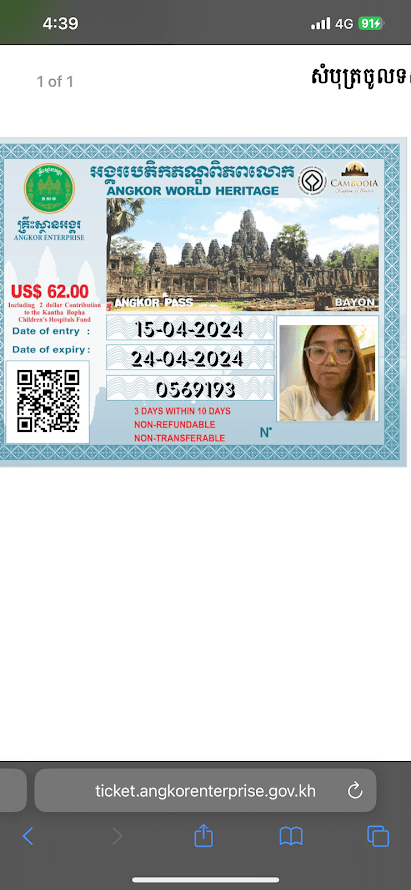
Angkor Wat Pass – 62 USD or PHP3, 542 for 3 days. I bought a 3-day ticket for Angkor Wat, anticipating my exploration and eagerness to see as much as possible. You can acquire your ticket here. Make sure to present the QR code (example below) as you pass each temple.
Laundry – They’re available across all of Siem Reap, including the hostels.
Clinics, pharmacy and stores– Absolutely, they’re all over the place. I even went as far as purchasing plastic covers for my phones and other gadgets because of the water splashing during the Khmer New Year festivities.
Things to Note:
1. During Khmer New Year, I recommend purchasing plastic covers to protect your belongings from the water splashing festivities that last for three days.
2. The weather in Siem Reap can be scorching, so be sure to pack an umbrella, cap, and apply sunscreen for protection. I even purchased an electric fan because of the intense heat, though I think a regular fan would suffice next time.
3. Be vigilant about the currency you’re using for payment. I made the mistake of paying 100USD, thinking it was 100kVND. It’s disappointing—I’ve been traveling for quite some time, yet I still managed to make such a silly mistake.
4. At hostels in Siem Reap, lockers are available, but not all of them provide their own locks and keys, so you’ll need to bring your own.
5. Exploring temples entails a considerable amount of walking, which can be exhausting, especially in the intense heat. Therefore, it’s crucial to bring water with you, wear appropriate clothing and sandals. Fortunately, my tuktuk driver, Mr. Hanoi, thoughtfully provided iced water bottles and cold towels during every tour to help us stay cool and refreshed.
6. During Khmer New Year, the water festivities typically begin around 5 pm and continue late into the night, with splashes of water everywhere. It’s crucial to be prepared, especially if you plan to attend a show. Consider booking a Grab car instead of relying on a tuktuk, and be sure to cover yourself if you prefer to stay dry. You can also consider purchasing a water gun so you can fully immerse yourself in the festivities and enjoy the fun of Khmer New Year.
Accommodation – I reserved two hostels for my stay in Siem Reap. However, due to the holiday season, the hostels are double the usual price and completely booked.
- Onederz Hostel Siem Reap April 14-15 – The cost for a night in a mixed bed is USD 20.62 or PHP 1,178. I’ve made a reservation at the hotel and will settle the payment upon my arrival. Although the standard check-in time is 2:00 pm, they kindly accommodated my late check-in at 9:00 pm. If you plan to arrive late, it’s advisable to inform them in advance for better coordination.
I’m quite fond of this hostel; it boasts a swimming pool and cafeteria, you can arrange tours and transfers from different locations within Cambodia and it remains peaceful during the night. My bed was comfortable, with soft pillows, and there was a convenient outlet nearby for charging. Each bed also had its own cover for privacy. Additionally, the room provided lockers with locks and keys. The shared toilets for both men and women are clean and equipped with dryers. Upon checkout, they even allow you to leave your belongings if needed. I would have liked to extend my stay here, but unfortunately, they were fully booked the next day, so I had to find alternative accommodation.
2. The Funky Village April 15-17 – I changed hotel after a night at Onederz for USD 35.20 or PHP2,012 for 2 nights. They accommodate late check-in. The usual check in is at 2:00pm and check out is 12:00nn. There is a 5USD security deposit and will be given upon check out.
This hostel differs significantly from Onederz. They offer lockers, but don’t provide locks and keys. Each floor has toilets, but they’re not well-maintained and lack dryers. Despite this, my bed was comfortable and had coverings for privacy. While the bed has an outlet, I prefer it to be beside me rather than above my head for easier charging. Although the hostel hosts parties at night, I rarely heard any noise. I appreciate that they offer private transfers from the hostel to the airport for USD15 or PHP857 and they also have different Cambodia tours to offer. The main downside of this hostel, aside from the toilet cleanliness, is that they turn off the air conditioning, which isn’t ideal in Cambodia’s hot climate and The private transfer car had minimal window shades, resulting in uncomfortably high temperatures inside the vehicle.
Food – will be covered per day
Day1 April 14 (Sunday)
I arrived from the Philippines at around 7:00 am feeling sleep-deprived and needing to wait eight hours for my flight to Siem Reap. Hungry, I decided to have Vietnamese food at BigBowl at the Noi Bai Hanoi Airport. Initially, I considered leaving the airport and visiting Hanoi’s Old Quarter, but the scorching 34-degree Celsius weather persuaded me to stay put and wait at the airport.
Noi Bai International Airport boasts cleanliness and a diverse range of food options, making it comfortable to spend some time there.
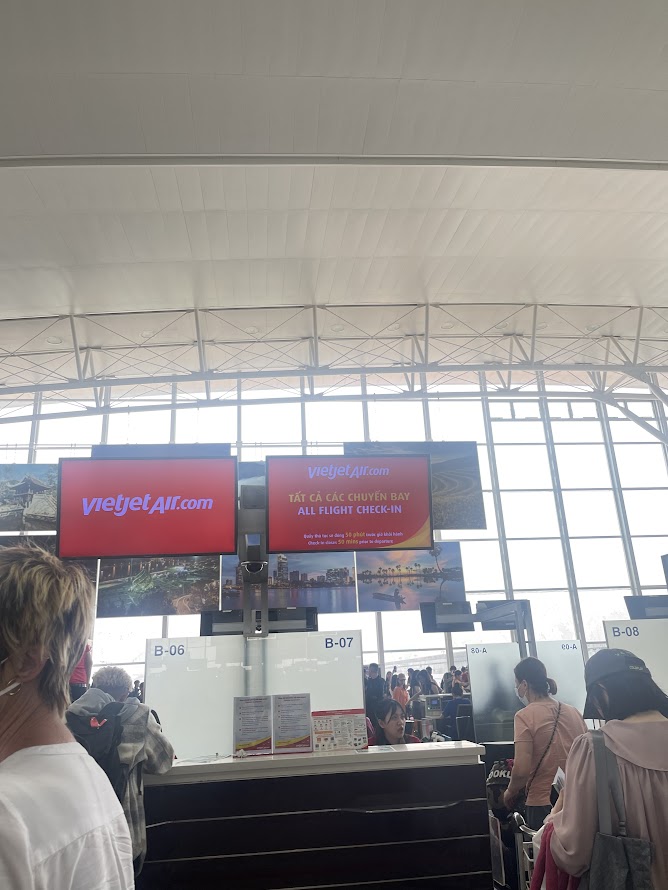
I checked in with VietJet, where a lengthy queue awaited me. Fortunately, the process went smoothly once I reached the counter. After clearing Immigration, I boarded the plane bound for Cambodia. The aircraft had a standard 3×3 seating arrangement.
Siem Reap International Airport
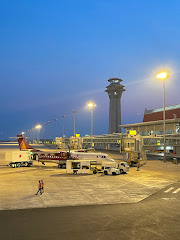
Upon arrival at Siem Reap International Airport, I opted to take the airport bus, which took about an hour. The airport was impressively vast, and I noticed both Cambodian and Chinese flags flying, hinting at China’s involvement in its construction. This realization saddened me a bit, as I couldn’t help but think about the political implications. It reminded me of the dangers of indebtedness to foreign powers, potentially resulting in loss of sovereignty. I earnestly hope Cambodia retains its unique identity, as it is undeniably a country steeped in beauty, history, and culture.
Upon reaching the bus stop in Siem Reap, I hailed a tuktuk to take me to Onederz Hostel for my first night. Regrettably, I mistakenly paid the tuktuk driver 100USD instead of the correct fare of 5USD, a bewildering error I won’t make again. Upon arriving at the hostel, they kindly lent me a lock and keys. After a quick shower, I settled into bed, looking forward to the adventures of the following day.
Day 2 April 15 (Monday)
Angkor Wat
Ta Prohm Temple
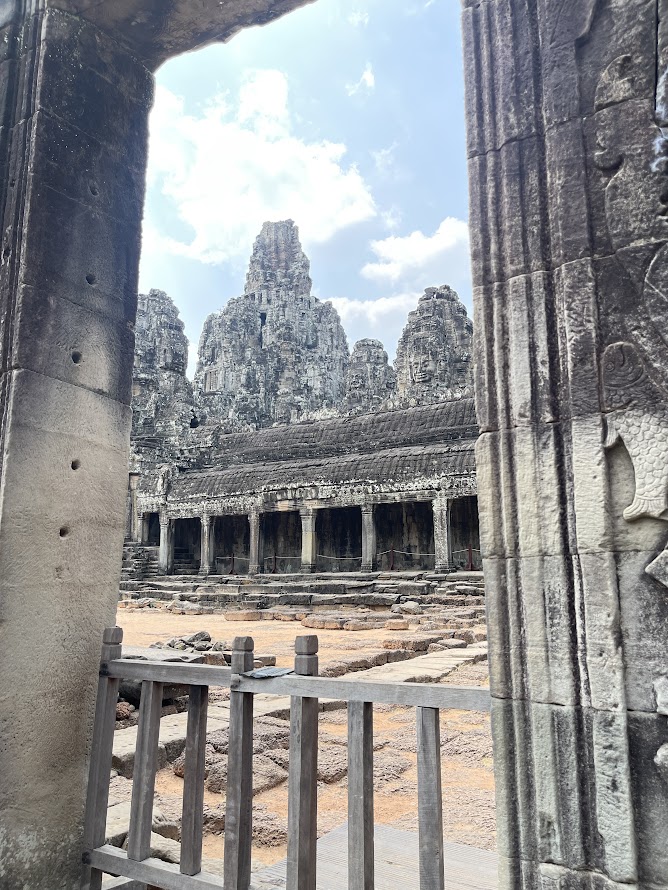
Bayon Temple
I woke up around 7 am and took a shower to prepare for my 9:00 am tour. After having breakfast and checking my emails, I completed an early check-out and met up with my tour guide, Sam and tuktuk driver, Mr. Hanoi (not the real name but nick name).
Lok Lak – 3USD or PHP171 a popular Cambodian dish made with stir-fried marinated beef, typically served with rice and garnished with lettuce, cucumber, tomato, and sometimes a fried egg. I ordered it at the café for breakfast before the tour, but when I tasted it, there was nothing particularly remarkable about it. In this scorching weather, the café also offers complimentary water and ice to refill my jug.
Angkor Wat
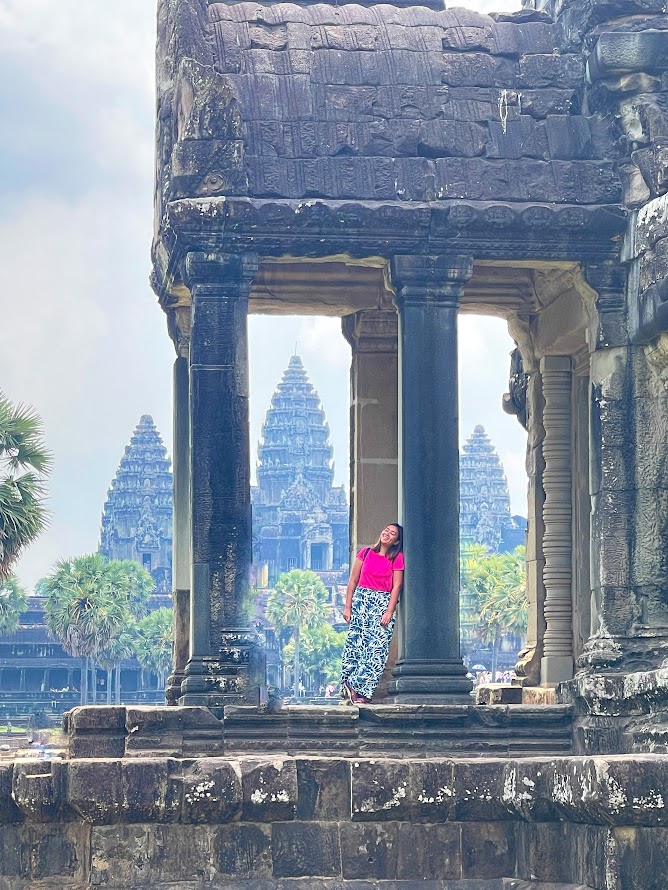
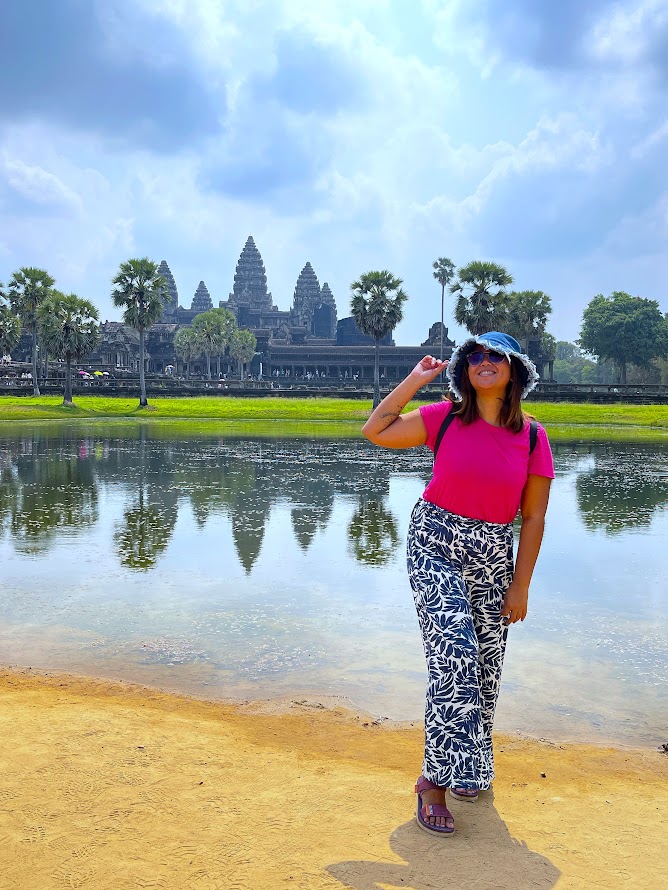
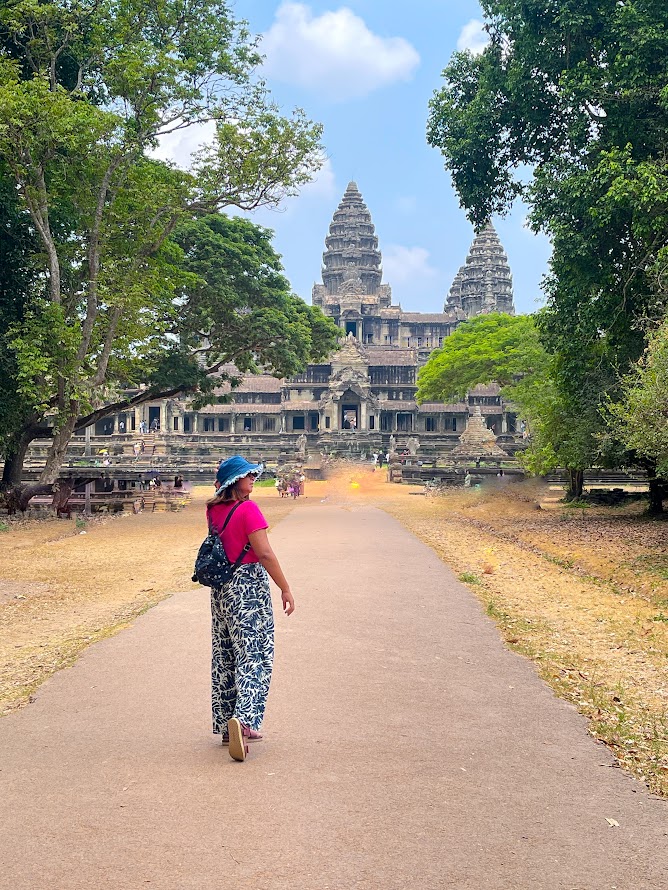
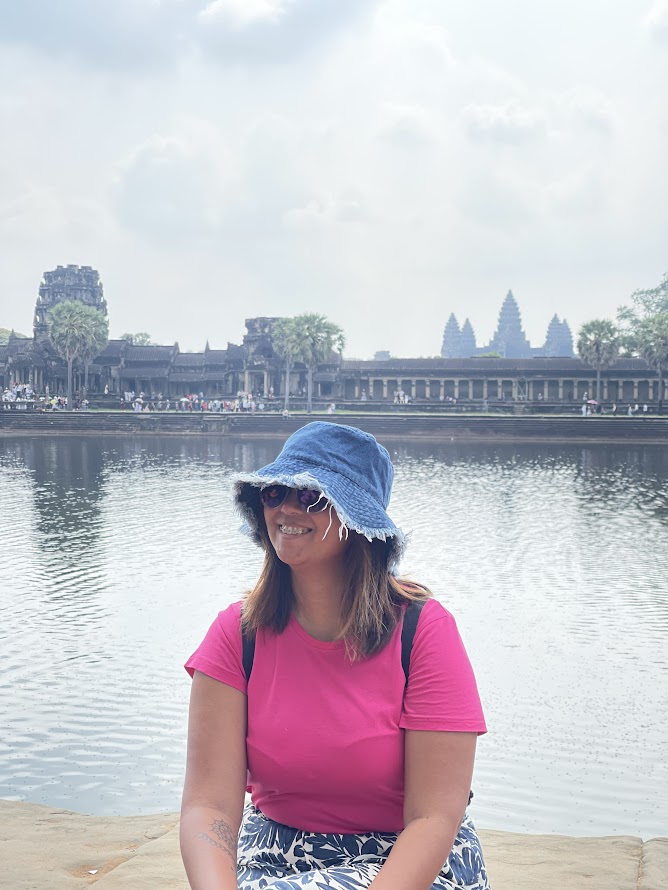
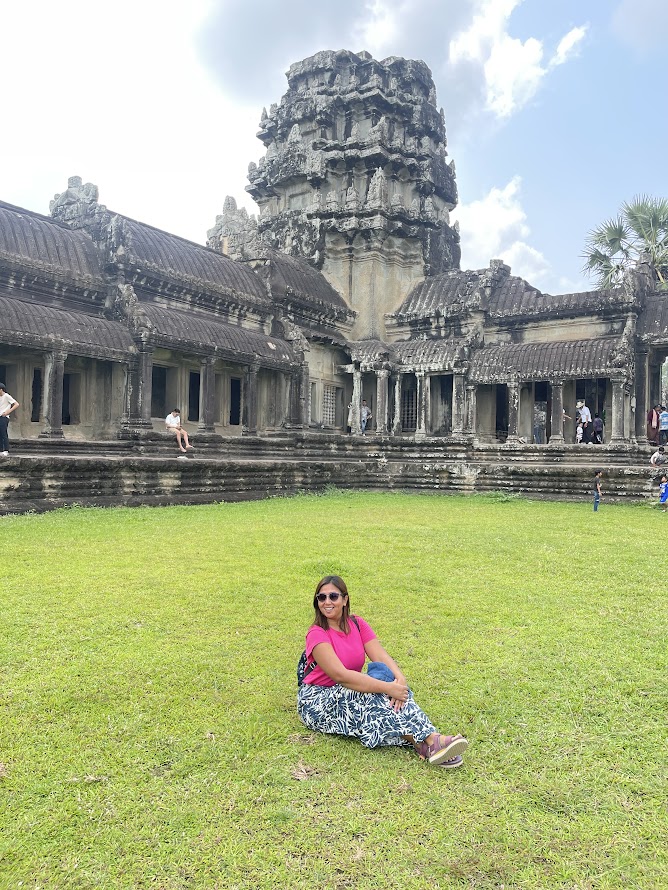
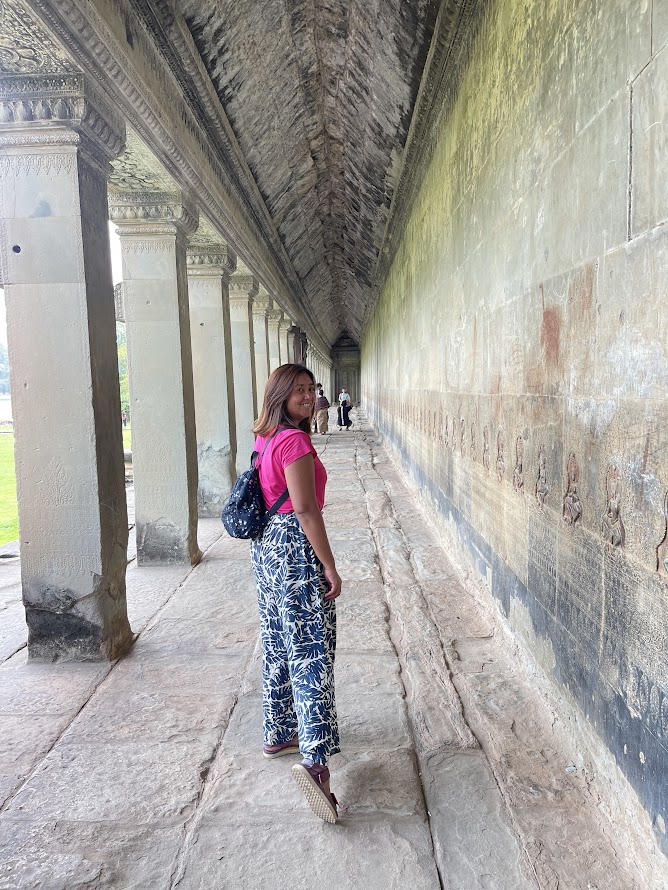
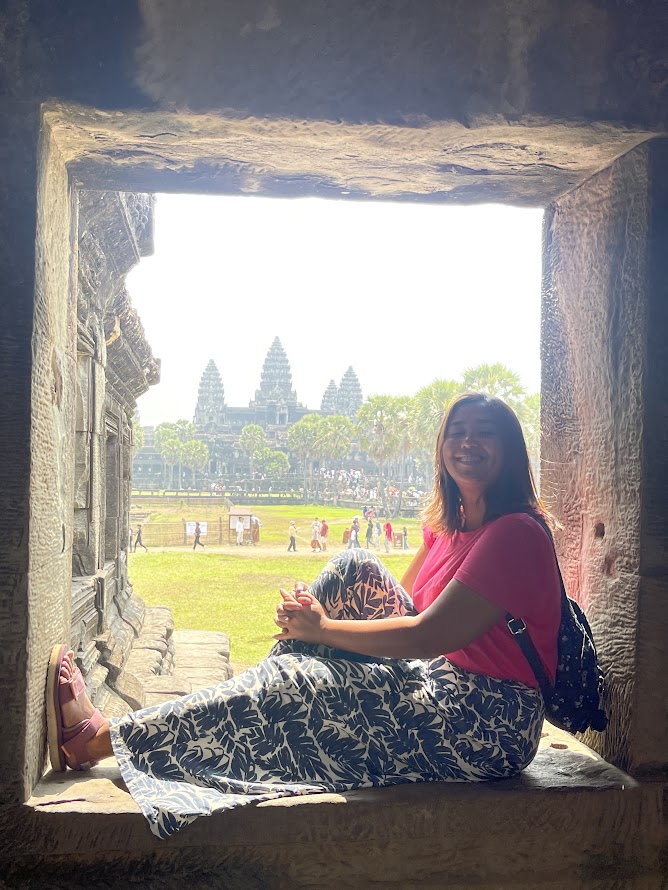
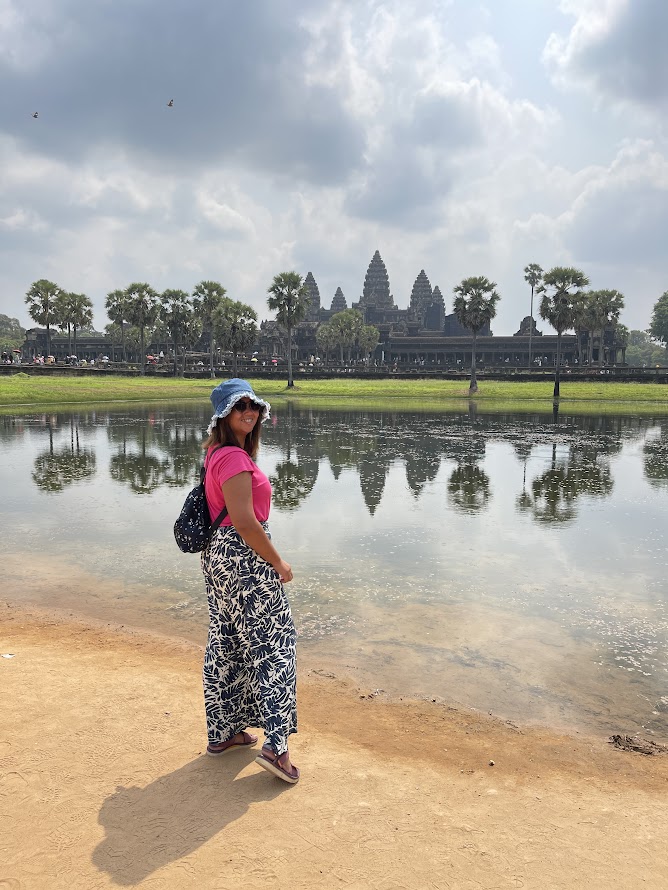
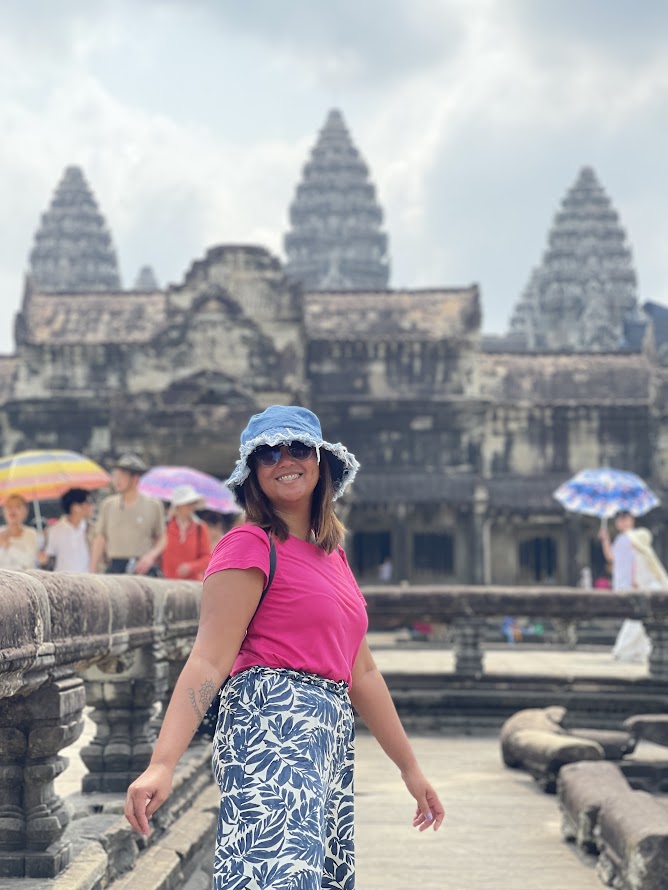
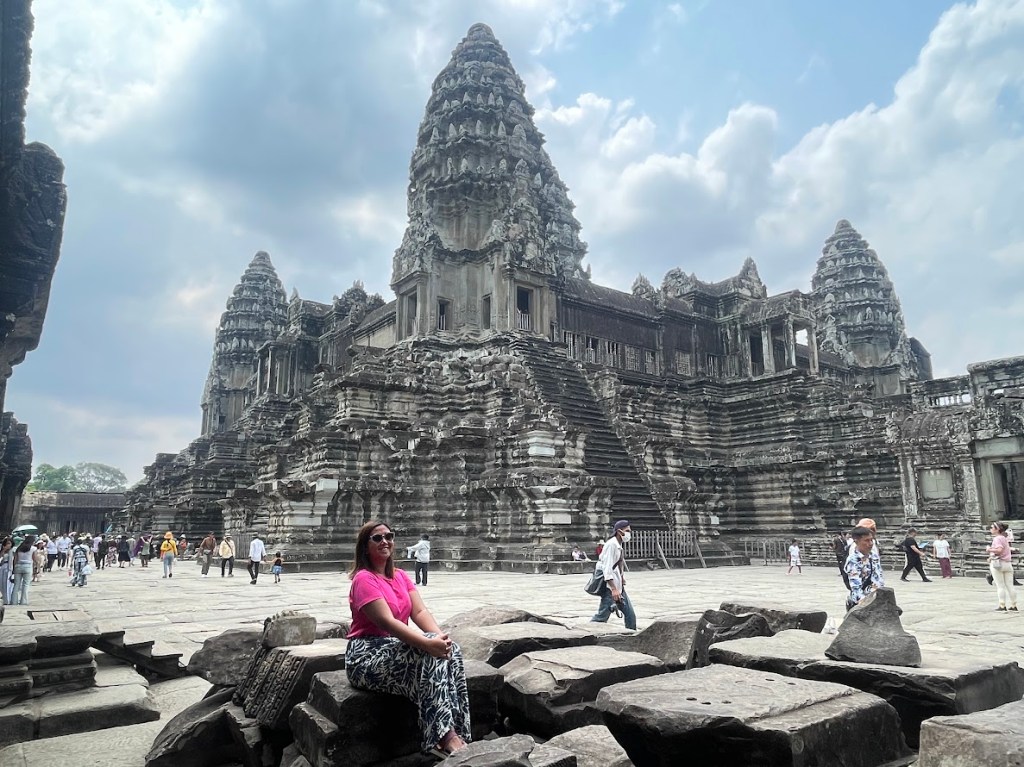
Even as I write about it now, Angkor Wat continues to leave me in awe. The sheer magnitude of its engineering and architectural brilliance, dating back to the 12th century, is truly breathtaking. The intricate carvings and the captivating stories they depict left me spellbound. Delving into the history and symbolism behind these carvings was a fascinating journey. Additionally, discovering the equinox phenomenon that occurs twice a year at this temple further heightened its mystique, and I aspire to experience it in person one day. My exploration of this remarkable site has deepened my love for it and enriched my understanding of its historical significance. For anyone intrigued by ancient civilizations, a visit to Angkor Wat is an absolute must—it stands unparalleled among temples, an unparalleled testament to human ingenuity and creativity.
Ta Prohm Temple
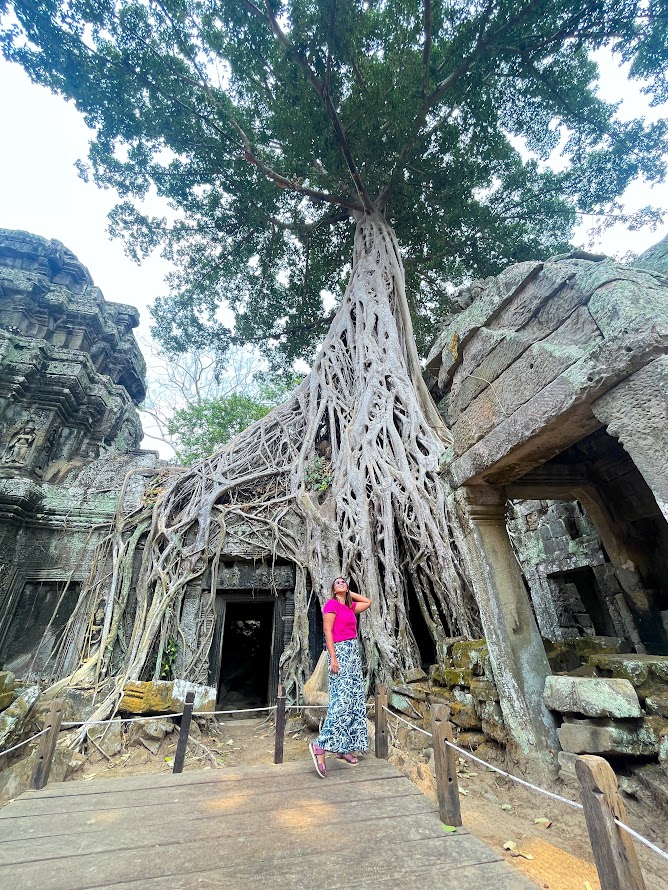
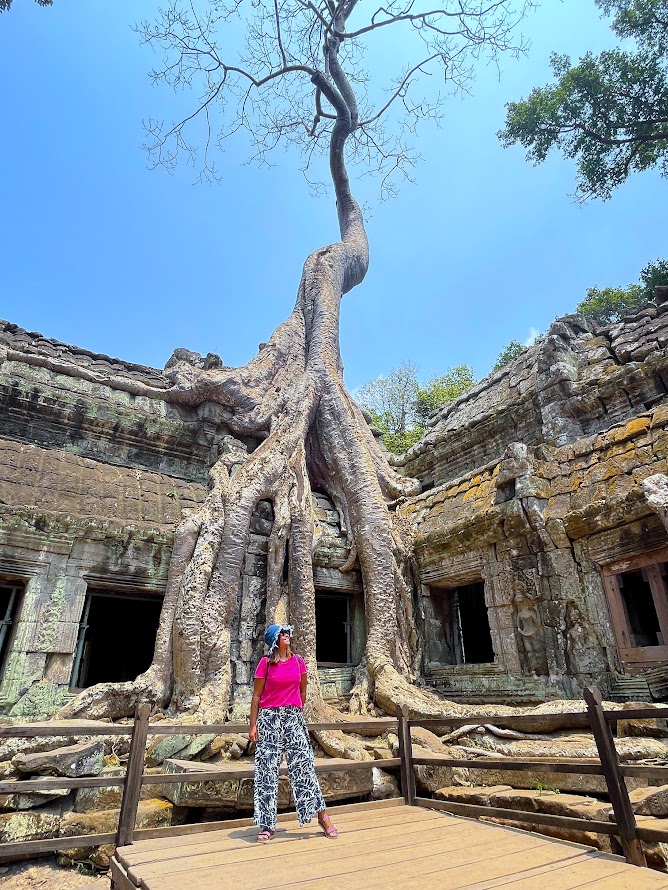
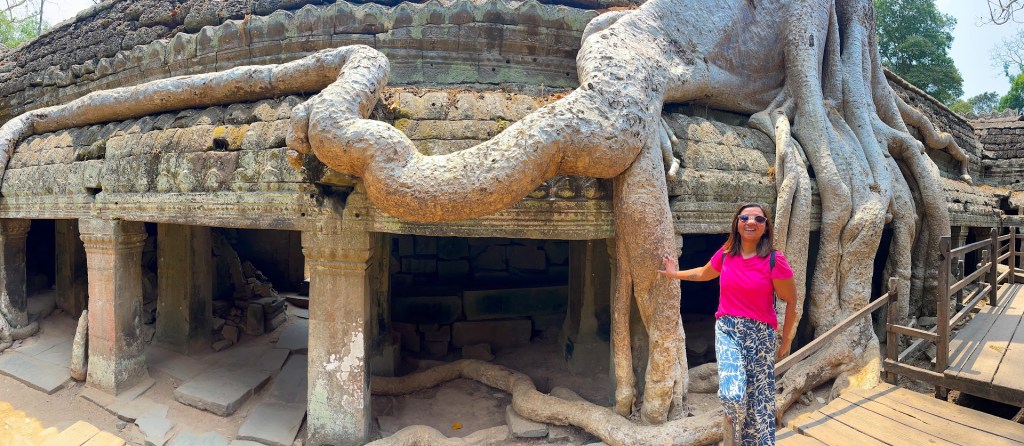
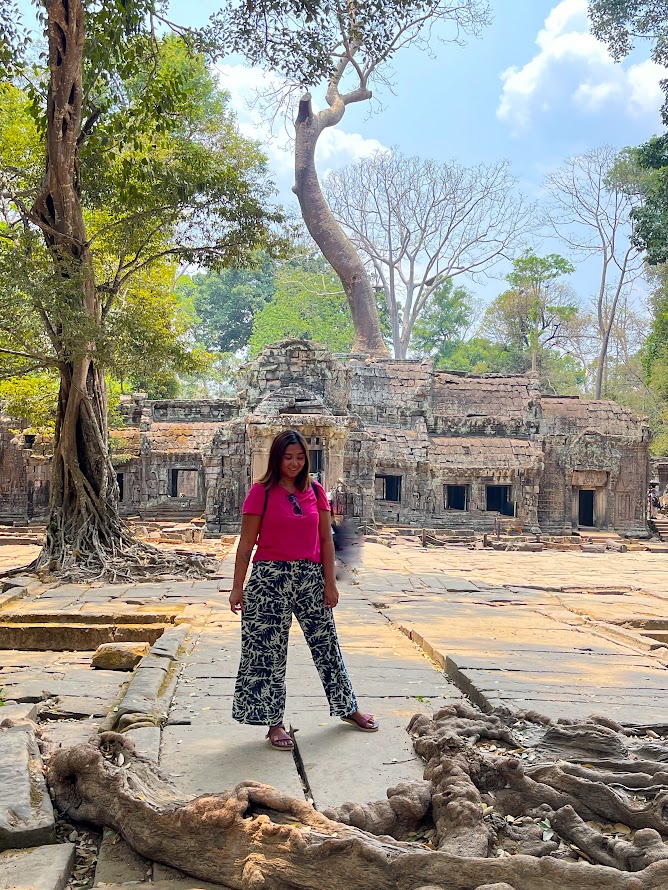
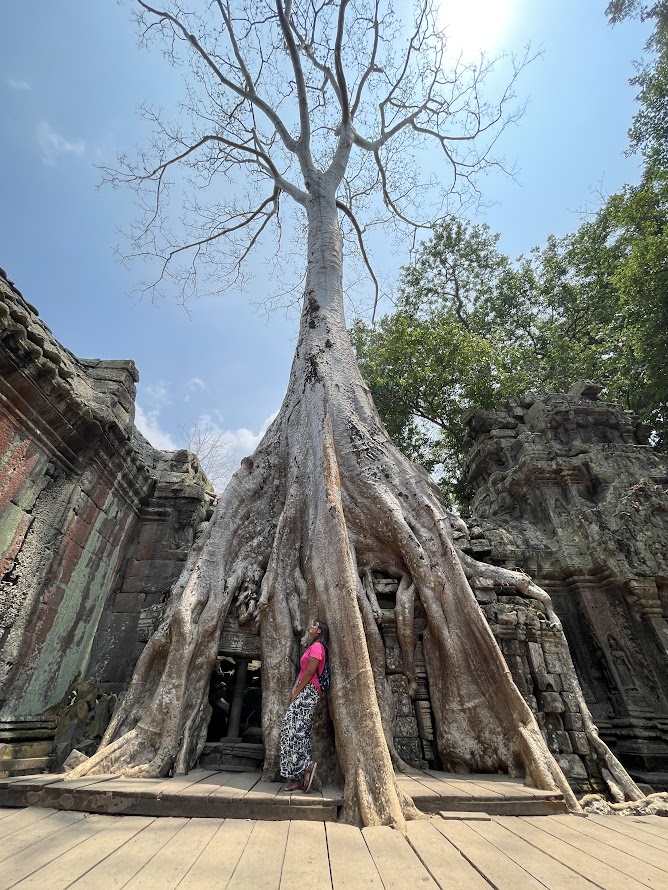
More than a filming location for the movie Lara Croft: Tomb Raider, Ta Prohm Temple stands as a poignant reminder of the passage of time, a testament to the resilience of nature and the enduring legacy of the Khmer Empire. I stood in awe before the majestic spectacle of roots and trees weaving their way through the ancient temples. It was a scene straight out of a fairy tale, where nature’s gentle touch transformed the stone edifices into ethereal works of art. Witnessing this remarkable fusion of man-made architecture and natural beauty felt like stumbling upon a hidden sanctuary, where the temples were not just monuments, but living, breathing entities embraced and nurtured by the earth itself.
Originally dedicated to the Buddhist deity Prajnaparamita, Ta Prohm served as a monastery and university during the height of the Khmer Empire. Unlike many other temples in the Angkor complex, Ta Prohm has been left largely untouched by restoration efforts, allowing visitors to experience the raw beauty of its ancient ruins in their natural state.
Bayon Temple
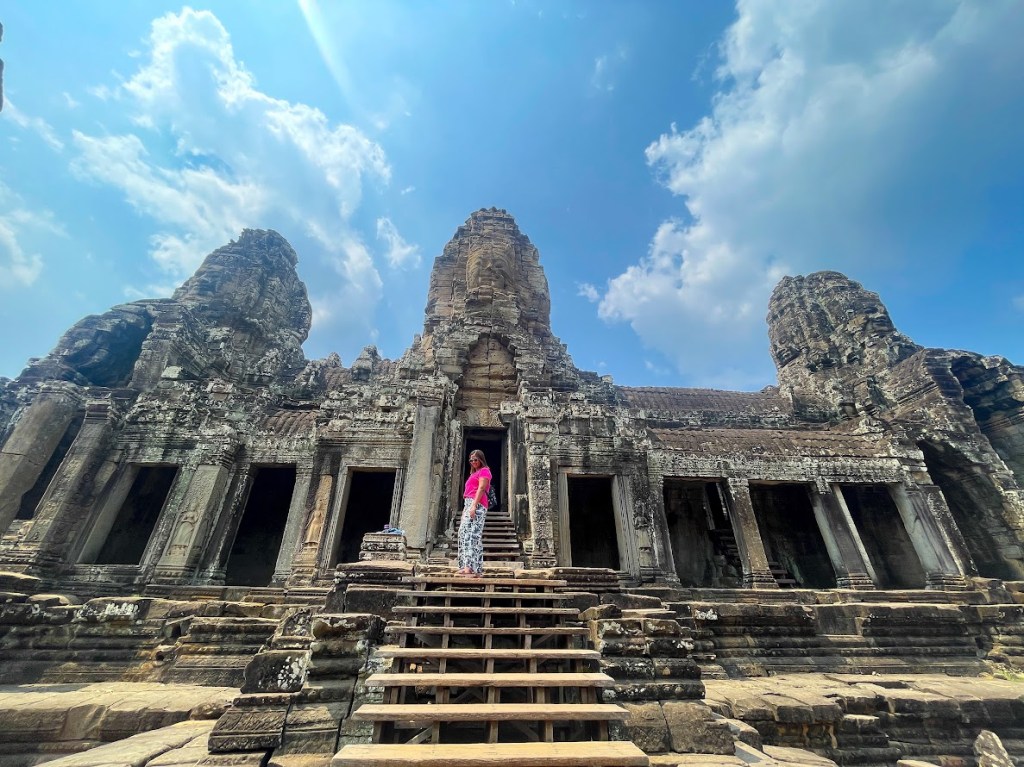
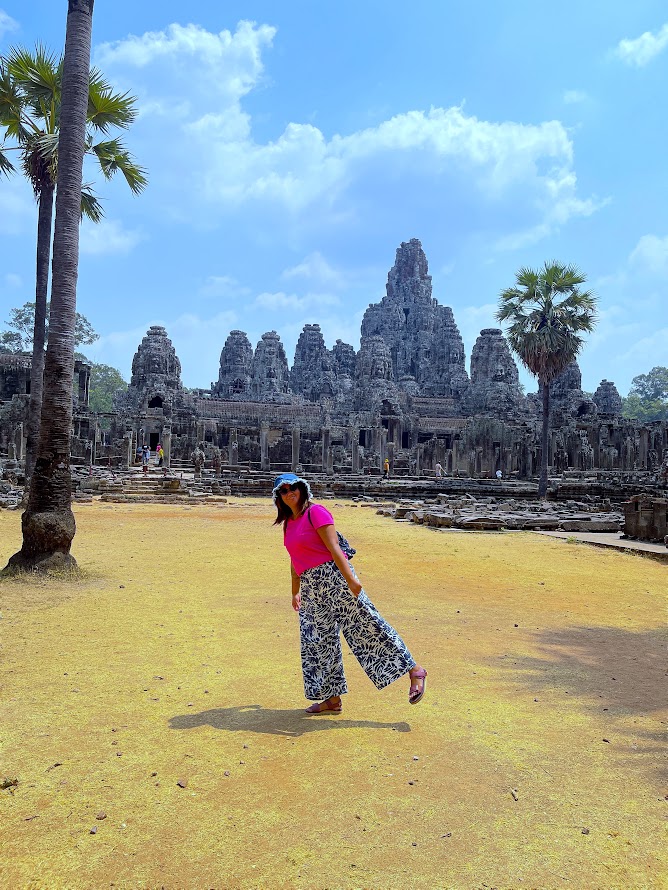
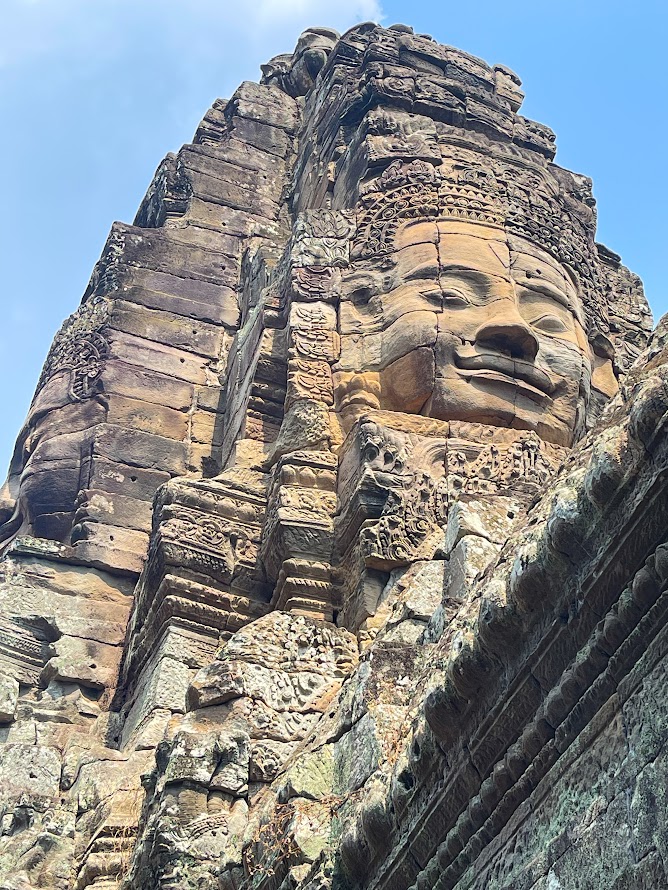
After eating lunch, we headed over to the last temple for the day. I was so exhausted by the heat but as I approach Bayon, I was greeted by the sight of countless stone towers rising from the jungle canopy, each one adorned with serene yet enigmatic faces. These intricately carved visages, believed to represent bodhisattva Avalokiteshvara or King Jayavarman VII himself, exude a sense of tranquility and wisdom, inviting visitors to ponder the mysteries of the past.
Bayon Temple, nestled at the heart of the Angkor Thom complex in Siem Reap, Cambodia, is a captivating testament to the grandeur of the Khmer Empire. It’s architectural design is a marvel of engineering and artistic innovation, featuring a unique blend of Khmer and Hindu architectural styles. Its towering spires, intricately carved bas-reliefs, and precision-cut sandstone blocks bear testament to the skill and craftsmanship of the Khmer artisans who built it.
Apsara Show at Angkor Village Hotel
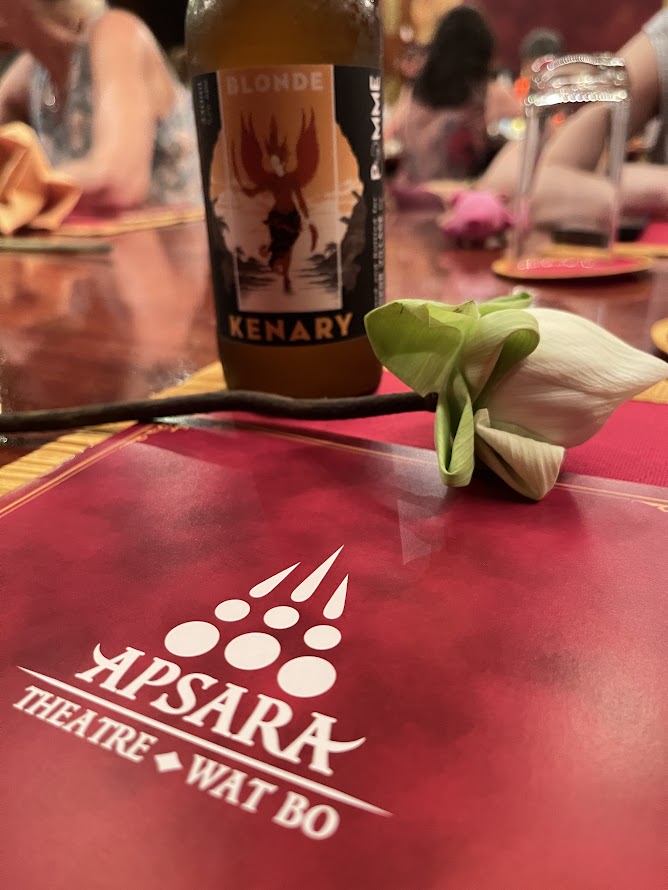
After exploring Angkor Wat and the surrounding temples, I decided to take a Grab ride to Angkor Village Hotel, where I was excited to attend the Apsara Show at their Apsara Theatre. Below are some important points to consider when making your booking. You can learn more here.
- Dinner Show every Monday, Wednesday & Saturday
- Dinner is served at 7:30pm
- The performance lasts from 8.30pm to 9:30pm
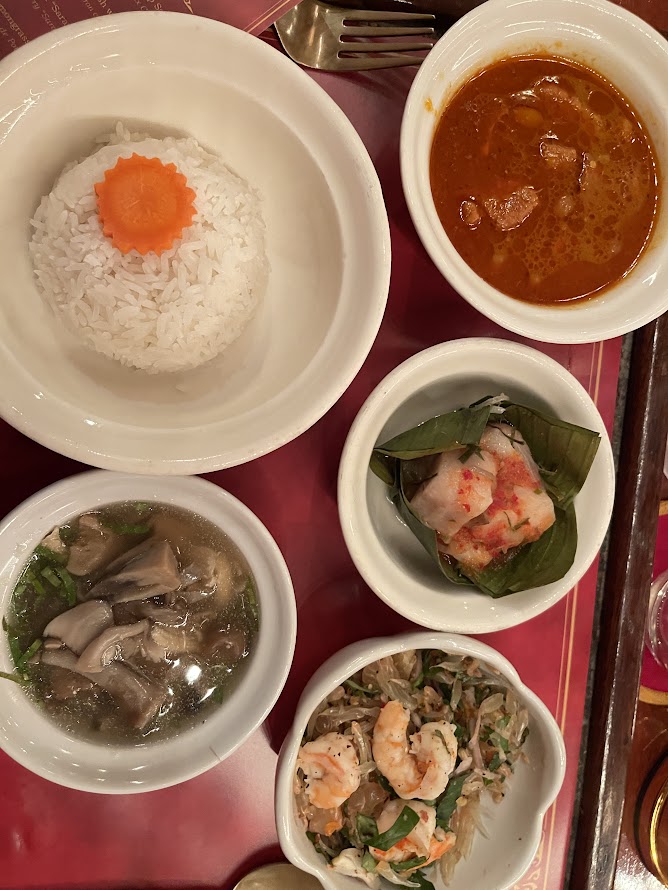
- Prior to reservation, they will provide a menu selection which includes three options: “THE TRADITIONAL” featuring an assortment of Khmer dishes typically enjoyed during celebrations; “KHMER TAPAS,” offering a lighter selection of local hors d’oeuvres, perfect for a cocktail and those with a smaller appetite; and Vegetarian options.
- The amount cost minimum of 31USD or PHP1,771
The Apsara dance, a mesmerizing traditional art form of Cambodia, is a graceful expression of beauty, elegance, and cultural heritage. Dating back to the Khmer Empire, this ancient dance pays homage to the celestial nymphs, known as Apsaras, depicted in the intricate carvings of Angkor Wat and other temple complexes. The Apsara dance holds deep cultural significance in Cambodia, serving as a symbol of national identity and pride. Through its performances, the dance celebrates the rich heritage and artistic traditions of the Khmer people, preserving ancient stories and legends for future generations.
Experiencing the cultural dance show was truly captivating and offered valuable insights into Cambodian culture. It’s an absolute must-see when visiting Cambodia. However, it’s important to note that navigating through the city can be challenging during Khmer New Year due to heavy traffic congestion.
Day 3 April 16 (Tuesday)
Angkor Wat Sunrise
Banteay Srei
Tasom temple
Preah khan temple
Neak pean temple
East mebon temple – just take a look
Pre rup temple – just take a look
Exploring these lesser-known temples nestled in the countryside was a delightful highlight of the tour for me. I thoroughly enjoyed immersing myself in their serene ambiance and unique charm, and I eagerly look forward to discovering more hidden gems scattered throughout the countryside of Siem Reap when I return.
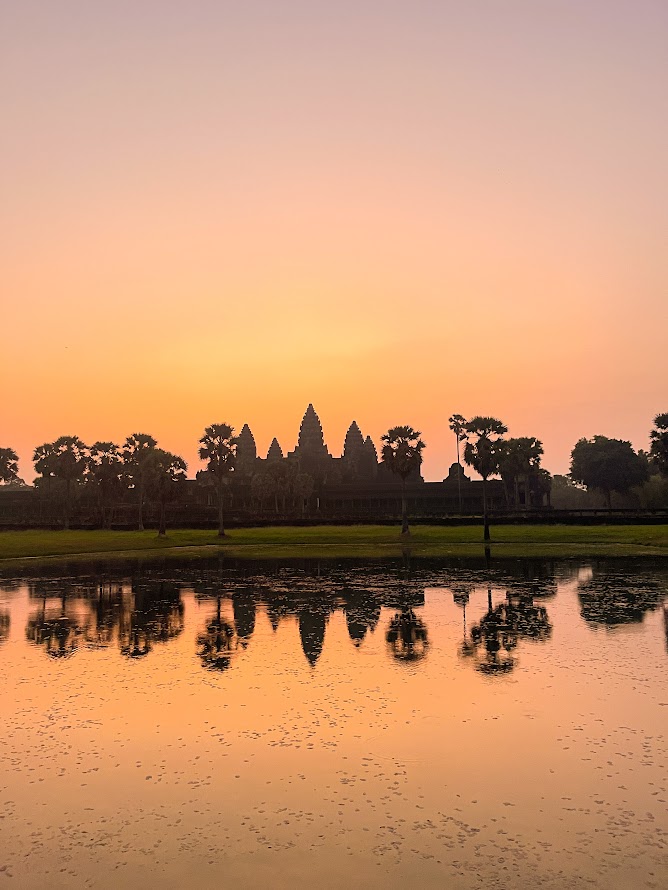
Angkor Wat Sunrise
I was picked up from my hostel at 4 in the morning to catch the sunrise at Angkor Wat. Although it was a bit cloudy upon our arrival, the experience of witnessing the sunrise was still awe-inspiring. Despite the early hour, the heat was intense, but it didn’t detract from the beauty of the moment. My admiration for Angkor Wat only grew stronger after this unforgettable experience.
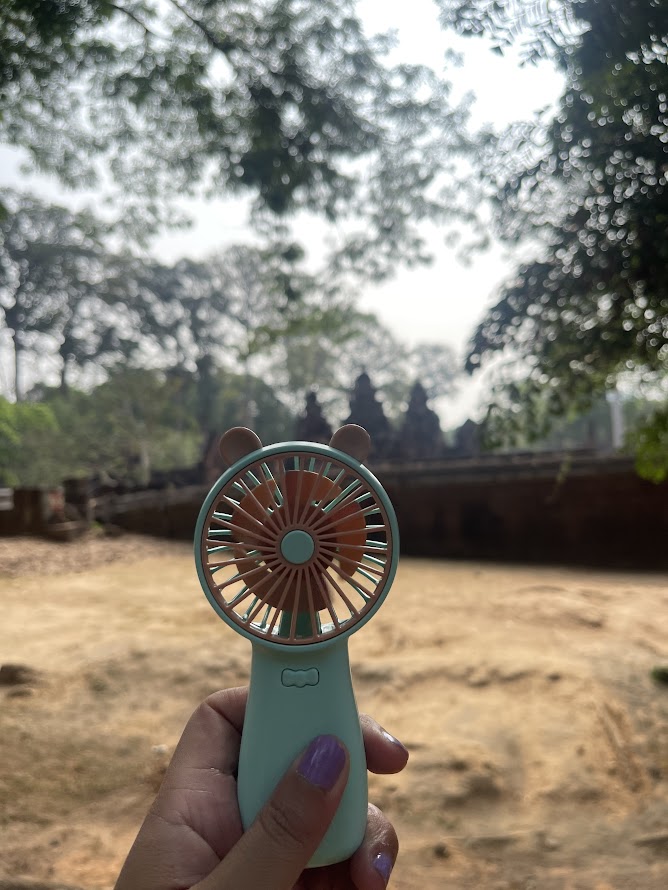
With temperatures soaring to 40 degrees Celsius, I decided to start my day with a breakfast of au chocolat croissant and coffee to fuel up. Thankfully, a kind Cambodian girl offered me her ponytail as I couldn’t find one, and I was already feeling exhausted from the heat. Additionally, I purchased a small electric fan to help cope with the scorching weather.
Banteay Srei
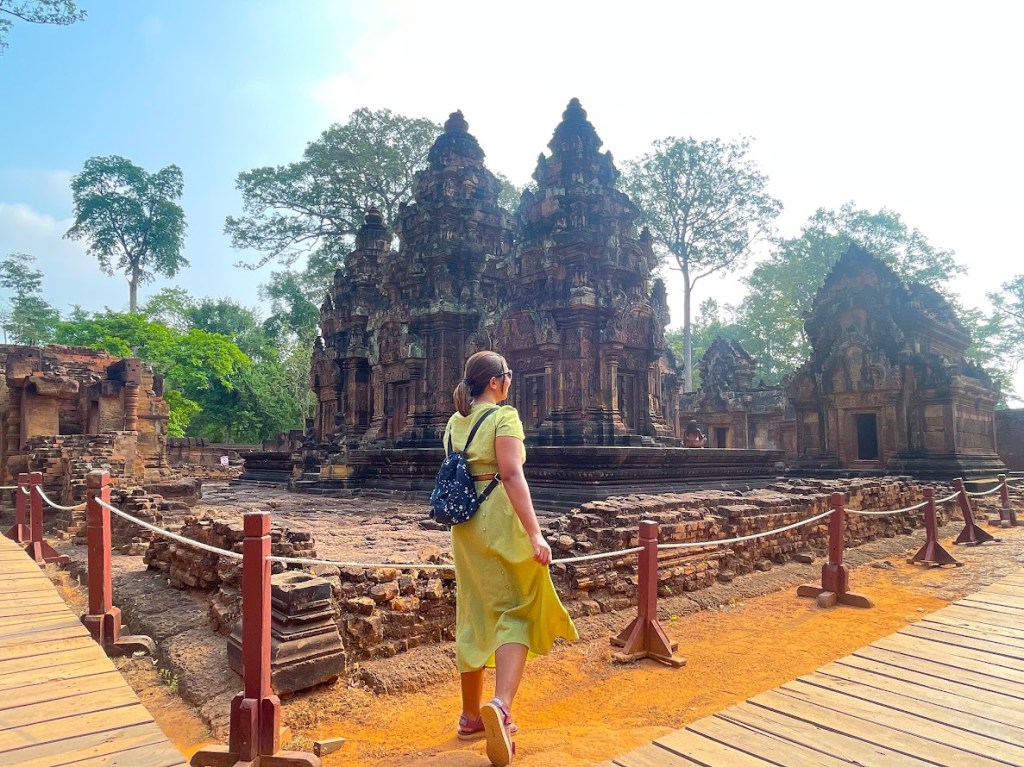
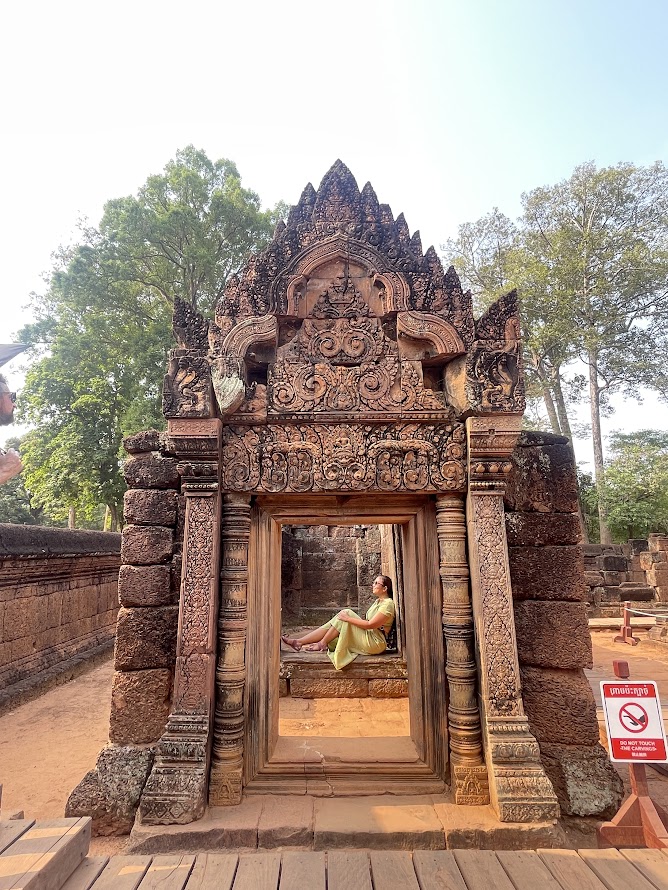
Banteay Srei, often referred to as the “Citadel of Women,” is a stunning temple complex located in the Angkor archaeological park near Siem Reap, Cambodia. Renowned for its intricate and exceptionally well-preserved pink sandstone carvings, Banteay Srei is a masterpiece of Khmer architecture and craftsmanship. Nestled amidst the lush Cambodian countryside, Banteay Srei stands as a testament to the artistic prowess and spiritual devotion of the Khmer Empire.
Ta Som Temple
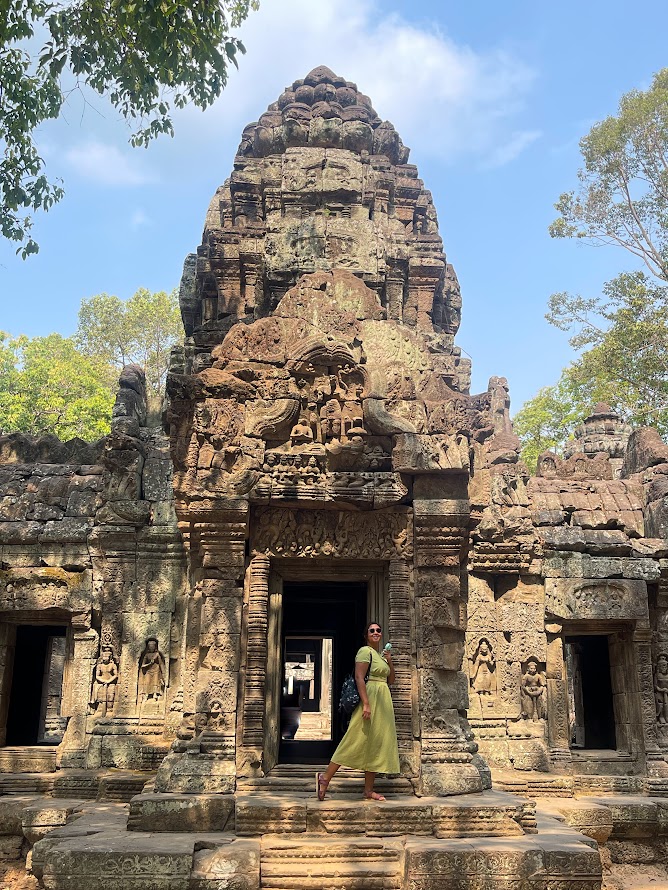
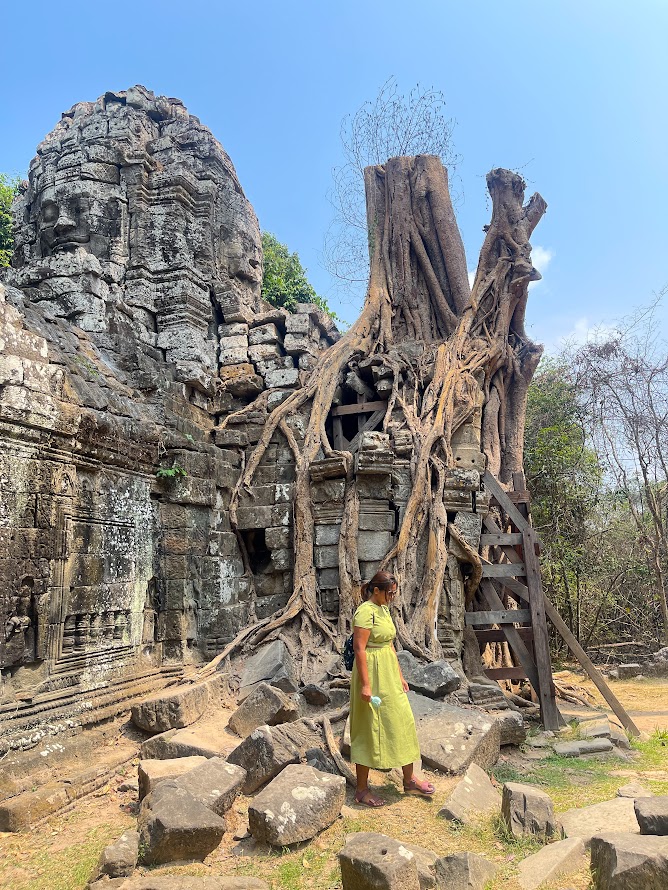
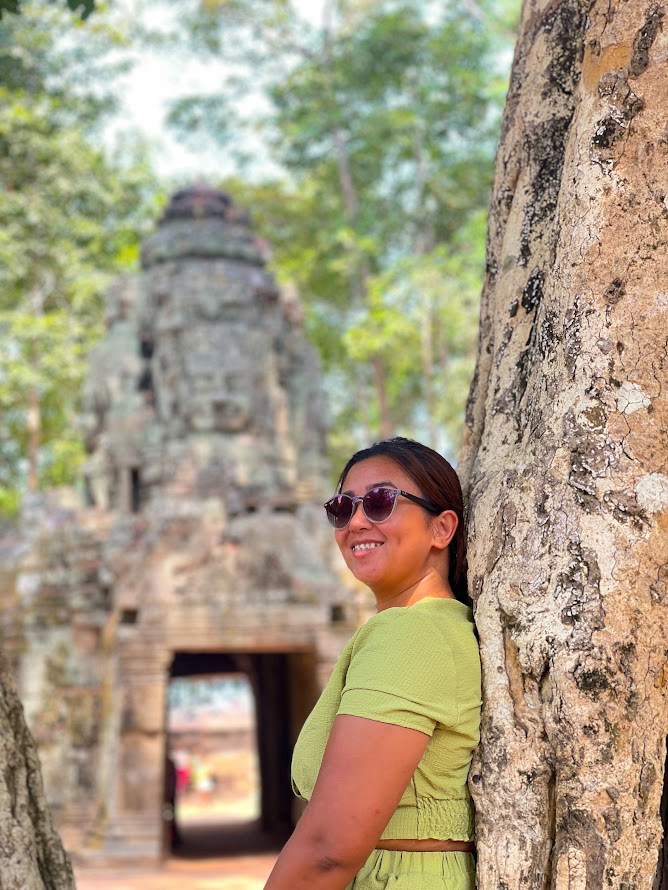
Ta Som, a lesser-known temple nestled within the Angkor Archaeological Park in Cambodia, offers visitors a serene and intimate experience amidst its atmospheric ruins. Built in the late 12th century Ta Som is adorned with exquisite stone carvings that depict scenes from Hindu mythology, including epic battles, celestial beings, and divine guardians. The temple’s central sanctuary features a towering stone gate, known as a gopura, adorned with intricate bas-reliefs and intricate motifs. As you wander through the temple’s corridors and courtyards, you’ll discover a treasure trove of artistic detail and historical significance.
One of the most enchanting aspects of Ta Som is its integration with the surrounding natural environment. Towering trees and creeping vines intertwine with the temple’s weather-worn stones, creating a harmonious blend of man-made architecture and natural beauty.
Neak Pean
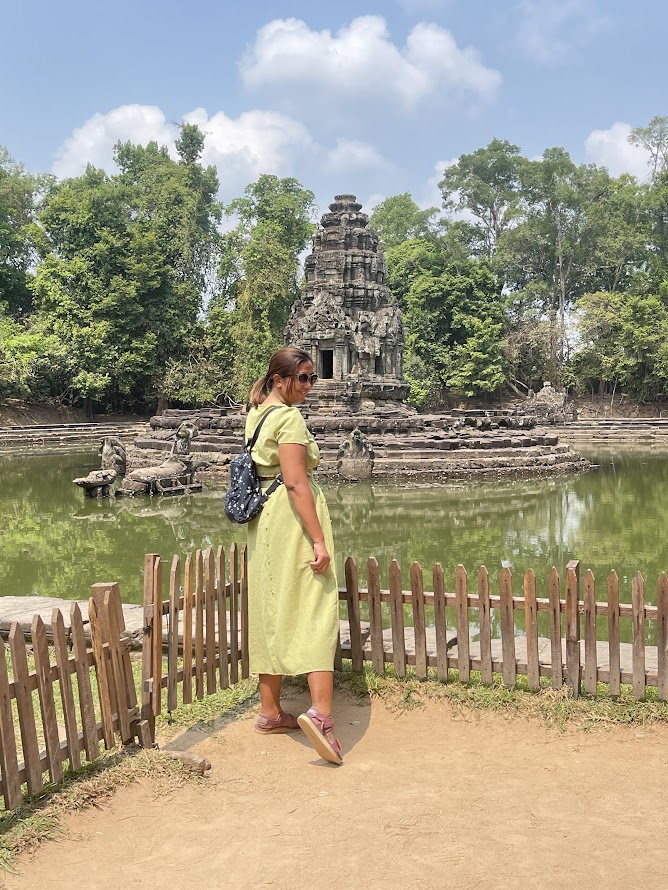
To reach this destination, one must traverse a bridge over a lake, and it’s highly advisable to carry an umbrella due to the intense heat.
According to my guide, the king would retreat to Neak Pean for treatment of leprosy. He sought refuge there to avoid contact with others and prevent the spread of the disease. However, Neak Pean is not specifically a temple for leprosy. While it is known for its association with healing and purification due to its depiction of the mythical lake Anavatapta, there is no historical evidence to suggest that Neak Pean was exclusively used for treating leprosy.
Neak Pean is steeped in symbolic significance, reflecting the Khmer people’s deep reverence for the natural world and their belief in the interconnectedness of all things. The temple’s design and layout embody the principles of Hindu and Buddhist cosmology, with its central sanctuary serving as a focal point for meditation and spiritual reflection.
Preah Khan
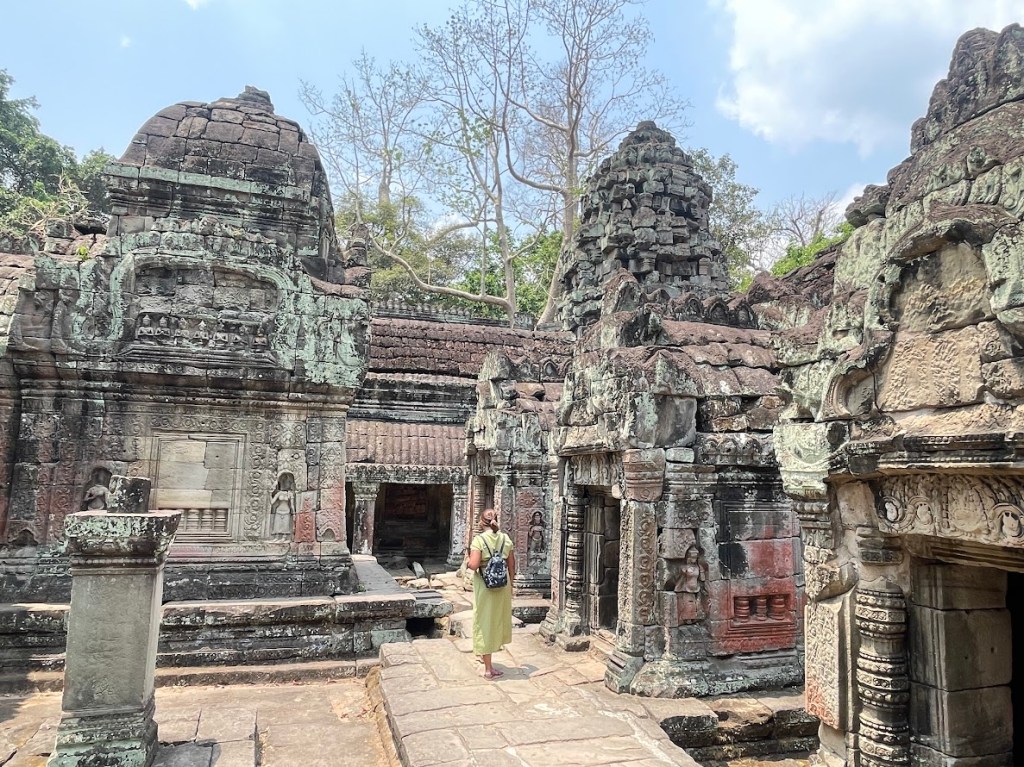
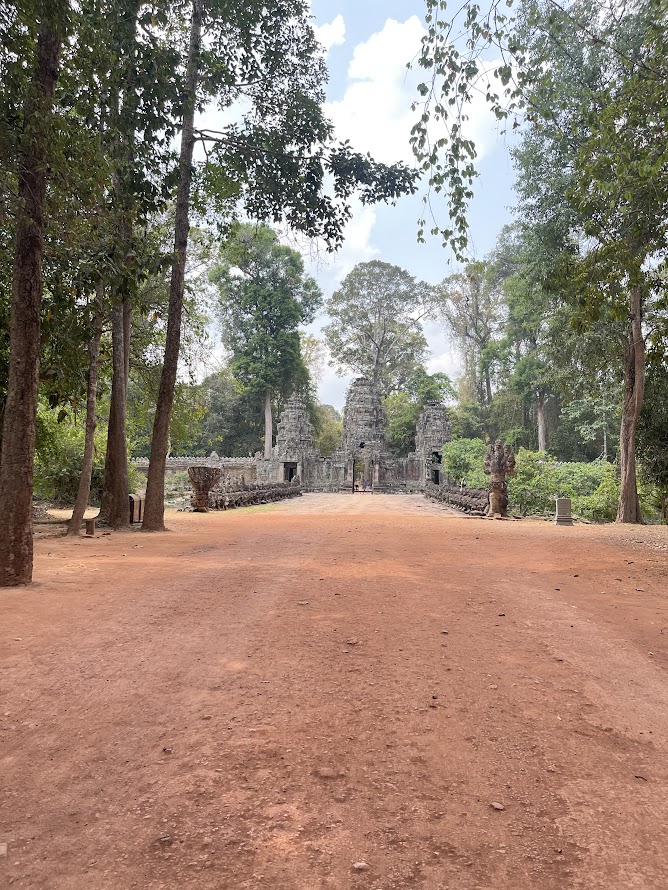
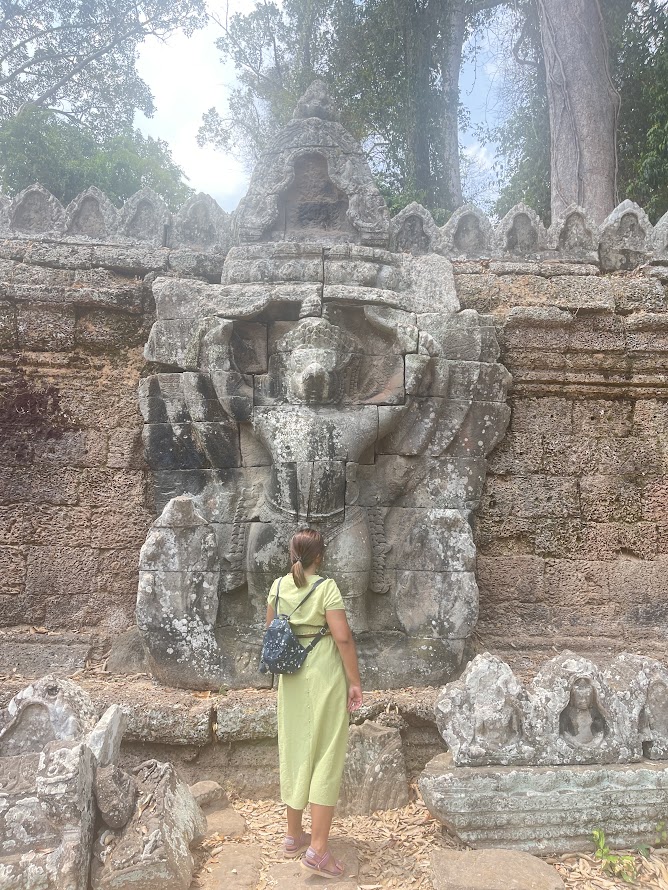
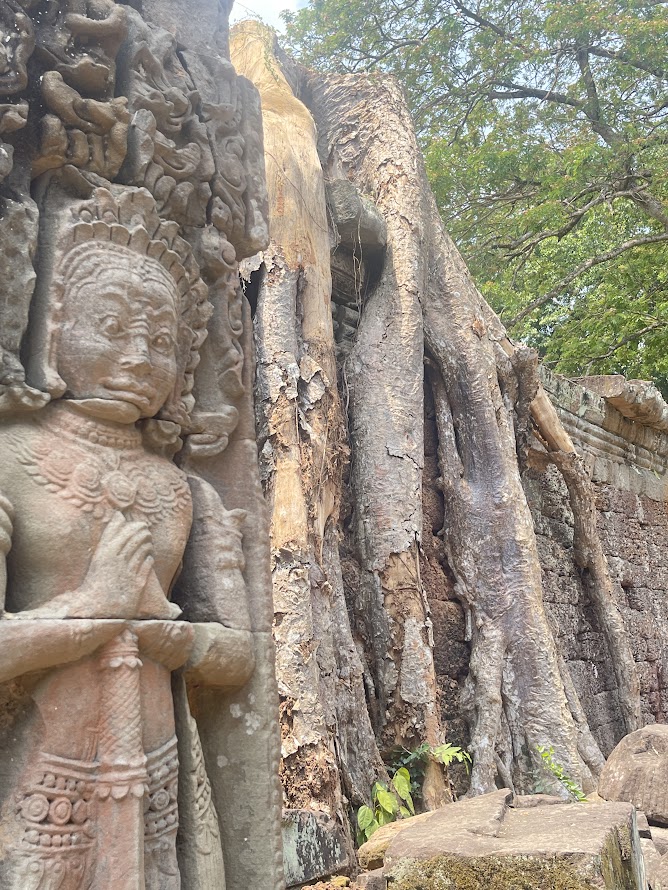
Preah Khan, a majestic temple complex nestled within the Angkor Archaeological Park in Cambodia. The walls of Preah Khan are adorned with exquisite stone carvings depicting scenes from Hindu mythology, historical events, and everyday life in the Khmer Empire. Preah Khan is believed to have been built on the site of a former royal palace. Its name, which means “Sacred Sword,” reflects the king’s victory over the invading Cham forces and his dedication to the preservation of the Khmer Empire.
Phare Circus – link here
Show is everyday
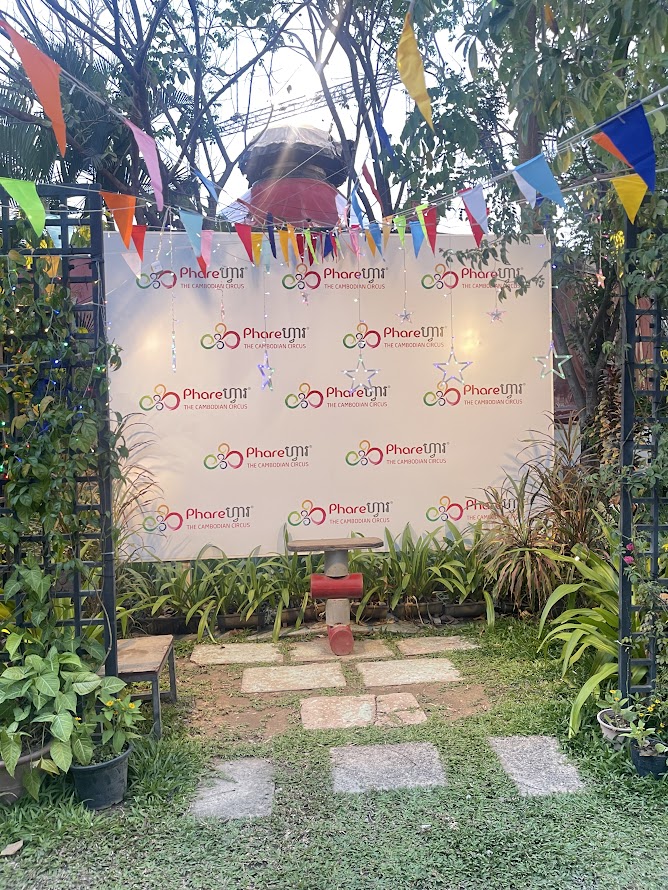
I headed to the Phare Circus for an evening show around 6:00 pm after a rejuvenating nap, conveniently located near my hostel. Upon arrival, I purchased a ticket for 28 USD or PHP 1600 for open seating at the center of the stage. I also exchanged 20 USD for food tokens, reminiscent of Monopoly money, which added a fun twist to the experience.
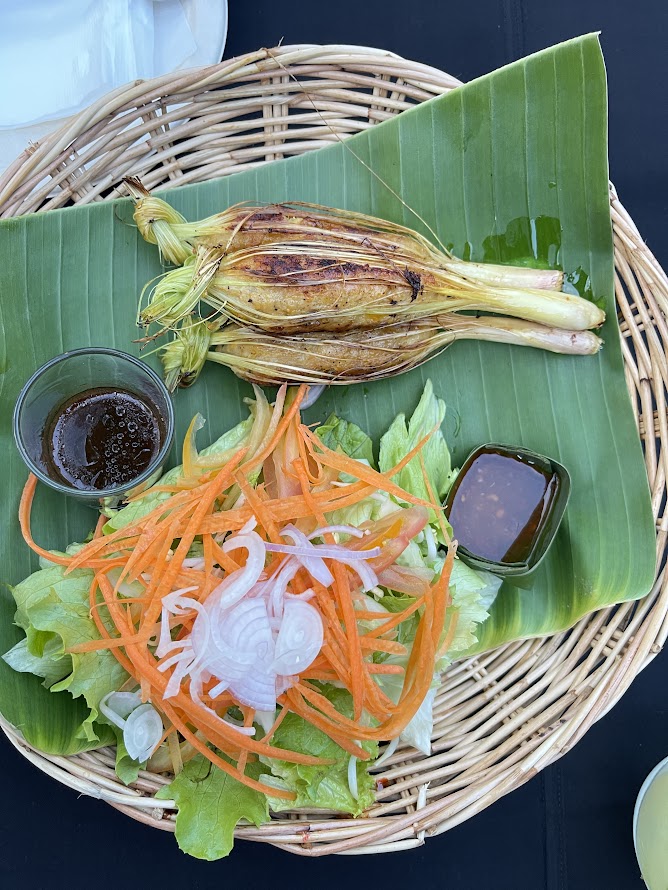
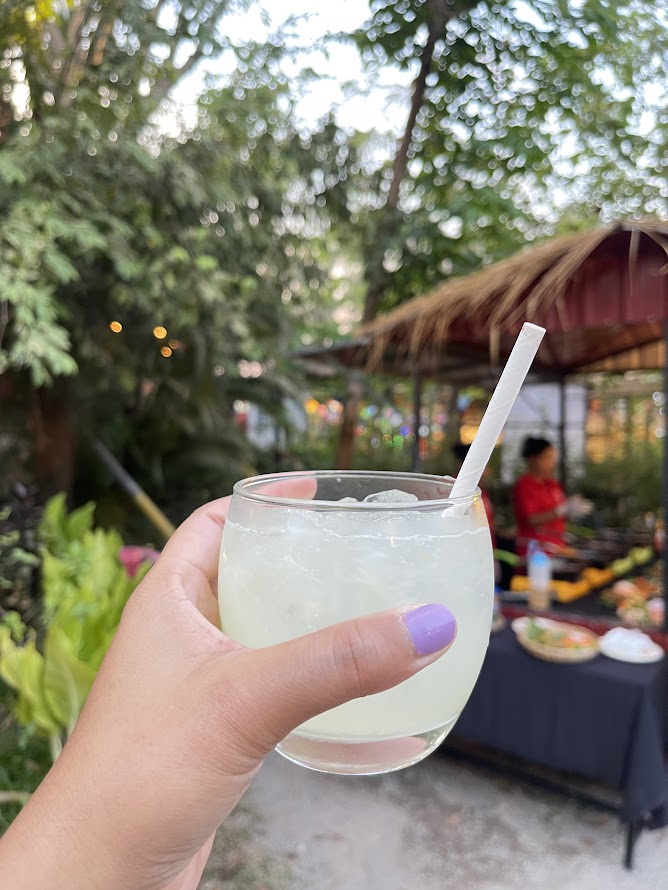
The venue featured enticing food stalls, where I indulged in a delightful Cambodian street food delicacy: Chicken Mango Pattie on Lemongrass, priced at 6 USD or PHP 342. The burst of flavors in this dish made it one of the highlights of my culinary adventures in Cambodia. To complement my meal, I took advantage of the happy hour drink specials (buy one, get one), opting for the refreshing Phare Coconut, a rum-based Cambodian drink, priced at 4 USD or PHP 228. I appreciated the thoughtful gesture when they also offered me a virgin margarita after learning I preferred not to consume alcohol.
The warm hospitality of the Cambodian people added to the charm of the evening. I had enjoyable conversations with the locals, particularly with the friendly lady who served me the chicken pattie. Though her name escapes me now, her kindness left a lasting impression.
Before the main event, an enchanting Apsara show set the stage aglow. However, it was the Phare Circus that stole the spotlight, captivating me with its artistry and precision. Drawing inspiration from Cambodian folklore, history, and everyday life, the performers developed a unique style of circus arts that combined traditional Khmer music, dance, and acrobatics with contemporary elements.
Following the devastation caused by the Khmer Rouge regime and its aftermath, a group of young Cambodian refugees sought to create a platform for artistic expression and empowerment. These survivors, trained in visual and performing arts at the Phare Ponleu Selpak organization, came together to form the circus troupe as a means of reclaiming their cultural heritage and sharing their stories of resilience with the world. Through their performances, the artists of the Phare Circus celebrate the strength and resilience of the Cambodian people while inspiring hope and healing in audiences worldwide.
The show was a work of art, captivating me completely and leaving me eager for more. Watching the Cambodian artists flawlessly perform breathtaking acrobatic feats was truly mesmerizing, highlighting their incredible talent. This show, with its purposeful message, is an absolute must-see in Cambodia. It’s truly an amazing experience! To know more of the circus and videos, please go to IG link
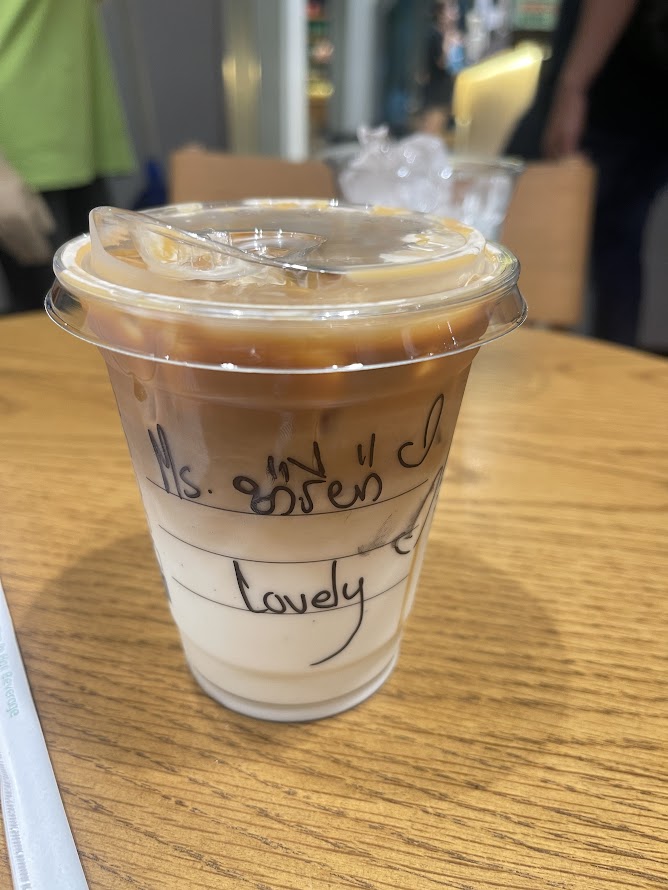
Following the show, I made my way to Pub Street for a look around. However, due to it being the final day of Khmer New Year, the area was bustling with people. Instead, I opted to visit Starbucks near Pubstreet. I noticed that Starbucks outlets tend to have uniform menus wherever I go, without offering locally crafted options, which was a bit disappointing. Nonetheless, it was still a pleasant stop.
Food in Cambodia
Malis Restaurant 5-10USD minimum or 285PHP to PHP571 per meal – This Cambodian restaurant holds a special place in my heart. It specializes in offering authentic Cambodian favorites and conveniently sits near my hostel. While it boasts both al fresco dining options and a sophisticated indoor restaurant, I couldn’t fathom braving the scorching heat for an outdoor meal—haha! With offerings like free-flow breakfast and a business lunch menu, there’s something to suit every dining occasion. My experiences here have been delightful, with each meal proving exceptionally delicious. While it may lean towards the pricier side compared to other eateries, I firmly believe that Cambodian cuisine presents a distinct and acquired taste. Dining in such an esteemed establishment, every dish served is nothing short of exemplary. I appreciate that they offer unlimited rice as well. More in this link
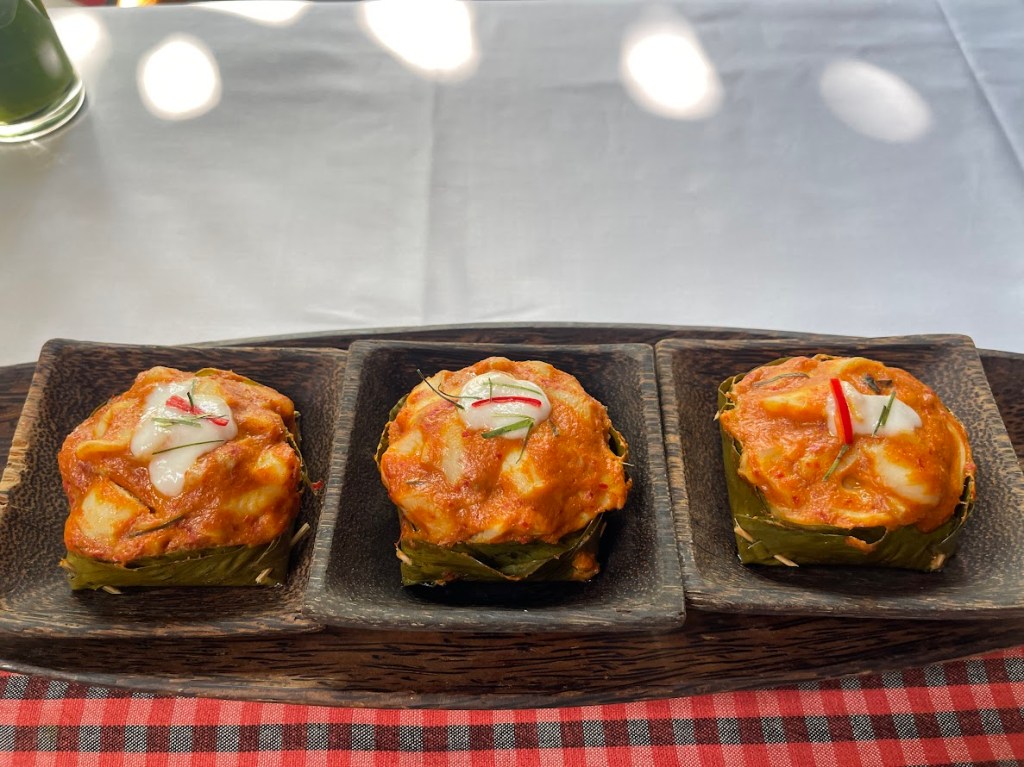
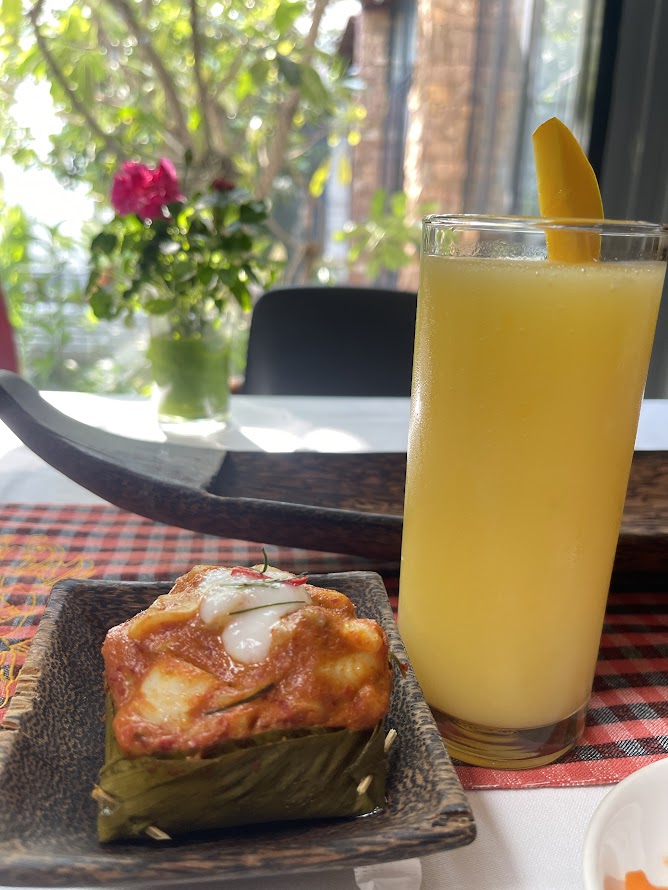
Amok Fish 11USD or PHp628- Amok fish is a traditional Cambodian dish featuring tender fish fillets, typically freshwater fish such as catfish or tilapia, cooked in a rich and fragrant coconut curry. The dish is often served in a banana leaf cup, adding a subtle earthy flavor to the delicate fish and aromatic curry. I love the Amok Fish it is a blend of sweet, savory, and spicy flavors, making it a beloved staple of Cambodian cuisine.
Date April 16
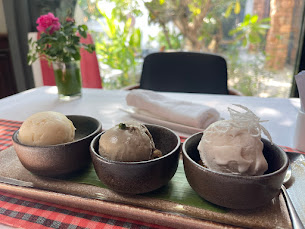
Cambodian Ice Cream – 7USD or 400PHP for 3 scoops – Among the options, I selected soursop, coconut, and Kampot pepper. While soursop and Kampot pepper didn’t quite appeal to my taste buds, I found the coconut to be delightfully refreshing.
For the Free Flow Breakfast for 10USD or PHP571 on April 17
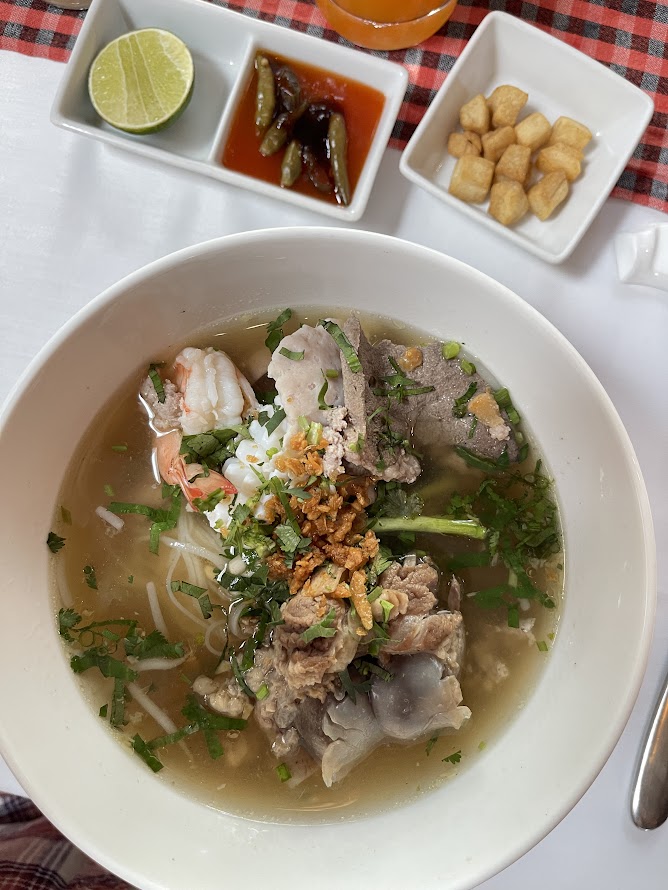
Kuy Teav – Kuy teav, a classic Cambodian noodle soup, is commonly savored during breakfast or as a light meal. This signature pork and prawn noodle soup made for a delectable introduction to Cambodian cuisine during my first meal. Surprisingly, I found it to be quite delightful!
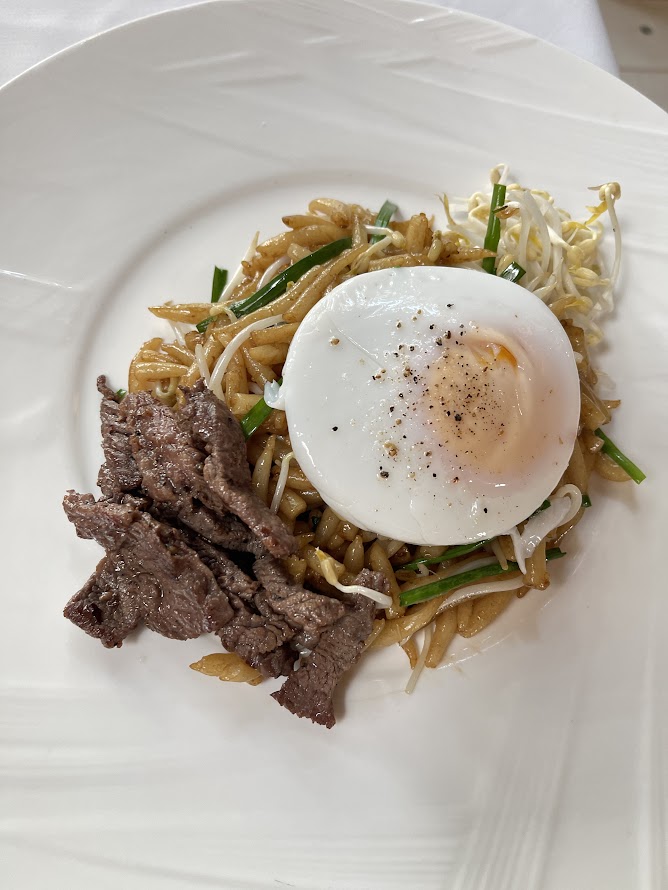
Lort Char – Lort char is a beloved Cambodian stir-fried noodle delicacy, usually crafted with wide rice noodles, tender meat options like pork or beef, and an array of crisp vegetables. During my visit, I opted for the Lort Char Sach Kor, featuring succulent beef marinated with Kampot pepper and expertly stir-fried with short rice noodles until achieving a golden hue. I found this dish to be exceptionally tasty, reminiscent of other delightful Asian meals I’ve enjoyed in the past.
Num Banh Chok – Num banh chok, a classic Cambodian dish, features fresh rice noodles accompanied by a fragrant curry broth and a medley of fresh herbs and vegetables. During my meal, I opted for the Samlor Khmer, a beloved national favorite that consists of fresh rice noodles served with a river fish gravy, seasoned with lemongrass, and infused with green kreoung spices. Mixing all the spices into the rice noodles, I found myself taking several bites to fully appreciate the complex flavors. Initially, the taste was a bit unfamiliar due to the curry noodles, reminiscent of eating chicken curry but with noodles instead of rice, but I embraced the opportunity to try something new.
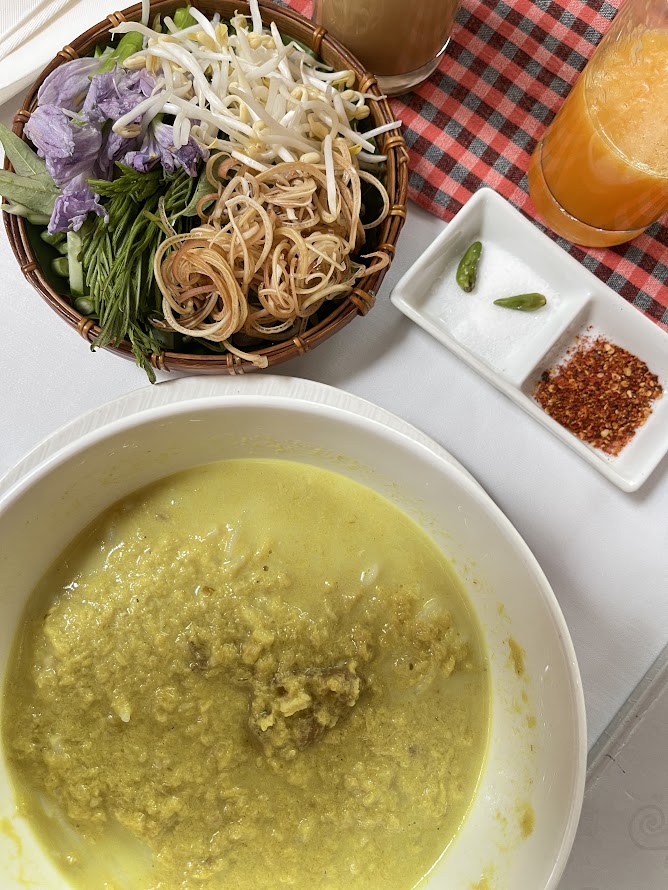
I enjoyed the gastronomical experience here and would definitely would love to get to know more of Cambodian cuisine.
Day 4 April 17 (Wednesday)
As I savored my sumptuous breakfast and indulged in a refreshing shower, I eagerly anticipated the next chapter of my journey. At 11 am, I bid farewell to my cozy hostel, accompanied by my ever-reliable companion, my fan. Together, we ventured to Siem Reap International Airport, where I embarked on the next leg of my adventure: a journey to Da Nang to reunite with my friend for our Central Vietnam expedition.
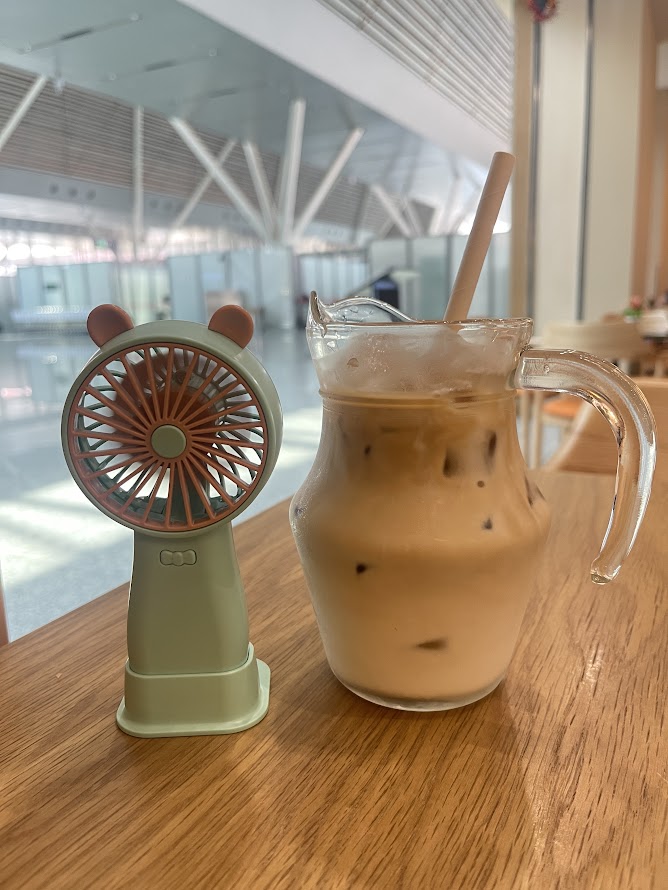
Reflecting on my time in Siem Reap, I couldn’t help but marvel at how it surpassed all expectations. Despite the sweltering heat (though I must admit, Bangkok gives it a run for its money!), every moment in this city was a revelation. From its rich history to its vibrant culture, Cambodia had me utterly captivated. The festivities of Khmer New Year infused an extra dose of excitement into my experience, while the discovery of local cuisine left my taste buds tingling with delight. And let’s not forget the warmth and hospitality of the locals, which added an extra layer of charm to my stay.
My four-day adventure in Siem Reap was truly unforgettable, igniting within me a deep longing to uncover more of Cambodia’s hidden gems. Initially, I was concerned about the crowds during this holiday, but it ended up being a lot of fun! Immersing myself in the tapestry of its history and culture was an experience that left an indelible mark on my soul. Suffice it to say, Cambodia has stolen my heart, and I eagerly anticipate the day I can return to its embrace.
Love,
Maria, sometimes, Niskie
 Finding Maria
Leave a comment