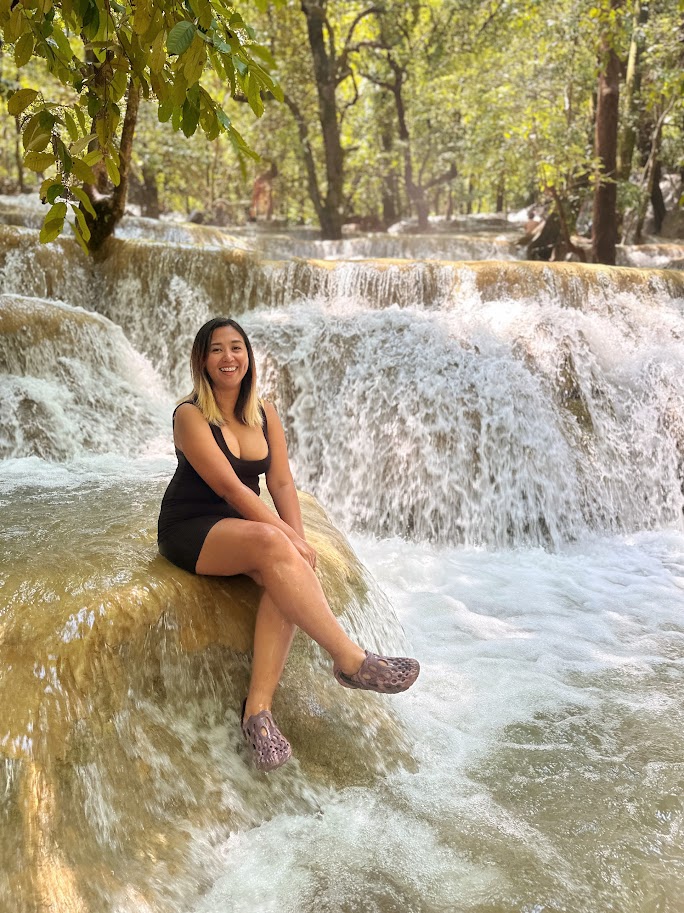
Abra is full of breathtaking landscapes, hidden gems, and adventures off the beaten path. Curious how to explore this underrated Philippine destination? Read my guide!
Disclaimer: All views expressed on this blog are my own based on my own experiences and do not represent of any entity with which I have been, are now or will be affiliated.
September 22, 2023
Batangas, Philippines
Date of Trip – Sept 16-17
Abra is a province in the Philippines that is completely surrounded by land, and it is found in the Cordillera Administrative Region on the island of Luzon. In the west, the province is hemmed in by the towering mountain ranges of the Ilocos, while in the east, it is surrounded by the Cordillera Central.
I haven’t heard much about Abra, especially since it has been given a lot of unfavourable connotations as a tourist destination due to the political struggle going on there, and it is being labelled as either a ghost town or a war zone. It was not even on my radar of the go to list of sites that I’d like to see in the Philippines, but my newly discovered friends gave me a lot of reasons on why I should see this, and I was fairly open to seeing it from a different perspective because of their convincing arguments. I will be the first to say that the location, and especially the city that we were staying in, gave me the creeps. Even though I was aware of the potential consequences, I couldn’t believe how amazing the waterfalls and other locations were.
Capital of Abra – Bangued
How to Go to Abra from Manila – With a total cost of PHP24,000, we have reserved a van to take us from Manila to Abra and back. There are twelve of us in our group. Buses are also an option; the Partas, Dominion, and Viron lines all depart from Cubao.
Duration – Our journey lasted for a total of 12 hours because we made a lot of stops along the way. The driver of the van had not had enough time to recover because of the previous journey he had taken. On the other hand, getting to Abra will just take eight hours..
Transportation – Buses and private cars. The most practical mode of transportation is private cars. When you get to Bangued, you can find tricycles nearby. There were no jeepneys around, and there was also no Grab.
Budget – PHP5,500 inclusive of accommodation, transportation, tour and food
Currency/ATMs – Philippine Peso is accepted. There are ATMs in the center which was Bangued.
Laundry – There are no public laundry facilities in Bangued, but you can wash your clothing in the transient as the owners allow it.
Internet Connectivity– In Bangued, the major network providers in the Philippines, Globe and Smart, have a solid connection; however, during parts of the excursions in the falls, there is either no signal coverage at all or very little signal coverage. Because the transient did not give a wifi connection, you should try to avoid working while you are travelling to Abra.
Accommodation – We rented a transient in Bangued for a night stay.
Language – Ilocano. Tagalog and English can be understood by some residents.
Weather – The weather was clear and sunny. It rained in the afternoon, but everything was well. The temperature ranged from 27 to 32 degrees Celsius, making chasing waterfalls enjoyable. Abra’s only weather patterns are sunny and wet. The summer months of March through July are typically followed by the wet season of August through January. It is recommended that tourists visit Abra during the rainy season because the main feature, Kaparkan Falls, requires water to flow in order to be seen.
Tour Package – To see Kaparkan falls, we booked the one and only tour package available, the Abramazing Tour, at a cost of PHP1999. Both the park admission and the round-trip monster truck ride are included.
Things to Note – Please make sure to check the news all the time in Abra. There was an ambush that took place a day before we visited, and you can view it here. It was so unfortunate of what happened. I don’t recommend it to solo travelers.
Things to Bring – cash, water, sunblock, cap, umbrella, waterproof bags, powerbank, plastic bags to cover your things, swimwear and trail sandals/shoes for the falls
Group I travelled with -I went on my trip with a group of friends who are members of the DIY travel community in the Philippines known as Adpengtures. This trip is being organised by my good friend Peng, who is the administrator.
Sample Budget in Abra for 2 days and 1 night
| Expenses | Price (PHP) |
| Van going to Mnl-Abra-Mnl (12pax) | 2,000 |
| Kaparkan Tour during weekend (Sat-Sun) if you opt to do it on a weekday, you have to rent the whole truck worth PHP40k | 1,999 |
| Transient Accommodation 1 house (12pax) | 400 |
Itinerary
Day0 Sept 15 (Friday)
Gathered in the Greenfield parking lot in Shaw about 10 o’clock at night. At about 10:30 p.m., we departed Manila. The van was enormous, but there wasn’t enough legroom, so I anticipated a lengthy and uncomfortable ride.
Day1 Sept 16 (Saturday)
Finally made it to Abra after 12 long hours on the road. Insanely, we have stopped four times. The driver made four stops total: at Nlex Balagtas Shell, Leeza La Union, Shell La Union, and Tessie Ilocos Sur.
Tangadan Tunnel and Abra Welcome Park Complex
San Quintin, in the Philippine province of Abra, is home to the well-known Tangadan Tunnel also known as “Usukan”. It represents the Abra people’s resilience and determination in the face of adversity. It was constructed by the American colonial authority as a link between Abra and Ilocos Sur provinces.
The Abra Welcome Park Complex can be found just close to the Tangadan Tunnel. The Gabriela Silang Monument can be found there, along with lush landscaping. Maria Josefa Gabriela Cario Silang, the first Filipino woman to lead a revolution against Spanish colonisers, is honoured with a monument.
Visitors can also stop by the Pasalubong Centre to pick up some tasty treats and unique souvenirs from the area.


Pantoc Falls
Due to its double waterfall plunge, Pantoc Falls is also known as Pinsal Falls. Just beyond the Tangadan tunnel, a short 5-minute stroll off the main road brings you to the most accessible waterfall in the area. This is where we stopped to take some shots.

Visited the house of Teofilo Garcia (A National Living Treasure Awardee)
Teofilo Garcia, winner of the National Living Treasure Award and an expert in the creation of traditional headwear fashioned from gourds (upo) or kattokong nga tabungaw, is known for his work in this field. The primary component of the headgear that may be worn in every climate is a native gourd that he cultivates and gathers himself.
In his town, Mr. Garcia is the only one who still makes these strangely beautiful works of art. He is now trying to get young people in his town who want to learn the craft to get in touch with him. People can visit his craft and buy a hat to help keep the traditional art of making tabungaw alive and well.


Abra Miki
We chose to take a break and ate Abra Miki at one of the eateries or what they call mikihan in Bangeud. Abra Miki is a Filipino noodle soup dish that comes from the Abra area. It is made of thick egg noodles that are cooked in a rich pork soup that has annatto seeds added to it to colour it. To make Abra Miki even better, you can serve it with a hard-boiled egg, shredded pork meat, and chicharon bits. I got everything on top for just PHP50! That dish is so well-liked in that area that there is an annual festival for it from February 19–27.

Tiggalay Waterfalls
This set of waterfalls in San Marcial, San Isidro, Abra, was nice. It took us five minutes of hiking to get to the falls. I was amazed at how clean the water was, and we were the only ones there, so I loved swimming here. A bathroom and shower are also there so you can clean up after the dip. Just so you know, though, the water also came from the falls.


After buying food and toiletries at a nearby Bangued store, we went back to our accommodation. We got to our lodging around 4 p.m. and took a short break. We were going to visit the Layugan Tulip Garden, but it rained, and they couldn’t turn on the lights for their paper flowers, which would have been nice to see at night. I was fine with skipping it, to be honest. We had dinner at Mang Inasal in Bangued and then went to bed to get ready for tomorrow’s plans.
Day2 September 17 (Sunday)
Our planned departure time was 4:00am, but the others were still asleep because they had been drinking the night before. After leaving our lodging at 5:30am, we got to the briefing spot around 6:00am. We went on our 10-wheeler monster truck journey in Kaparkan Falls after the briefing.
Kaparkan Falls
Kaparkan Falls, or Mulawin Falls, is another name for it. It has been “discovered” by an outsider in August 2015, yet locals have known about its presence for years. The height of Kaparkan Falls is 500 meters. It’s a real waterfall from the spring that cascades down a series of terraces and into a collection of shallow pools to the Tineg river.
Seeing the Kaparkan waterfalls and swimming in its basin was like being in a painting, which is why I adore them so much. Feeling overwhelmed since I had no idea something so wonderful existed in the Philippines off the beaten path.
To add to the excitement of visiting Kaparkan Falls, we rode on a monster truck, dubbed “hell ride” by the locals. It was a hell of a three-hour ride. For an hour, we drove on pavement, for another hour we chained our tyres to improve traction in the mud, and for the last hour we drove on uneven terrain. You’ll have to go 900 metres before you reach the falls, though. But in the end, it will be well worth it.
The only downside of this falls was the CR which they did not clean regularly for visitors to use. And the food was not that delicious, I ordered in advance to the organizer dinaldalem which includes of 2 rice and 1 royal bibingka for PHP140 but it was way too salty. I only liked the Abra bibingka. Dinaldalem is an inadobo dish that features pork liver. The Ilocano word dalem, which signifies liver, is where the name dinaldalem comes from.
Even with the downside, I enjoyed every sights and the experience I will never forget. Please note that the tour organiser will let you know when you need to return from Kaparkan Falls; we left at 1:30 p.m., and it rained on the way back to our lodgings, adding to the excitement of the day.


Once we arrived to our accommodation around 5:00pm, we showered and prepared to go back to Manila.
Victoria Park Cassamata Hill and Abra Signage
Cassamata Hill National Park, or Victoria Park as it is more commonly known, is a Philippine public park near the city of Bangued in the province of Abra.
The more I explored the Philippines, the more I became accustomed to having my picture snapped in front of various signs. We were leaving Victoria Cassamata hill for Manila, and we stopped there to see the sunset. It was such a beautiful day and glad to have done it.


Adventure is the driving force behind all of my trips. I enjoyed exploring the less-visited parts of the Philippines and learning more about the culture and history of my country. .As a Filipina, I think it’s important to learn as much as you can about your home country in order to better understand who you are, and I thoroughly enjoyed exploring the country’s lesser-known regions and all they have to offer. This is the only place where you can get it. Among the many breathtaking waterfalls I visited in the Philippines, my favourite was the Kaparakan falls. The scene is so beautiful that it might easily be mistaken for a painting or a postcard. I can’t wait to share more of the Philippines with you.
Love,
Maria, sometimes, Niskie
Leave a Reply